
SIDETRACKS AND DETOURS, Sunday 27th September 2026: DAVID ALAN COE, blues, country, cowboy singer writer, dies at 86 + DUO BRAVO and the songs they sing + JAZZ iN READING
DUO BRAVO IN CONCERT
ALMA IN CONCERT REPERTOIRE

I had so enjoyed the concert that I couln´t wait to put something about it into print,….not next week, but now, the morning after the who.
I sent n e mail over to Fran, to ask whether or not he could let me have a copy of the set list, as sometioimes I miss titles that are introduced in Spanish and it had been particularly noticeable that they covered various genres and moods throughout the evening.
The opening song Toda Una Vida is a famous bolero written in 1943 by Osvaldo Farres, the Cuban composer who dedicated the song to his wife, Finita, sister of the actress Asunción del Peso, whom he met while working as a publicist for Polar Beer. Although there was a significant age difference between them, all indications are that it was love at first sight. Her family, who opposed the relationship, sent the young woman away from Havana , at which point Farrés composed the bolero for her. Pedro Vargas premiered it on the radio program La Hora Polar so that she could hear it.
Since its premiere in 1943 by Pedro Vargas , countless versions of the song have been recorded, most notably those by Antonio Machín , who popularized it in Spain, Los Panchos , Chavela Vargas , Julio Sánchez , Paloma San Basilio , Raphael , and Sara Montiel .
Mexican singer Luis Miguel included a version of the song on his 2001 album Mis romances. Argentine singer Sandro included it on his 1994 album Sandro Clásico .” Spanish singer Paloma San Basilio included it on her 2001 album Escorpio .
Araceli conveyed this song as being of a deep, faithful, and eternal love, expressing the ultimate desire to spend an entire lifetime alongside the beloved person. Fran´s piano work certainly reinforced that interpretation.
The following number, La gata bajo la lluvia, composed by Rafael Pérez Botija, recounted the story of a lost love and the deep longing that accompanies it. Although the composition is not inspired by a specific personal experience, it manages to capture a universal emotion that resonates with anyone who has felt the sadness of a fading love. Due Bravo had told us about the love of a life-time and of a love unrequited and the myriad emotions love of any kind engendered and because of their ability to convey all these emotions Araceli and Fran had already won the hearts of their audience.
The song Piel Canela, followed. Composed by Bobby Capó, the song speaks fondly of deep fascination, absolute devotion, and romantic love for a person, highlighting the natural beauty and sensuality of tan skin, and Araceli playfully reminded us of those emotions, aided and abetted by Fran with some lovely trills adorning the melody.
With scores of candles offering atmospheric but subdued lighting, we in the audience felt we were listening in to a young adult considering her life to date.
A la niña que fui is a song by Puerto Rican artist Kany García about the reunion, reconciliation, and intimate dialogue between an adult woman and her childhood self. Araceli delivered this conversation with honesty and an understanding beyond her years, and although the melody as written was wonderful Fran somehow enhanced it with short, nebulous riffs.
Cuando nadie me ve by Alejandro Sanz speaks about the freedom of showing oneself without masks, vulnerability, and the duality between the desire to love and the need for personal independence. This is a song of contradictions to some degree with its title of Cuando Nadie Me Ve translkated into English as When Nobody Sees Me.
Dos gardenias is a well-known and much loved bolero written in 1945 by Cuban composer and pianist Isolina Carrillo. The lyrics serve as a metaphor for sincere love, union, and total devotion between two people. It might have also served as a metaphor for not only a romantic partnership, but also speak of the ingredients that a music-duo of a vocalist and a pianist
need to help them deliver the song as eloquently and precisely as they did here tonight.
Butterfly Dust is a title that porcliams the fragility of its ethereal lyrics. Vanesa Martín’s song is a symbol of the fragility, beauty, and fleeting nature of a love that comes to an end.
Butterfly Dust and Dos Gardenias, which had immediately preceded it, might just have been the clue to the x-factor that we know Duo Bravo possess. Arceli delivered a powerful, joyful interpretative vocal about the total devotion and power of two people in love, and then re-interpreted love as fragile and fleeting, and we believed her every word.
The song titled Estoy Aprendiendo, by Argentine artist Yami Safdie, talks about self-love, emotional healing, and the process of setting boundaries to prioritize one’s own mental health. Once again, Duo Bravo took ownership of this song with Arcila´s expressive phrasing and gentle support of a dreamy melody played beautifully by Fran.
Perhaps the most dramatic performance of the evening was given to La Mentira (also known by its famous opening line “Se te olvida”) speaks of pain, heartbreak, and betrayal in a romantic relationship.
This was followed by a deep-breath and the strength to reject an empty reconciliation. The song Que Vuelva by Kany García addresses recovery as the singer / story-teller walks away from a relationship after having suffered emotional harm.
Hijo de la luna, composed by José María Cano for the Spanish group Mecano, narrates a tragic legend of love, sacrifice, and distrust inspired by Gypsy folklore.
With the song Cuando yo quería ser grande (popularised by Vicente Fernández) we were back on higher ground as Arceli sang about the passage of time, childhood, and deep love for one’s father. Duo Bravo as a partnership are always on the same page both lyrically and musically but just as importantly they are always on the same page of the telling of the story.
Lo saben mis zapatos is a famous song by artist Pablo López from Málaga that speaks of a secret, intense, and hidden love that only the person themselves knows about.
Lucía, composed and performed by Spanish singer-song-writer Joan Manuel Serrat, speaks of lost love, nostalgia, and the indelible mark a person leaves on memory.
El ángel caído is a metaphor for pain, heartbreak, and resignation at the end of a romantic relationship. The song was composed by Pablo López and popularized by Malú.
We as an audience had been taken on a roller-coaster of a gondola ride that had taken us through so many emotions. We began with eternal love, before learning of a love unrequited, fascination, devotion, and the sadness of fading love. Other stations we pulled in at we travelled through the tunnel of love included natural beauty, and the sensuality of tan skin. Further along we called in at reunion, reconciliation and intimate dialogue, honesty and understanding. As we rolled round the bend we called in at vulnerability, duality, desire and personal independence, invisibility, sincerity, union, fragility, freedom, self-love, emotional healing, boundaries, mental-health, pain, heartbreak and betray. As we ran down the the last stretch to the finishing line we stopped in at recovery, tragedy, sacrifice, childhood and fatherhood, but we still had to travel through secrecy and intensity. We called in at the Lost Love office, as we got off the gondola and stepped back on terra firma of memory.
A very special voice, and a powerful and pretty piano sound had given us a wonderful concert that was called Alma, but in any other language, surely, it was SOUL.
The audience rose to their feet, as one, before the final note ofthe concert had fadfed away: a standing ovation
There is definitely a big X-factorberhind the remarable couple that are Duo Bravo.

Jazz at Progress
… brought to you by Jazz in Reading
Friday 23 October 2026
Oli Brice Quartet
Friday 23 October 2026 | Progress Theatre, Reading | 7:30pm | £20.00 (£18.00 concessions, £10 under 16) plus 3.5% booking fee |
Bar at all gIgs from 7:00pm. Drinks may be taken into the auditorium.
lñisting shared by Jim Wade, Jazz In Reading and passed on by sidetracks & detour
s
THE OLI BRICE QUARTET
The Olie Brice Quartet play music from their 2025 debut album, All It Was. Brice’s most personal album to date – with most of the music written shortly after the death of his father – All It Was combines powerful freedom and exploration with memorable melodies, driving swing and emotional intensity
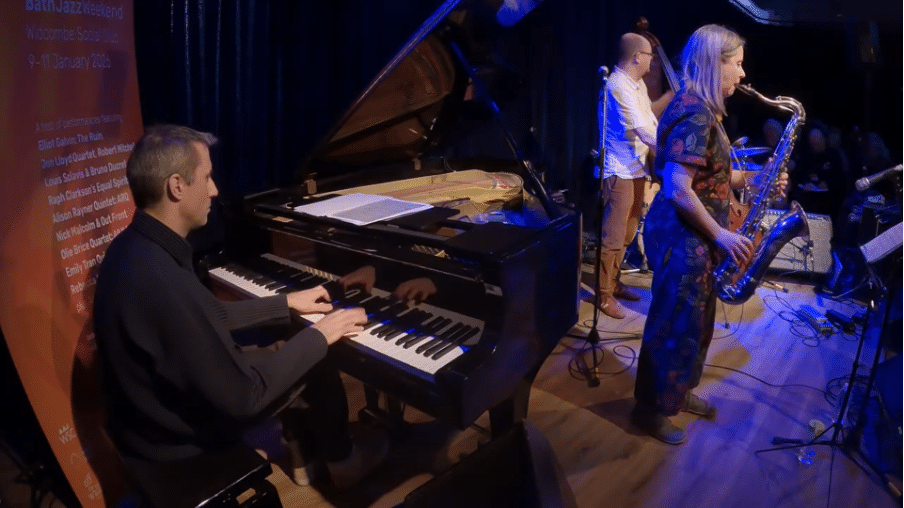
The quartet features three of Brice’s closest colleagues, all among the most exciting and creative improvisers around; Alexander Hawkins on piano, Rachel Musson on tenor sax and Will Glaser on drums. Alex is recognised as one of the most important improvisers and composers of his generation, leading his own bands as well as working with the likes of the late Louis Moholo, Evan Parker, Anthony Braxton and Wadada Leo Smith.
Rachel recently received the prestigious Paul Hamlyn Foundation Award, and collaborates with Mark Sanders, Pat Thomas and Cath Roberts among others and Will is possibly the most in-demand young drummer in the UK, working widely in both the jazz and creative music scenes.
“The work of a truly extraordinary quartet. All It Was will be one of the records of the year”
Richard Williams, The Blue Moment
“With this album, Olie Brice achieves a remarkable synthesis of composition and improvisation, intellect and emotion—reaffirming his place as one of the most versatile and compelling voices in contemporary creative music”
All About Jazz
REST IN PEACE
blues, country, cowboy, heavy metal musician
DAVID ALLAN COE has died at 86
Norman Warwick reads it in Paste magazine.
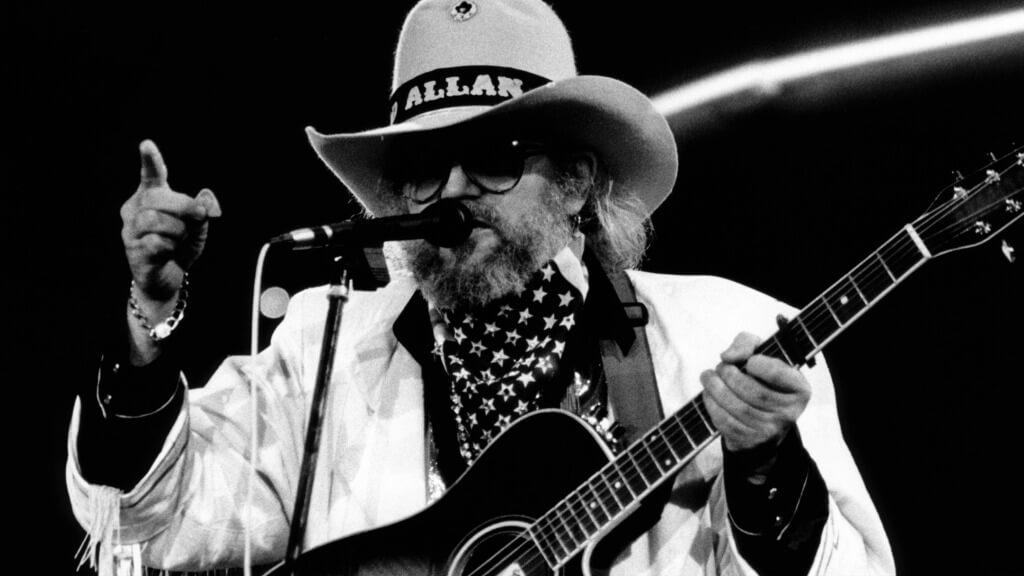
David Allan Coe has died. The much covered You Never Even Called Me By My Name and Pledging My Love singer was 86 years old. Rolling Stone, published a heartfelt comment form Coe’s widow, Kimberly, that confirmed her husband’s passing: “One of the best singers, songwriters, and performers of our time [and] never to be forgotten. My husband, my friend, my confidant and my life for many years. I’ll never forget him and I don’t want anyone else to ever forget him either.”
Born in Akron, Ohio, in September 1939 Coe grew up on a steady diet of Johnny Ace, subject of a Paul Simon song, The Late Great Johnny Ace that can be found on Simon´s Heart and Bones album. The song tells of how Ace died from a self-inflicted gunshot wound, that gossip conversations conspired to suggest was a result of a game of Russian Roulette.
Coe actually spent more than 20 years in reform school and correctional facilities, including a brief stint at the Ohio State Penitentiary. At times he was in a cell neighbouring with Screamin’ Jay Hawkins. Christened Jalacy Hawkins, Screamin’ Jay was an African-American popular singer who achieved significant success during the rock and roll explosion of the mid-1950s. He was known for his circus-like performances and (sometimes macabre) aesthetic, and he recorded one of the biggest hits of the era, I Put a Spell On You , in 1956. His song was later covered by a variety of artists as diverse as Aretha Simone and Alan Price.
It was in the late Sixties that Coe left prison and headed for Nashville, where he tried to make it as a country singer, at one point living in a hearse parked by the Ryman. Shelby Singleton, owner of Plantation Records, discovered him and got his initials on a record contract. Coe’s debut album,
Penitentiary Blues, came out in 1970. A year later, he joined Pete and Rose Drake’s Windows Publishing Company as Billie Jo Spears and Tanya Tucker found mainstream success covering his songs. But fame mostly eluded Coe, even as he earned a reputation as one of Music Row’s slickest songwriters. Columbia Records signed him, and his third album, The Mysterious Rhinestone Cowboy, confirmed a switch of genre from from blues to country.
In 1975, perhaps by keeping good company with some people identified as bad company 1975, Coe saw Johnny Cash sing his tune Cocaine Carolina and the man in black invited Coe to to sing backup on John R. Cash. That same year, Once Upon a Rhymeyielded one of Coe’s biggest tunes: You Never Even Called Me By My Name.
Coe took his cross-genre journey by taking it a step further country to full outlaw on Longhaired Redneck, impersonating Ernest Tubb, Merle Haggard, and Bill Anderson in an era dominated by Waylon and Willie, who had just released country music’s first platinum album, Wanted! The Outlaws, with Jessi Colter and Tompall Glaser.
In 1977, Jimmy Buffett accused Coe of plagiarizing his song Changes in Latitudes, Changes In Attitudes. Three years later, Coe´s album, I’ve Got Something to Say boastedf contributions from Dickey Betts, George Jones, Guy Clark, Bill Anderson, Kris Kristofferson, and Larry Jon Wilson. When the “urban cowboy” movement grew stronger in the early Eighties, Coe doubled down on his outlaw sound. His Get A Little Dirt was acommercial success so Coe soon enough saw Castles in the Sandreach #8 on the country albums chart, his highest placement in eight years. The Ride reached #1 on the Cashbox Country Singles chart and spent 19 weeks on the Billboard country charts. Another major single, “She Used to Love Me a Lot,” came out in late 1984 and nearly cracked the top 10 on the Billboard Hot Country Singles chart.
He went independent in the Nineties, eventually meeting Pantera’s Dimebag Darrell and striking up a heavy metal bond with him. His output from that period, namely Nothing Sacredand Underground Album, alienated audiences who read racist, misogynistic, and homophobic into the lyrics. Coe denied the accusations, claiming that his satirical music was inspired by Dr. Hook’s album of Shel Silverstein songs. He later made Rebel Meets Rebelwith members of Pantera, a landmark crossover moment for country and metal music, and became a Kid Rock collaborator. Our Hands, a duet with Anderson was a moderate crossover hit.
Coe’s career was marked by persistent controversy, outlaw mythology, and exaggerated personal lore. He insisted that he spent time on death row after killing an inmate who tried to rape him, but the claim was later disproven. Coe songs like The House We’ve Been Calling Home and If That Ain’t Country (I’ll Kiss Your Ass) were barred from country radio stations because of polygamous and racist lyrics. The singer’s association with the Confederate flag, which appeared on his guitars and a few of his album covers, including Son Of the South, sparked significant backlash.
Coe also refuted accusations of racism: “I have dreadlocks down to my waist with earrings in both ears and my beard is down to my waist and it is in braids… I was in prison with 87% black people, I hung around with black people, and I learned to sing music with black people. It was ironic that in prison the white guys called me a ‘n***er lover’ and now I write the word ‘n***er’ in a song and I am all of a sudden a racist. It is pretty ironic.”
Requiem For A Harlequin featured criticisms against the KKK and Rebel Meets Rebelridiculed the U.S. government’s treatment of Native Americans. On Nothing Sacred, an album released via mail order in the back of a motorcycle magazine, Coe included a dig at Anita Bryant, who famously supported the repeal of anti-LGBTQ discrimination laws in Florida. But the Underground Album was deemed so offensive that, in the ensuing years, Coe was often mistaken for white supremacist musician Johnny Rebel.
During a legal conflict with the Internal Revenue Service in the early 2000s, Coe lost the publishing rights to the bulk of his catalog, including Take This Job And Shove It, in bankruptcy court.
All the songs on the X-rated albums were sold, he said in an interview. I don’t own that stuff anymore. I have nothing to do with that stuff. They have to give me credit as the songwriter, but I don’t make one cent.
In later years, Coe found a steady gig touring the motorcycle rally circuit, even recording a live album at Biketoberfest in 2001.

SIDETRACKS & DETOURS 4th OCTOBER 2026
KASEY MUSGRAVES: From Golden Hour To Middle of Nowhere


Leave a Reply
Want to join the discussion?Feel free to contribute!