
SIDETRACKS & DETOURS, Sunday 16th August 2026, including R:I:P Jimmy Cricket + the film MICHAEL that allows art to be enjoyed for art´s sake + new name for old street
ON LOSING A WONDERFUL HUMAN BEING
JIMMY CRICKET: a personal tribute
by Steve Cooke from all across the arts.
Laughter, having its evolutionary roots in creating social bonds that help individual and group survival, is a powerful tool that improves physical health, mental well-being, and social connections, acting as a natural stress reliever and immune booster; a crucial resource in dealing with the challenges that life throws at us survival.
Jimmy Cricket delivered all of the above in abundance to millions through his more than fifty years as an entertainer.
We have, devastatingly, just lost not only a uniquely talented entertainer but also the wonderful kind and loving James Mulgrew.
Jimmy kept up his indefatigable charity work and was bringing laughter to audiences right up to his passing.
I last had the pleasure of his company when he popped round with a box of chocolates and a bottle of champaign. We were celebrating the publication of his autobiography for which I had been fortunate enough to edit and write the forward.
We laughed a lot, talked about our families, discussed the need for more love and peace in the world and parted with a big hug .
That was Jimmy – a funny, caring, kind, warm, genuinely lovely irreplaceable man.
If you weren’t lucky enough to see him live or meet him in person or if you would just like to find out more about him, I suggest you get a copy of Jimmy’s autobiography Memoirs Of An Irish Comedian ‘Come Here There’s More’ The Jimmy Cricket Story, on sale from Amazon with £1 going to the charity ‘Mary’s Meals’.
You learn about his childhood years growing up in Northern Ireland and his days spent in the holiday camps. The tough times touring the North of England club circuit as a stand-up comedian and his big break into television culminating in his own series for Central television in the eighties and his radio series in the nineties.
You get to join him, his family and those well-known and unknown to the wider world, on a journey that I guarantee will fill your heart with joy and laughter and also tug at its strings.
Jimmy showed us what true celebrity can be providing a much-needed alternative to the meteoric rise and burn of our ‘look at me’ culture.
The book is a life affirming celebration of the man who kept alive the tradition of ‘Variety’ whilst providing joyous family fun.
EDITORS NOTE: by Norman Warwick
Jimmy Cricket is also a well-loved figure in the sidetracks & detours office here on Lanzarote.
In fact, I have a particular memory of Jimmy from forty odd years ago. I had been ´selected´ to play in a charity fund-raising football match Aat Springfield Park, in Rochdale, but had no idea until I was in the changing room just before kick off that the referee of this match was one Jimmy Cricket. He stepped in to to address my ´home´ team and made a side-splitting palaver about counting every stud on every one of our boots, and using a six foot ruler to do so.
It was all chaotic and hilarious but the trouble was that during the match Jimmy was not so much blowing his whistle but playfully wheezing into it, to demonstrate how tired he was. He created several comedic ´prat-falls´ that he blamed on having his boots on the wrong feet. He told us all that whenever he went out dancing in Rochdale he painted an L on one shoe and and R on the other so that he always knew that ´discos here´ and dat goes der´ but today he was tripping up all over the place´, until one of the players pointed out that Jimmy had painted the R on his left wellington and L on his right wellington, which, of course, was wrong.
There was a pretty big crowd, and Jimmy kept them in roars of laughter by making strange decisions that helped the game reach some phenomenal score line. When he finally stopped his watch for full time he blew a pitiful comedic breath that petered out as he fell flat on his back on a muddy pitch. The players picked him up and carried him shoulder high to a pitch-side table of medals, one of which which Jimmy then presented to each player, hanging them on our ears.
In the bar afterwards he tirelessly signed autographs constantly muttering his well known catch phrases. I have never, neither before or after that day, seen so many smiles and heard so much laughter.
Jimmy was not a great referee but he was, as Steve Cooke said earlier, the man who kept alive the tradition of ‘Variety’ whilst providing joyous family fun.

LET ART SPEAK FOR ITSELF
And We Might All Learn Something
by Norman Warwick
I should stress at the outset that the film we are about to discuss is said by The Indpendent Culture pages to have received ´eviscerating reviews´, beforter they then go to eviscerate both the film and its subject.
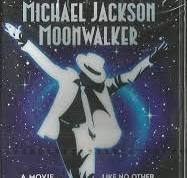
Michael is a biopic , about the late Michael Jackson, the singer and dancer. Antoine Fuqua is the director of the film released in May 2026 with John Loga, credited as its writer. The story begins with Jackson’s time with the pop phenomenon that was The Jackson 5 in the 1960s to the 1980s, when Michael set out on his own ¨Bad¨ World Tour. His real life nephew, Jaafar Jackson, portrays the adult Michael and, as a child, by Juliano Krue Valdi, both in their film debuts. Nia Long, Keilyn Durrel Jones, Laura Harrier, Jessica Sula Mike Myers, Miles Teller and Colman Domingo are among the supporting cast.
The film has been in development since November 2019, when it was reported the rights to produce a film about Jackson had been acquired by producer Graham King with Logan writing the screenplay. It was announced in February 2022. that the film was to be made by Lionsgate Films and Fuqua was confirmed as director in January 2023. Casting began that same month with the selection of Jaafar; the rest of the casting took place between January and April 2024.
Following delays caused by heavy strike action in the industry, filming took place between January and May 2024. Subsequently a clause was discovered in a legal agreement, that any references to sexual accusations against Jackson should be removed. This, the third act was revised, and scenes were reshot in June 2025. Visual effects were handled by the Industrial Light And And Magic studios and others.
The first trailer, released in November 2025, became the most-viewed trailer for any musical or concert biopic. Michael premiered in Berlin on April 10, 2026, and was released on April 24 by Lionsgate in the United States, although in other parts of the world by Universal Pictures. It received generally negative reviews; critics praised Jaafar Jackson’s performance but criticized the story for being “saccharine.” It has grossed $217 million to date.
The plot of the film tells us that steel worker Joseph Jackson brought his five sons together to form the Jackson 5 in 1966. Michael was the youngest of these five sons but was nevertheless the lead vocalist.. After months of gruelling rehearsals, which included disciplinary measures by Joseph, The Jackson 5 began performing until the Motown record label quickly signed them up. Their albums topped the charts and they sold out concerts across the United States, allowing them to move to a mansion in Encino, Claifornia from Gary, Indiana. Berry Gordy, the Motown founder believed Michael had more potential as a solo star.
In 1978, Epic Records signed Michael for Off The Wall, his first solo album, with Quincy Jones producing . Despite its success, Joseph held him back, believing he was solely responsible for their children’s fortune. After a falling out with Joseph, Michael took the advice of his bodyguard and close friend, Bill Bray, and forged his own path. In 1981, he hired John Branca as his lawyer and asked him to fire Joseph via fax. Feeling insecure about his appearance, Michael underwent rhinoplasty to reduce the size of his nose.
In addition to visiting children’s hospitals, Michael experiments with ideas for his next album, slated for release in 1982. After watching a news report about the gang war between the Crips and the Bloods, he composed Beat It. Michael and Jones struggle to name the album, but after watching horror movies on television, Michael settles on Thriller as the title. With the album breaking sales records, Michael and Branca travel to CBS Records New York to CBS president, Walter Yetnikoff, to ensure that MTV would air Michael’s music videos. MTV agrees to give him airtime, even though Yetnikoff intends to pull the CBS Records catalog from the network. This helps Michael achieve such global success that Motown´s 25th Anniversary Special invited him to appear to showcase his Bille Jean choreography including his new Moonwalk dance move .
While Michael is enjoying his success, his father, Joseph and Don King, the famous boxing promoter, discussed whether a Jackson 5 Revival tour might be feasible in 1984.
King offers Joseph a PepsiCo sponsorship deal on the condition that Michael tours with the Jacksons. During the filming of a Pepsi commercial, a spark from fireworks ignites Michael‘s hair, causing third-degree
burns and nerve damage. He and Branca sue Pepsi for the damages, and the settlement goes to the burn centre where he was treated.
During his hospital stay, Michael became convinced that perhaps his true purpose in life was to help and heal the world, so he decided that the money they raised should be donated. Once recovered, Michael went on tour with his brothers.
At Dodger Stadium, during the final concert, Michael announced that it was the last time the Jacksons would perform together, thus ending his relationship with Joseph.
As part of the Bad tour, in 1988, at Wembley Stadium in the UK, Michael performed and sang the title singing the title track of Bad..
This fictionalised biography was, of course not without several controversies and re writes
Earlier versions of the script included the child sexual abuse allegations against Michael Jackson, and King stated that he wanted to “humanize him, but not sugarcoat him, and present the most compelling and unbiased story.” Domingo said that Michael wasn’t “trying to prove his innocence,” but rather “simply trying to offer an in-depth analysis of an artist, of what made him who he is, of what makes him complex, so that the viewer can draw their own conclusions.”
Variety magazine reveals that one version of the script began in medias res in 1993, following the first allegations, with Jackson looking at his reflection as police arrived at Neverland, as he had named his home / theme park. The third act would have dealt with the impact of the allegations on Jackson’s life. Dan Reed, director of Leaving Neverland the 2019 documentary revealing later allegations against Jackson, claimed to have read a leaked script that contained “flagrant distortions” of the alleged sexual abuse. However, all references to the allegations were removed after a clause was discovered in an agreement with one of Jackson’s accusers, Jordan Chandler, that prohibited any mention of Chandler in the film. Rewrites were delayed after Logan’s home was damaged in the Palisades fire.
The final script ends with Jackson beginning the Bad tour, before the first allegations surfaced. Domingo said this was to focus on Jackson‘s rise and peak. Long said it highlighted Jackson‘s early journey and accomplishments, leaving the rest of his life for a possible sequel. Fuqua expressed scepticism about the allegations, saying, “Sometimes people do nasty things for money.”
Paris Jackson had no involvement in the film and described an early draft of the script as “sweetened,” adding that Hollywood biopics often shape narratives and contain inaccuracies. In response, Domingo expressed his hope that the film would honour his father. Janet, Randy and Rebbie, Michael Jackson‘s siblings, do not appear in the film; according to La Toya, Janet Jackson “kindly declined” to be included.
Ity was our good friends Larry and Liz Yaskiel, the driving force behind the excellent quarterly magazine Lancelot that offers comprehensive pages of the history, geography, flora and and fauna and culture of Lanzarote who alerted us to the Lanzarote premier screening of a film called Michael, and befored you might start guessing which of the world´s Michaels it might have been about I´ll tell you right now that it was Michael Jackson, It was on Thursday 23rd of April when we recieved the information, and Dee and I discussed what we would want to see from such a film and then we checked in at the web site of the beautifil, if somewhat incongruous, cinema that sits amidst a fishing boat lagoon community in Arrecife. We have seen biopics here of Elvis, Bob Dylan, and Aretha Franklin and so we were a bit surprised to read the blurb on line that suggested Michael was less a biopic of the artist himslef and rather more a celebration of the art he cre.ated. I was happy enough with that and Dee agreed so we whizzed across our 13€ for two tickets for a 4.20 pm showing on the following Monday 27th April. I e-mailed back to Larry, thanking him for suggesting the news and he replied saying he and Liz would see us there.
Larry Yaskiel, of course, was a record label exective at A & M records working with Herb Alpert, who had a big hit with This Guy´s In Love With You and I was slightly surprised he was so interested in Michael Jackson as the subject, given the controversy that surrounded Jackson´s life and career. I mean, what heck, but I then remembered that Larry had worked w3ith artists like Jimi Hedrix !
We then had a chat with two of our ´ undercver reporters ´who provide us wth UK arts news whenresdiding in their UK home, but who are here at the moment in their Lanzarote home. We mentioned the film, but i was surprised when they said they would like to go with us. I told them Iwas surprised that Michael Jackson´s music was their cup of tea, and Margaret roared down the phone that they had seen Michael Jackson perform from the roof top of a grand building in some distant, exotic country. Surely not, I teased her, you must be thinking of another Michael? Buble, perhap ! However, Iain confirmed that Margaret knows her moonwalks and that it was indeed Jackson they had seen in concert.
So in two days time there would six retirees of pensionable age sitting in a Lanzarote cinema with a bunch of ´´youngsters´ watching a Spanish language film about a fallen America icon.
Anyway. The big news this week, for better or worse, is Michael, a story of controversy-swaddled biopic of the late pop music icon and alleged paedophile Michael Jackson is finally out in cinemas, and despite a torrent of backlash – and some eviscerating reviews – it looks set to become one of the year’s biggest films. Already, Michael has broken box office records in the UK, with the biggest opening day for any music biopic.
However, this ios a story that reveals by concealing and concealing.Michael is a cintroverssy riddled film..
In her rather damning alllocation of only one star,critic, Clarisse Loughrey wrote that Michael “resists story in favour of content, in making sure fans see what they expect to see”. She adds: “In that respect, it’s hardly unique, but there’s a particular ghoulishness in applying that mentality to a figure as profoundly complex as Jackson.”
Adam White, meanwhile, wrote about how the film can’t conceal Jackson’s darker side. “Michael does an absolutely terrible job of making its hero seem normal,” he writes. “For all its admirably expensive pomp, Michael can’t escape the inherent creepiness of Jackson, and I’m not sure it really tries. It just lays out the surreal madness of the man and hopes audiences will find it adorable.”
Also, this is rather small fish in the scheme of things, but isn’t Michael just such an insipid title? I mean, Elvis made sense. Presley was the Elvis. (With all due respect to Mr Declan MacManus.) But Michael? That could be anyone. Michael Owen? Michael Schumacher? Michael Bublé? There’s a reason A Complete Unknown wasn’t simply called Bob. Because that would be a bad title.
Monica Castillo introducedher recent review by remembering that during the early 2000s, The Jacksons: An American Dream, a two-part miniseries about the Jackson family that dramatized the story behind their music, aired all over TV. It showed the exacting patriarch Joseph Jackson pushing his sons to rehearse for hours, eventually packaging them as an ensemble, the Jackson 5. Michael Jackson, the group’s main singer and one of his youngest sons, struggled under his father’s tyrannical rule. His path to freedom was a long one, hard fought after years of striking out with his own hit records. Based on the memoir of the Jackson family’s matriarch, Katherine, the series stops while Michael was at the peak of his 1980s popularity as the untarnished King Of Pop, Castillo recalled
Part of me wishes that I could enjoy Michael like I did watching The Jacksons: An American Dreama sas a kid, sheo wrote. Writing recently in Paste magazine, a publication that always makes me think, she recalled that she learned the moves to Thriller from Pop-Up Video reruns.
She observed that ´throughout Michael, director Antoine Fuqua shows the effect the superstar had on his fans, recreating the excitement of various shows throughout his early career: the hordes of fans rushing the stage for a glimpse of the performer; girls crying, a few even passing out in the frenzy; and almost everyone dancing and scream-singing their favourite songs. It was a reminder of what once was—the joy of loving an artist and their work without any caveats.
Nevertheless, Monica Castillo acknowledges in her review of the film that, ´over the years, however, that image has soured´. A series of what at least one songwriter might have describe as hints and allegations have so disappointed and have left us afraid to unquestionably accept the whitewashed series of events. Michael is an attempt to remind audiences why so many fans fell in love with him in the first place, but it doubles as a pretty clear bit of hagiography.
Like The Jacksons: An American Dream, Fuqua’s Michael focuses on the family’s journey from Gary, Indiana to Michael Jackson’s ascension to the pop throne in the 1980s. Instead of focusing on the family reuniting onstage in the aftermath of the disastrous Pepsi commercial that severely burned the singer, Michael bookends its story with his first solo tour to promote Bad in 1988, when he finally stepped out of his father’s shadow.
Castillo captures the film´s Incredible Highs and its limitations. She describes how a scenery-chewing Colman Domingo brings Joseph to life as the film’s imposing villain, a tough father and single-minded manager who beats Michael from a young age´.
Katherine (Nia Long) keeps the vile secret during her children’s abuse for years, before taking a stand against Joseph for the sake of her son.
As a reviewer, Castilllo frequently alerts u sto what we might have otherwise passed by.
She notes that ´Juliano Valdi gives childhood Michael a precocious energy in his performance, constantly moving to the beat even if it accidentally affects the recording. Later, Michael’s real-life nephew and Jermaine Jackson’s son, Jaafar Jackson, slips into the single sequined glove, imitating his uncle’s voice, mannerisms, and dance moves with an almost eerie precision and what looks like countless hours of practice´´.
With a much larger budget than the Jackson family TV movie, Fuqua’s biopic carefully plays up the grandiosity of this larger-than-life story as if to remind the audience of Michael Jackson’s popularity at the time. There are swarms of fans waiting for him at every turn, and in one funny sequence, several mailmen stop by the Jackson residence with a growing number of fan mail.
Monika Castillo also alerts us that ´in studio scenes, Michael’s vocal tracks sometimes play with little or no musical accompaniment, showing off his singing skills in a way few would have ever listened to before´.
The Jackson family compound comes complete with a snake, a llama, a giraffe grazing on the leaves outside a window, and of course, Bubbles the chimp, who gets a surprising amount of screen-time as one of Michael’s few friends.
Castilla makes fair judgments, too, arguing that although the film film doesn’t do much in the way of analyzing Michael, it at least explores the strange, isolated world he built for himself—the beginnings of his own Neverland.
The reviewer is sure enough of her ground to remark that although Michael wanted his “Thriller” director John Landis to shoot his entire body when dancing so the camera captures the choreography, Fuqua prefers a closer set-up, sometimes with too much editing to inject extra movement; in sequences like the Motown 25th anniversary special, it derails the suspense of the debut of the moonwalk´.
This moment is just one in which Michael functions like a greatest hits compilation. Roughly a third of the two hour + movie is a musical performance, as the cast re-enacts everything from momentous concerts to music video rehearsals. This is where Fuqua and cinematographer Dion Beebe shine brightest, bottling the energy of a Michael Jackson concert in all its glory through bright stage lights, shiny costumes, and ceaseless cutting between the crowd of enthusiastic fans and Michael thrilling them. While so much effort went into recreating these beloved pop culture moments, the dramatic scenes between performances and creative choices behind them don’t feel as polished.
Some scenes look and sound badly written, says Monica in her Paste article: ´like when Michael Jackson brings members of the Crips and Bloods to create the “Beat It” music video, they end up mostly sidelined except to cheer him on. ´
At times, Jackson is shown alone in his creative genius, making him seem like the only talent in a room full of musicians making an album. However, John Logan’s script gives Michael plenty of substitute father figures to lean on in the absence of his own for emotional support, including Berry Gordy (Larenz Tate), his driver Bill Bray (KeiLyn Durrel Jones), Quincy Jones (Kendrick Sampson), and John Branca (Miles Teller), the manager who tries to fire Joseph over the fax machine.
Monica Castillo is unafraid to say that ´there are scenes that can only be described as whitewashing, sainting Michael Jackson in such a way that it feels explicitly like calculated damage control. Michael never loses his temper or shows any flaws beyond not standing up to his dad and never growing up. He’s portrayed as an innocent good guy who prefers the company of animals to people, brings toys to kids in hospitals, sits to talk with them, and sings to a girl in a wheelchair when he’s a child because, as he says, “They’re not my fans; they’re my family.”
There are more than a couple in a hospital showing Michael bringing joy to sick kids, which feels oddly excessive for a man with a very busy career. There’s a reason the film stops in 1988, and it’s not just because it’s his first solo tour. It’s because after that, it gets hard, and legally complicated, to just enjoy the music. It’s easier to accept the version of Michael who’s just a little too obsessed with Peter Pan when not confronted with what comes next.
Like M:J: The Musical the long-running Broadway show, the team behind Michael are counting on audiences just looking to enjoy the nostalgic rush of hearing songs like “ABC,” “Gotta Be Startin’ Somethin’,” and “Billie Jean.” While this movie may have his uncle’s name on it (and his estate’s approval), Michael belongs to Jaafar Jackson and his ability to conjure the thrill of watching Michael Jackson perform his signature moves in retro costumes. There’s almost an element of comfort in its predictability, even as it skirts as much controversy as possible, finally throwing up a card that reads “His Story Continues,” when it’s time to bail. Only, the audience knows what’s next—and if you don’t, that’s what search engines are for—and not everyone is willing (or able?) to separate the art from the artist.
Director: Antoine Fuqua
Writer: John Logan
Starring: Jaafar Jackson, Colman Domingo, Juliano Valdi, Nia Long, Miles Teller
Release Date: April 24, 2026
…..
Art for art´s sake goes the saying, though my understanding of that phrase is flimsy and nebulous. Like most people, I suppose, from a distance I can separate the pitiful tv images of Michael Jackson outside courtrooms as the evidence grew high enough to bury him. Whatever the causes I can´t find any circumstances to forgive him of having done, if he did, what he was accused of. I have heard enough rumours, or press stories as they are sometimes called, to understand that his father could have been a strong, even bullying, influencer on his own son(s).
None of that has anything to do with Moonwalking (left), Thriller or whatever.The art, standing alone, can be appreciated in its detachment from the artist. I have always taken the Barthesian view on The Death Of Author.
Barthes was not arguing for the death of author, but was instead arguing that once completed, the art produced can be admired, and critiqued in its own right,…. though of course that led to Melanie screaming to her mum, ¨Look What They Have Done To My Song´.
I don´t want my favourite films, songs, dances, books, paintings and dramas (and comedies) to be dis-credited or ´disappeared´.
Please don´t make me forget some of my favourite jokes or comedic capers.
Stop flagellating film, stop silencing songs, don´t denegrate dances, don´t rip into radio, don´t turn on television, don´t burn books, don´t pour paint on paintings, don´t denounce drama and for goodness sake don´t be cruel to comedy. Or at least don´t do anything to those arts simply because their creators are of less than good character.
Michael is an enjoyable film,, even its subject might have desperately flawed.
Think of how many pop music protest songs were initially banned in the sixties and seventies and yet they have outlived their detractors and are still heard on the radio today, proving even now that video hasn´t killed the radio stars.
Burning books is a crime in some places. The ugly pots of colours thrown in art galleries by protestors against some historic act or attitude, is scraped off and repaired and the beautiful art beneath is re-revealed. A violent and quite genuinely frightening performance of 1884 at The Royal Exchange, Manchester, some years ago, compelled me to read George Orwell´s novel again, after many. many years and to better understand what he was protesting about.
I was once told by a professor at my university that he was not at all interested in my opinion, but he would happily listen to my argument.
Over the forty years since then I now have a glimmer of understanding of what he meant. By the way there is a film called A Few Good Men in which Tom Cruise and Jack Nicholson, in a military hearing court, fight a furious debate on just that topic of the difference between an opinion and argument.
Now, stirred by the excellent writing of Monica Callistro, we went to see a film about the monumental artistic achievements of Michael Jackson, without letting today´s social attitude to the creator be-smirch those achievements.
This is a wonderful venue, where we have previously seen biopics of Elvis Presley, Aretha Franklin, Bob Dylan and Bruce Springsteen.
We joined with our frends Larry and Liz Yaskiel and Iain and Margaret, and the combined age of the six of us was, I´m sure, higher than that of all the rest of the audience put together ! In fact, the screening was shown in a massive beautiful theatre / cinema room that , despite our several previous visits to this multi cine complex, we hadn´t known existed as we had always previously watched in one of the several small studio rooms. Wow. What a revelation this assett should be to the venue. It seems to me that it would be perfect for live stage productions and concerts, and I look foward to many more visits. To add to my excitement Larry and Liz told us that there is an underground area beneath the cinema offering free parking,………park your cark, walk up three or four steps up to the box office and take your seat.! Larry and Liz seemed quite amused that we had parked about a mile away and walked the whole circumference of the San Gines lagoon,… and that we would have to do so after watching the film.
Given some of the damning-with-faint-praise reviews I have mentioned earlier, I have to say that the film´s focus on Michael Jackson´s unique contribution to music and culture was well celebrated. The rerlationshp with his father echoed what we now know about the relationship between Brian Wilson, of The Beach Boys,and his own father. Briefly, this version of Micheal showed him being beaten with a belt by his heavy fisted dad, and Mr. Wilson was, if not heavy-fisted, was ceretainly heavy handed. The rest of the Jackson family, mother, siblings and relatives were shown as being supportive of Michael, and the star himself was portraid as a child-like innocent: a very softly spoken, gentle, caring person with a world view that made it so difficult to comprehend the awful things he was subseqently accused of.
Berry Gordy, the Tamla Motown magnate was shown as supportive of Michael Jackson as was Quincy Jones, the famed record producer, both of whom gave Michael room to develop his ideas for lyrics, music, song, dance and drama and to establish a sound quite unlike anything we had heard before.
Like most of my generation I had grown up on top ten hits but I was fourteen, only fifty or so years from becoming a grown up, when young Michael was delvering his cute dance steps, relentless energy and clear voice to hits with his brohers in Jackson 5, so I disdained, but secretly loved those hits, as I explored the more mature efforts of The Incredible String Band, The Moody Blues and the last embers of The Beatles. When the world was going mad over Michael´s moonwalking I was listening to John Stewart´s Armstrong song about the first moon landing.
Nevertheless I thought what Michael Jackson achieved as a solo artist after his contract to his father had been rescinded was incredible. Although I was too much a music-snob to seek them out I heard his songs all the time on Top Of The Pops and the radio, saw news footage of his incredible stage shows and dance movements and I even came to admire his lyrics and rhythms. Then he was not only on MTV he was always in the news about his life style of Neverland with its menagerie of animals that he thought of his friends. To be honest I thought, as most of the world seemed to, that all this was strange and unworldy, but in fact the story as told in Michael, the film, makes a solid sense out of it all by showing Michael´s childhood fascinaton of the animal kingdoms of the world. Having shown the fracture of the relationship with his father the film shows how the star built a safe world around himsel as he excited his adoring fans and instigated and managed some excellent community initiatives and increased global awareness of the need to care better for our world.
Whatever the purpose of this film, the producers and director and cast of Michael have paid him the the late star the ultimate compliment of being the best they could be. Of course no one could replicate the performances the star himself had delivered in his life time, but there was certainly much to admire in the enrgey and passion the ensemble delevered.
The Music was loud, the dancing was breath-taking and there was even a weighty amount of pathos in the story being told.
Michael´s art has survived its creator.
All of this, of course, was the subject of conversation when Dee and I and Iain and Margaret, dined later in an excellent restaurant beside the lagoon. The sun was going down as the lights were coming on in the row of restuarants and the little fishing huts and the clock face on the spire of the beatific church were coming on. The food was beautiful, our waitress lovely and smiley, the drinks were cool and the conversation was hot indeed.
Could he really have done those things? (though we whether we questioning his dance steps or some of his alleged procliveties was never clear).
We were asking questions of the artist, but for that and so many similar questions, answers came there none
There two final questions we asked oursleves as as got back into the car.
Did we enjoy the film? YES, we all agreed.
Did the film better serve the artist or his art?,………and answer came there none!

ISLAND LIFE
NEW CULTURAL R0OUTES TO OLD CULTURAL ROOTS
by Norman Warwick
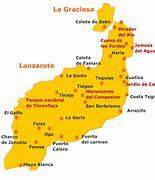
The Lanzarote and La Graciosa Island Council presented this Friday the Cultural Heritage Route in Arrecife, a project promoted by the Historical Heritage Service and financed by the General Directorate of Culture and Cultural Heritage of the Government of the Canary Islands that proposes the creation of an urban route intended to connect some of the most relevant historical buildings of the island capital.
This was reported recently by Lancelot Digitas as they told us the initiative includes a pedestrian route of just over one kilometer that will link Casa Fajardo, Los Cabrerones and El Mercadillo, buildings recently acquired by the Cabildo and intended to house museum centers and interpretation spaces, along with other complementary uses.
The president of the Lanzarote and La Graciosa Island Council, Oswaldo Betancort, emphasized that “this project allows us to understand heritage as an element that connects the history of Arrecife with its present and its future. It is about restoring historic buildings, integrating them into the life of the city, and turning them into spaces open to the public.”
For her part, the Minister of Culture of the Canary Islands Government, Migdalia Machín, pointed out that “Arrecife preserves in its streets, buildings, and public spaces a fundamental part of Lanzarote’s identity. This project allows us to recover the essence of old Arrecife, connect sites that are part of our collective memory, and bring that legacy closer to new generations.”
He also highlighted that “the collaboration between the Government of the Canary Islands and the Island Council has made it possible to promote a project that combines heritage conservation, landscape and culture, offering a comprehensive vision of urban development.”
NEW NAME FOR OLD STREET
Similarly, the Councilor for Urban Planning of the Arrecife City Council, Maciot Cabrera, insisted that “the modernization of the capital cannot be understood without the recovery of its heritage. The path towards a more attractive city also involves protecting and giving visibility to the spaces that form part of our collective memory.”
During the presentation, the Lanzarote architect Antonio María Zamora, designer of the cultural heritage route, explained that the document analyzes aspects related to urban mobility, street furniture, vegetation, lighting, pavements and party walls, incorporating proposals for aesthetic improvement to the urban environment inspired by the traditional architecture of Lanzarote and the artistic work of César Manrique.
In a piece of beautiful serendipity, The Arrecife City Council unanimously approved today in plenary session the renaming of a well-known street in the capital city. It will now be called Calle Antonio Corujo Tejera, in homage to the folklorist who practiced his profession for decades in the barbershop located on this small, central street in the heart of the capital. “We are paying tribute to a person who dedicated his life to preserving, researching, and transmitting the folklore and traditions of the island, Antonio Corujo. This recognition has symbolic value, since the street that will bear his name is the one where he practiced his profession as a barber for decades. A place that was also a meeting point for culture,” explained Abigaíl González, Councilor for Culture of the Arrecife City Council.
The Councillor for Culture clarified that Ramón Manchón’s legacy will be honored by having his name transferred to another street in the city. “His name won’t disappear; it will be honored on a different street in the city. This pays tribute to two important figures in our city.”
A fitting tribute, then, to Antonio Corujo, a member of a family saga that is key to the historical and cultural development of Arrecife, as his son Tonin Corujo is a leading timplist on the Canary Island. sidetracks & detours have seen a number of Tonin´s folklore concerts over the years and he is a man much loved by not only by his audiences but also by the fellow musicians, with whom he so often collaborates in live performances.

SIDETRACKS & DETOURS SUNDAY 23rd august 2026
Buddy Mondlock is a songwriter !

SIDETRACKS & DETOURS SUNDAY 30th AUGUST 2026
Too Darn Hot: live jazz
SIDETRACKS & DETOURS SUNDAY 6th SEPTEMBER 2026
Canary Cruising,…cool
SIDETRACKS & DETOURS SUNDAY 13th SEPTEMBER 2026
secretly recorded live gigs legitimised on line?
SIDETRACKS & DETOURS SUNDAY 20th SEPTEMBER 2026
Waiting For Godot and Music At Lunchtomes
SIDETRACKS & DETOURS SUNDAY 27th SEPTEMBER 2026
r.i.p. David Alan Coe, songwriter and unreliable narrator


Leave a Reply
Want to join the discussion?Feel free to contribute!