
SIDETRACKS & DETOURS: May 24th 2026, songwriter Malcolm Holcombe by Peter Pearson + poets and Rochdale rhyme + Rochdale Music Society Concert Review + DUO BRAVO

DUO BRAVO
Convento de Santo Domingo, Teguise 22/5/2026
NOTAS AL VIENTO (NOTES ON THE WIND)
review by Norman Warwick
I can remember what it felt like the first time I stood on stage in such a cavernous hall. My partner, Colin Lever, and I called our duo, Lendanear, because we wrote our own songs and wanted our audiences, and our fellow musicians on the music scene in the UK in the nineteen seventies, to like our songs enough to want to record them!
I can remember, especially when we were still a new group, but also quite often even when had become a locally well-known group, standing on a stage in a cavernous hall in front of a fairly sparse audience, that somehow made us even more nervous.
Now here we are in the second half of the twenty twenties on an island that loves its arts and its concerts but all the available arenas are on an island that isn´t quite as geographically big nor as populated as my home town. Therefore the rewards rarely justify the risks for emerging musical ensembles.
Very rarely, but occasionally and impactfully, a new ensemble emerges out of the network, becoming the name on everyone´s lips as they rapidly climb to sold-out concerts and to receiving invites from a wider diaspora that might include any or all of the other seven Canary Islands, and even mainland Spain and out into Europe.
I think we have one or two acts stepping out of their shell and are ready to take a magic carpet ride to faraway places.
I was once told by an American artist I was interviewing at the time that he viewed the songs he wrote as Invisible Angels, and although he didn´t know where those songs might end up, he was sure that the invisible angel would find people who need the gifts a song can bring them.
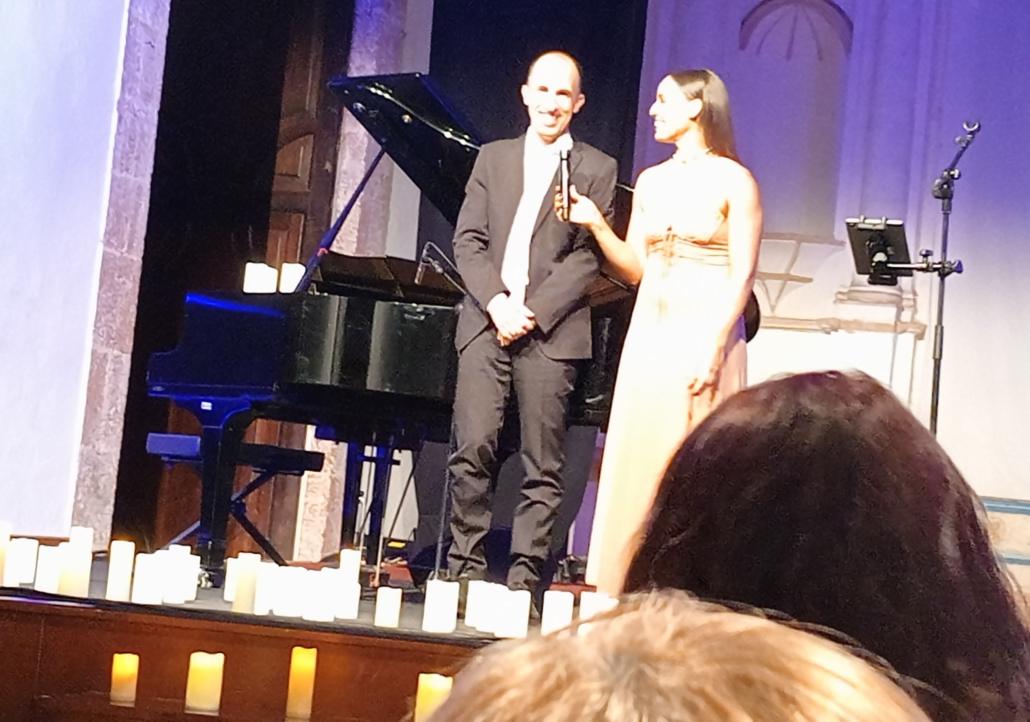
So, why am I writing about Duo Bravo?
Because the songs they performed in this cavernous (but atmosphere) hall were sent out as Notes On The Wind or, put it another way, as invisible angels.
The songs Araceli & Fran delivered as Notes On The Wind were
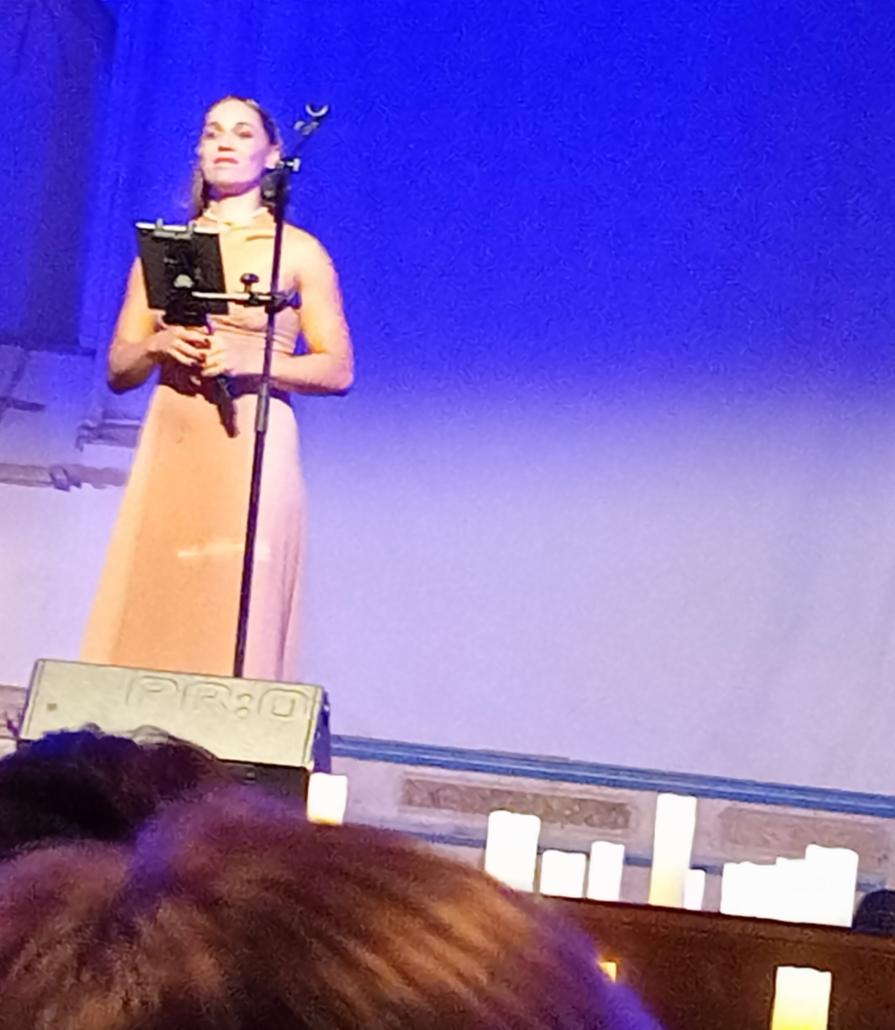
1. Aires de Lima de Valsequillo
2. Lucia
3. Por fin
4. Arrancame
5. Sabor a mi
6. No te pude retener
7. El Viaje
8. Contigo Aprendí
9. Lo que en ti veo
10. Cuando yo quería ser grande
11. Gracias a la vida
12. Contigo en la Distancia
13. A un milímetro de ti
14. La mala costumbre
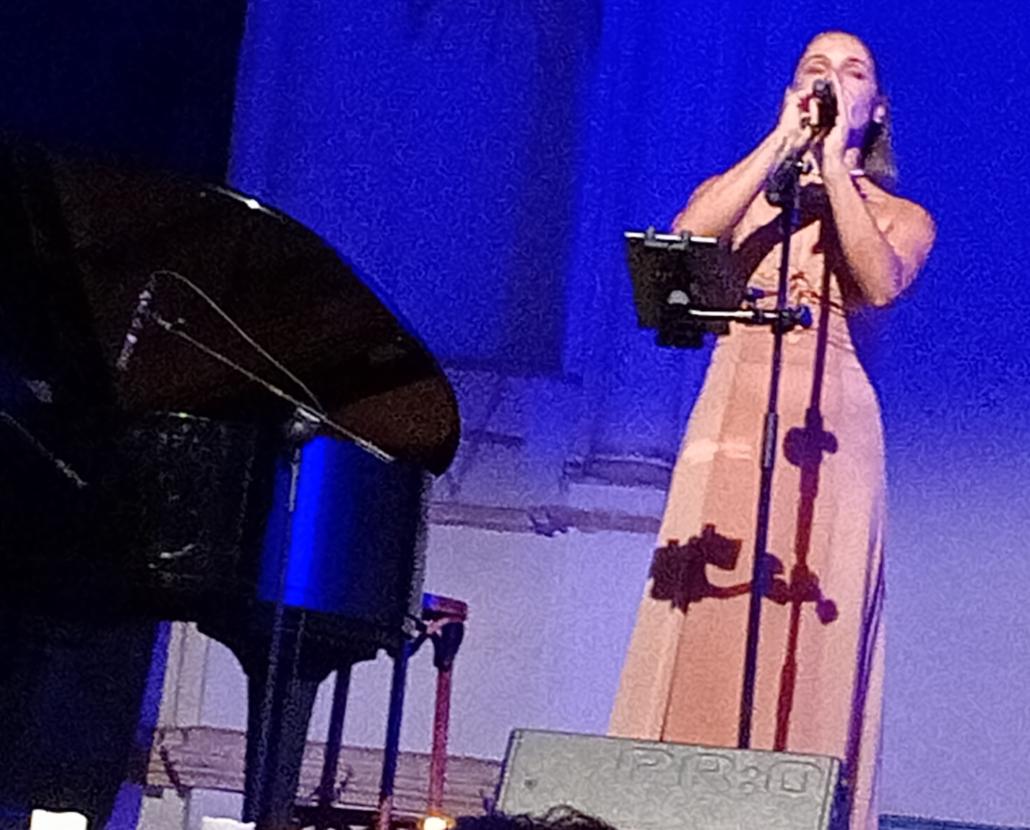
The songs were sung with empathy and sympathy and, on some, Ancilia created sustained emotion on the last line, as if blowing a kiss to that invisible angel as it drifted away, taking the song to who knows where.
They might have been songs of an operatic flavour but Ancilia´s pitch perfect renditions sounded to me like the best of popular ballads that are the staple diet of radio station such BBC Radio 2 in the UK, a broadcaster with the power to send musical artists to the top of the charts.
Ancilia treated every song with respect and affection and I recognise that as a sign of a true professional. She gave a short introduction of every song (in Spanish, so I may have missed something of importance in her word)
and sang them in perfect diction. She also sang them in perfect timing with her musical partner xxx, and even though it might have seemed each partner was lost in their own world, the concert would not have been so great without the duo being always fully aware of what they were seeking to deliver as a duo rather than as individual musicians.
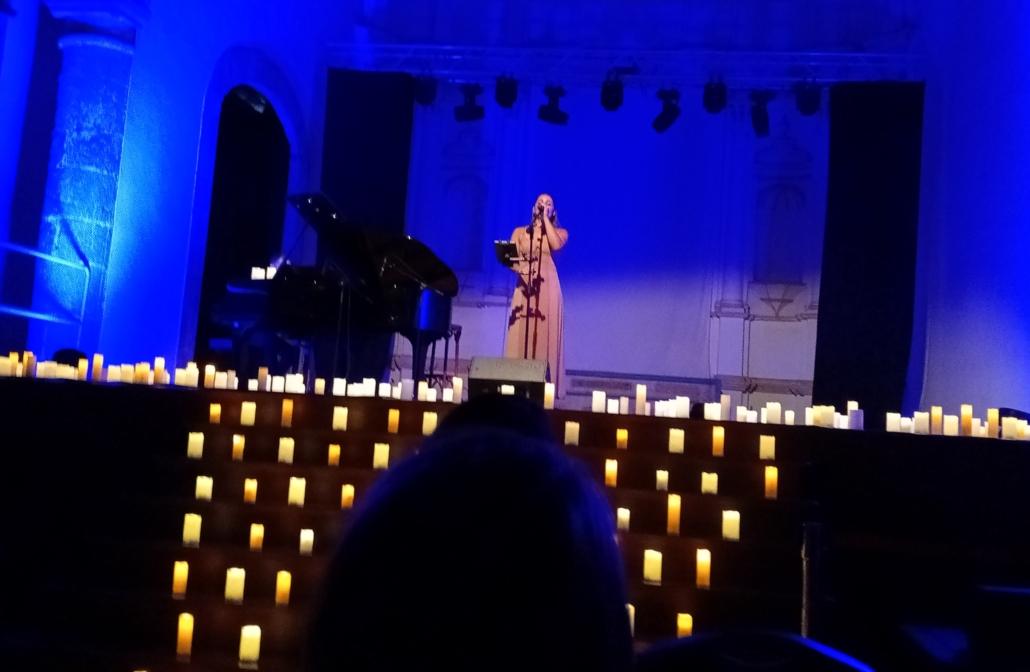
The Convento De Santo Domingo was less than full, but what seemed to be five hundred candles had been lit to excellent effect. They were strewn around to light the stage, they climbed up and down the stairs to the stage, making it feel like a bridge between artists and audience, and there were candles placed up and down the aisle at the side of every row of seats.
At the end of the concert everybody in the audience seemed to have enjoyed every second of it, and gave a long (and loud) ovation to xxx & xxx.
The two musicians, xxx & xxxtogether promenaded the audience area, seemingly glad-handing and speaking to every single member. Because they had some family members in the audience, they even introduced those relatives to the new fans they had recruited tonight.
Sensitive and accurate piano playing that carried the players characters, and songs that sounded to matter to both singer and player and a shared desire to make new found fans feel part of the family, and don´t forget, such a wonderful selections of songs delivered y a voice to die for,…….and all that is why I feel sure that very soon the name of Duo Bravo will be on everyone´s lips.

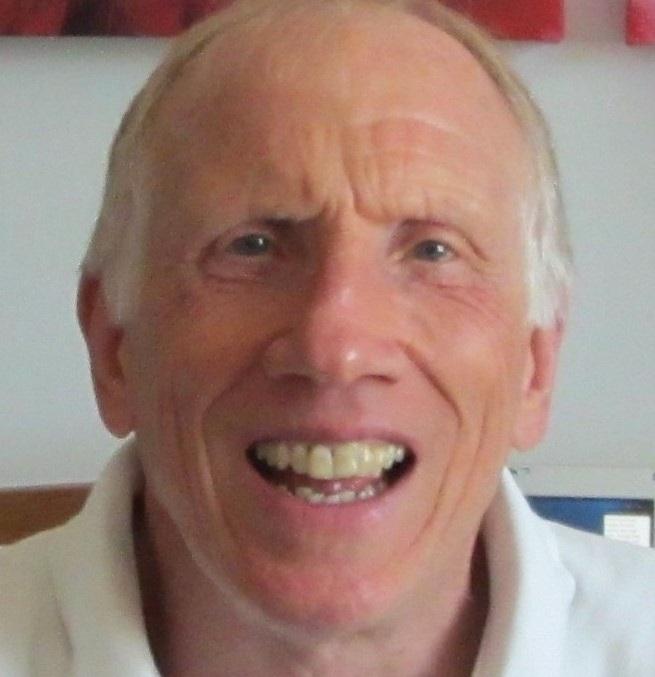
MALCOLM HOLCOMBE
Eccentric Songwriting Genius
re-visited by our Americana Music correspondent
Peter Pearson
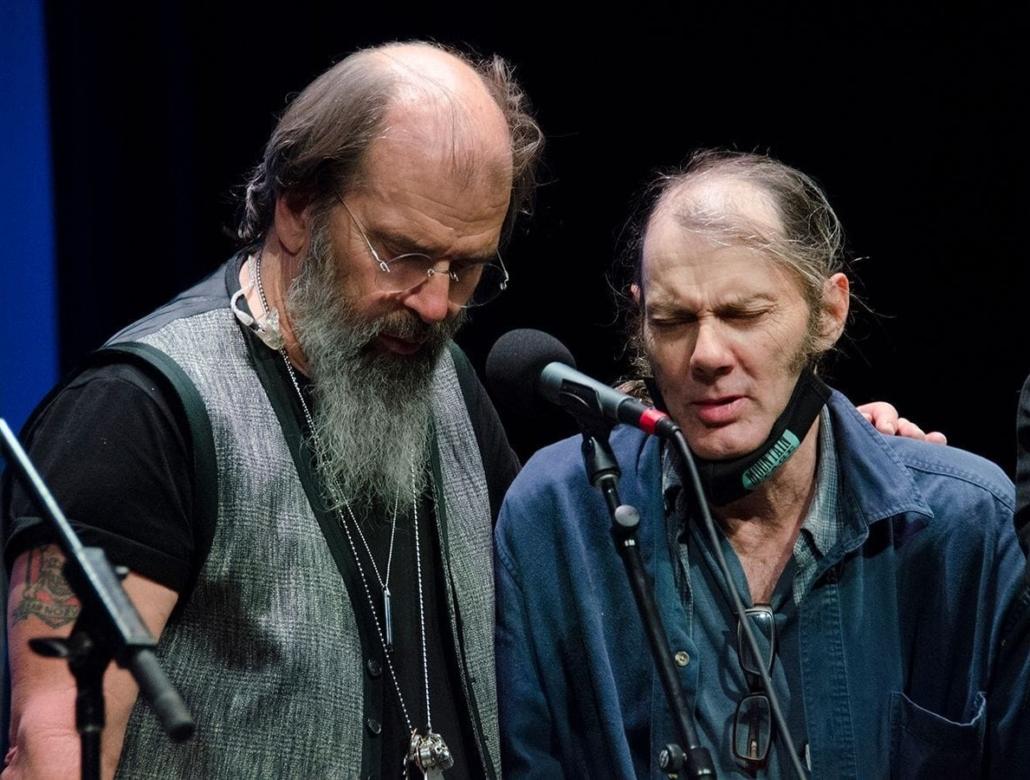
Malcolm Holcombe may be one of the best American songwriters you have never heard or heard of. If so, you will not be in the minority. When Steve Earle (shown left with Holcombe) sang about the last of the hard core troubadors he probably had Malcolm Holcombe in mind.
Steve was a great admirer and champion of Holcombe and referred to him as the best songwriter I have ever thrown out of my studio.
A few days after Malcolm’s death at age 68 in 2024 following a two year battle with cancer, the Country Music Hall of Fame released a statement on his life. It read in part- Enigmatic, gifted singer-songwriter Malcolm Holcombe died of respiratory failure on March 9. He had been ill with cancer and packed a lot of hard living and singular song-writing into his sixty-eight years. Holcombe was held in high esteem by some of the most admired songwriters in American music, including Lucinda Williams, Steve Earle, David Olney, Mary Gauthier, Tony Arata, Darrell Scott, and others.
That last sentence sums up Malcolm’s career.He had a faithful coterie of fans and a back catalogue most artists would give their right hand for and whilst not a household name he was one of the most respected writers amongst the song-writing elite.
He was born in 1955 in Weaverville North Carolina, an area steeped in folk and bluegrass music. His first introduction to a guitar came as a boy from a next door neighbour who had an electric guitar and a chord book. Once I got past the first page, the rest of it was out of my league, he said. Those orchestral chords, that’s too much information. I was just trying to go ahead and keep a grain of sanity. Things moving all the time, man. Like sands through the hourglass.
In High School he played in a folk group. By the time he was in his teens he was already performing in the clubs and bars of the nearby and somewhat larger Asheville, with local bands such as The Hilltoppers and Redwing. He was drawn further into music when his parents died young and, as part of a trio, he released an album on a local label in 1985, titled Trademark. It went nowhere and his personal life descended into chaos fuelled by the demon drink. There was a woman and a child whom Malcolm loved deeply. The child suffered from cerebral palsy and would die young. Later, after Malcolm had moved to Nashville and was in the depths of despair, songwriter David Olney drove him to a motel where Malcolm was staying. Olney recalls that The motel looked like a place for people heading towards oblivion I went into the room, and he had a picture of his son, who had died. It was the saddest thing you could imagine, but it was totally real. There was nothing you could do, except have a good word for him.
Malcolm moved to Nashville in 1990.There he found work at Douglas Corner Café, a songwriters room with an audience much more boisterous than the nearby better known Bluebird Cafe. The gig was not as a musician but as a cook and bottle washer. However, knowing he was a musician, sometimes during a lull in proceedings he was called up to play. Harmonica virtuoso Jelly Roll Johnson recalls that When I first met him, he was this meek, polite guy, working there in the kitchen. I didn’t know he was a songwriter. I was playing at Douglas with Tony Arata and Scott Miller and they called him up to play. He took off his apron and walked up to play. When he played he got up there and I’d never heard anything like it. It was just incredible. He did one or two, then put his apron back on and went back in the kitchen to start working again.
Tony Arata famous for penning The Dance-a huge hit for Garth Brooks– became an early and ardent champion of Malcolm. In a town built on formulaic songs, he said, Holcombe was offering up works that were wholly different. They carried an Appalachian soul, with the sadness and humanity of something Sara Carter might have sung, but with melodic sophistication and an entirely unusual poetic sense. In person, he could wail like a madman. Really, he could wail as a madman. But he retained an essential control over his surroundings.
He was able to secure a record deal with Geffen Records in Nashville and cut an album which, for some inexplicable reason, Geffen decided not to release. Stories abound of his time in Nashville. Peter Cooper in a brilliant profile of Holcombe published in the music magazine No Depression writes: Sometimes, he’d show up in concert and put on shows so stunning that folks still talk about them. Sometimes, he’d show up and put on shows so stunningly incoherent that folks still talk about them. One night, he performed with David Olney and sang with his back to the audience. When I moved here, I thought I was a rebel, Olney told the crowd. Now, I meet Malcolm and I feel like Vic Damone.
One night, he wandered into The Station Inn (a famous Nashville music venue) walked up to various patrons and menacingly repeated, Cat Power! No one knew what he was talking about. Turns out he had just been booked for a small tour, opening for the singer-songwriter who goes by the stage name Cat Power.
The devastation of the unreleased album coupled with the death of his son drove him further into alcohol and drug abuse and the unwinding of his career in public. Meanwhile, copies of the unreleased album were circulating around Nashville and Holcombe began earning a reputation as something of a mad genius. Eventually, in 1999 the album was released on a different label under the title A Hundred Lies. It earned a four star review in Rolling Stone.
Whilst in Nashville Holcombe met dobro player and multi instrumentalist Jared Tyler with whom he would collaborate for the rest of his career (see left). They met in the kitchen of the Bluebird Cafe. Tyler was employed in the kitchen (many a famous songwriter started their musical career in that kitchen washing dishes, whilst auditioning to get a slot on writers night). He had heard the unreleased album and was mightily impressed. Holcombe was playing the Bluebird and during the interval wandered into the kitchen to hide.
This wiry guy came into the kitchen, Tyler recalled. I thought he was off the streets or something. Somebody said, This is Malcolm Holcombe. I was shocked, and I said, What are you doing back here? And Malcolm said, What are you doing back here?
Holcombe gigged around Nashville backed by Jared Tyler and Tony Arata but eventually gave up and returned to North Carolina. He found a girlfriend got married and got clean.
I ended up meeting a lady and falling in love, he said. Drilled a hole out here in Swannanoa. We decided to aah, to pool our resources. Even put out a couple of indie albums. And, damn straight, it was different this time. Matter of figuring out some roadblocks and potholes now and then. My wife’s been a big inspiration, you know? And you’re as good as the company you keep. Ain’t no man an island.
He remained happily married with his wife acting as his manager for the rest of his life.
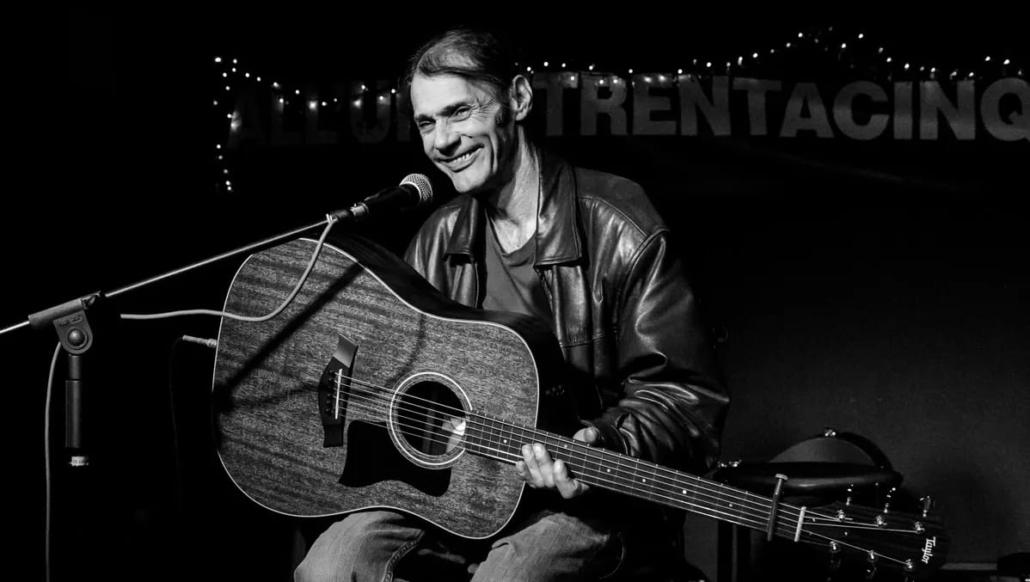
In the years following his move back home he released more than a dozen studio or live albums, a substantial and remarkably consistent body of work that supported steady touring in the US and Europe. In 2015, he released the retrospective RCA Sessions, a fresh performance on CD and DVD of key songs across 20 years of work, recorded live at RCA Studio A in Nashville. It’s an excellent starting point for anyone wishing to explore his catalogue.
During his career Malcolm (right) was a frequent visitor to the UK and I caught him in performance at Bury Met. That venue must have made quite an impression on him as it inspired him to write the song Bury England featured on his 2017 album Pretty Little Troubles. He shuffled on stage cutting a disheveled figure. Taking a seat on a chair he proceeded to rock back and forth pounding his acoustic guitar with some miraculous picking, whilst barking out the lyrics to his perfectly crafted and melodious songs. Although I was spellbound, I nevertheless wrote him off as a bit too much Tom Waits style with his vocals for me and it was only recently, after I had read the biographical book of Justin Townes Earle (featured by Norman Warwick on these pages a few weeks ago) that I explored his catalogue and realised the folly of my built in prejudice.
Justin was a big fan and much influenced by Malcolm. He was barely a teenager, and already something of a wanderer, when he first heard Holcombe.
Speaking of that experience Earle said: I had run away from home and was living in Johnson City, Tennessee, in a small commune of songwriters, Malcolm was spoken of around there like this ghost that haunted the streets of Johnson City. That was in his ´gone time´. But the first time I saw him was at the Down Home (a famous music room) in Johnson City. Scottie Melton introduced me to him as Steve Earle’s son, and Malcolm looked at me and said, Well, who gives a — and then he walked away. I thought, This is going to be horrible, and I was mad at Scottie for dragging me out. But then he got up, and the first song he played was Dressed In White. It was shocking to me. Back then, he had this ability to be completely out of his mind and put on amazing, back-breaking shows.
In an interview with Acoustic Guitar magazine when asked about his guitar playing style Justin responds by saying it was influenced by watching Holcombe play.
“He had this thing where he kept the rhythm with his thumb on the low strings and picked a part with his index finger on the high strings, while holding the rest of his fingers like a claw, like you would to play clawhammer. And then he’d strike the strings with that claw, really making a lot of noise. So I went home that day and tried to play like that, my cuticles bleeding, my hands just falling apart. By now, my right hand looks like hell, my cuticles are gone, and my thumb is a different shape than it used to be. But it was such a rhythmic style, I just had to play it, even if I’m nowhere near as good as Malcolm.”
Holcombe issued 18 albums during his career. They are all excellently produced. Ray Kennedy, of Steve Earle fame, produced several. Darrell Scott was a great admirer and produced his 2017 album of Pretty Little Troubles. Fellow artists have lined up to provide harmony vocals on his albums; most notably Emmylou Harris, Iris Dement, Greg Brownand Maura O’Connell.
Peter Cooper wrote that Malcolm Holcombe doesn’t give linear answers to direct questions. He doesn’t give direct answers to non-linear questions, either. He doesn’t like to give answers at all. Or really to ask questions, save for the occasional Don’t it? As in, It makes a noise, don’t it?
Holcombe’s lyrics are pure genius but he leaves it to you understand the meaning of them. On the phone to Peter Cooper one day he said: Everything has something to do with the writing. Rain or shine, or a butter knife in the ribs, it makes a noise, don’t it?
We are therefore left to interpret lyrics such as those in his masterpiece, Who Carried You, in which he manages to put Agatha Christie centre stage-
From a cajun diner to Carolina
Sick in the mornin’ to see the town doctor
Life and Agatha Christie in a Trailway
Back from New Orleans
Who dunnit, who carried you
There are similar problems with songs such as Mister In Morgantown or Butcher In Town. In researching this piece the nearest I have come to understanding his approach to lyric writing is in a long phone interview he gave in 2003 to a journalist named Frank Goodman of music magazine Pure Music.com.
Asked about his approach to lyric writing, Holcombe responded It’s hard for me to write about something I haven’t experienced. Sing about what you believe in. Write about what you believe in. I try to write what I believe in and try to deliver it across as something that says, man, this guy sort of knows what he’s talking about, or at least he acts like he knows what he’s talking about.
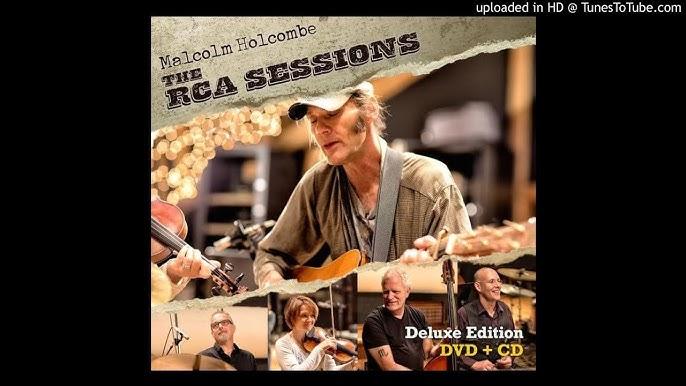
His albums, including Malcolm Holcombe: The RCA Sessions, (shown above) are all on Spotify.
Give them a try.
© Peter Pearson

POETS & ROCHDALE RHYME
by Norman Warwick
Katie Haigh (left), now established as a frequently published poet in not only her home town of Rochdale but also much farther afield, first started scribbling down her thoughts at the age of 12. She found herself fascinated by Wilfred Owen´s ´war poetry´, particularly “Dulce Et Decorum Est”.
She came to love writing as an escape, an escape from dyslexia, an escape from her eating disorder, an escape from the normal teenage angst.
Her first publication came at the age of 16 in The International Library of Poetry Anthology, The Star Laden Sky, for which she also received the Editors Choice Award.
Katie has also had poems published in many editions of the Rochdaler-based Cartwheel Arts publications including My Magic Pen, Scribble and The Book Box. Her poems can also be found in North West Focus, The Co-op Diamonds Coffee Table Book and she is still regularly included in the Touchstones Creative Writing Group monthly anthology available on Amazon on Kindle only.
It was at a meeting of Touchstones Creative Writing Group that I first met the adult Katie, by then a wife and mother, in the early nineteen nineties when I was serving as a writing facilitator. In the time before I retired to Lanzarote in 2015 I I saw Katie move on from being an aspirant poet, to being an accomplished writer of both poetry and story. Public awareness of her talent grew rapidly because she was also becoming quite a compelling performer. She could deliver her comedic work with just a hint of anarchy and protest and her serious work was always written with consideration and compassion.
I recall Katie being an enthusiastic volunteer performer at all sorts charity fund-raising arts events, willing to adapt her love of the arts to all sorts of tasks, such as reading her poetry in recording studios and from what I hear and see on line it seems Katie Haigh has become a ubiquitous and always well-received participant on the Rochdale Arts scene.
I recently read that she has had a book of her poetry published by Chipmunka Publishing. Her book, Prejudice and Pride, is about Disability and Mental Illness and is available from the Chipmunka website as well as Amazon in both hardback and kindle.
She is frequently present on social media, attend various local writing groups including Darnhill Scribblers, Langley Writers and Touchstones. She also performs at various open mics including the Just Poets, Another Folk And Poetry Night at The Baum, in Rochdale and The Ring O Bells open mic nights in Middleton. Katie has, of course, performed at several festivals and events; once with Rochdale Youth Orchestra as part of a ´Frozen Music´ performance and once with a jazz band as part of the Maskew Event, celebrating a late couple we have also written about here in Sidetracks & Detours. Frank and Annie met in Rochdale Central Library and went on to enjoy decades of a secure and happy marriage, and left a very significant bequest to Rochdale Library Services.
I know that Katie also performed a few showcases of her work at the official opening event at Mill Pond Recording Studios.
When I knew Katie Haigh she was always trying to improve her writing so she could connect better with her readers. She need not have worried, as all those who know her now and read her work appreciate its obvious evocation of emotion and empathy.
SEAMUS KELLY and ONE POET´S VISION
by Norman Warwick

Seamus Kelly, (right) is a Rochdale based poet originally from the midlands. In 2015he took the plunge, giving up his full time job in sustainable travel,l to become a professional poet and writer photographer and visual artist and has adopted “onepoetsvision” as a name to encompass all of those artforms.
Seamus can be found performing and running writing and poetry workshops around the North West of England and occasionally further afield and offers a range or ready made or bespoke sessions details of which can be found on his site, along with sample of his work at onepoetsvision on line.
Having led Weaving Words, Rochdale’s creative writing group, for 10 years, before turning freelance, he has performed his work across Greater Manchester and beyond including a high profile performance at the 2015 Eroica Britannia Festival in Derbyshire (a festival of all things vintage and cycling) and having been invited back brought new material to appreciative audiences at the 2016 and 2017 festivals. Seamus has facilitated and delivered workshops on a wide range of topics including how to find inspiration, the technicalities of writing and a series of high-speed workshops at the Rochdale Literature and Ideas Festival. His workshop clients include schools, libraries, creative writing groups, reading groups and community organisations.
Seamus was the originator and one of the commissioned poets for Connect2 Poetry, launched in 2013 that grew from Seamus’ idea for a poetry trail around Rochdale’s 40km Connect2 network of walking and cycling routes. With support from Rochdale Library Service and Cartwheel Arts a total of 35 poems were commissioned to be featured on plaques on the routes, an interactive website and phone app.
Seamus is also the resident poet and writer with Vibe in Rochdale who’s “Stories We Could Tell” project was the runner up in the Rochdale Diversity Awards 2016. Vibe works with young people including asylum seekers, young people in care and young people with mental health issues, using creativity to empower them whilst developing skills and confidence. In 2021 Seamus is leading the development of a video broadcast called “Vibecast” where young people will record reviews, interviews and short programmes about their interests. Vibecast will initially be recorded and shared through the Vibe website and as young people grow in confidence and technical abilities we will produce some live-streamed content.
As an environmentalist, with a degree in Ecology to go alongside an HND in Graphic Design and a Post Graduate Certificate in Education, 20 years in IT support, a creative career, 14 years of teaching (including working in an SEN setting) and six years promoting cycling Seamus is a rare combination of scientist and creative; by his own admission prone perhaps to thinking (and talking) too much. He has worked in an SEN school for 6 years teaching young people who have severe social and behavioural issues, including young people in care and those on the autistic scale.
He produced his first short collection of poetry “Thinking Too Much” in 2015 with poems inviting the reader to think about life, family, nature, politics, justice, peace and society – the book can be purchased using his on line links.
Prominent Yorkshire poet James Nash said of Thinking Too Much “Seamus Kelly’s poetry is the poetry of journeys and places. Sometimes that place is the past and sometimes it is where nature and people intersect. But always it is written with a kind of passionate precision, and with great humanity”
Katie and Seamus know each other well, having worked together in creative writing workships led by well-known poets such as James Nash, Mike Garry and Tony Walsh. Both Seamus and Katie have now each delivered many workshops of their own design and are now integral copntributoirs to a deservedly well-regarded creative writing and spoken word network that stretches across the Boroughs network that extends across Rochdale Borough and out into the five townships of Heywood, Middleton, Littleborough, Milnrow and Wardle. Katie Haigh and Seamus Kelly miight not be of quite same age but are they are both representative of a bookful of poets who made us feel proud of our Borough in the years when the town was having a topugh time, financially politically and even ethically. Nevertherless, even then, there writing groups in every constituency and the deliverers and receivers of all these workshops somehow, whether thriougfh a second sense or serendipity, produced streams of text that offered a balanced view of our town. .
When i think of that generation I think of all those who were regular writers and readers at the Sunday night sessions like those Bard From The Baum, many of who also read at the monthly sessions at The Ring O Bells in Middleton. I remember poets like Val Chapman and Pam Ashton, both very capable poets in their different ways, who improvised a fanatastic performance of two poems speaking together, creatng characters within those poems and telling a story. I remember Eileen Earnshaw wrting poetry that was genuinely funny and at other times writing poetry that could chill the heart. There was Robin Parker wih his poems that mentioned Amy Winehouse, that echoed in someway the work of xxxx and the adventures of a fine little called Albert. And I still read Robin´s anthology of The Edenfield Scrolls and Michael Higgins´regard for history and dialect and legend. There was Ray Stearn who could make you laugh out loud in a silent library, and I can never forget Tony Webb and his mate who ignored all boundaries. And I will for the rest of my life be in admiration of quiet, ladylike woman called Catherine Coward who produced poetry that, anything but timid, would tear into the social issues of the time.
I understand that many of those poets are still, writing, still reading,….still making a difference. I know the gnerosity of that generation and I know they will only be pleased to see the changes taking place such as the greater receptivity to the arts and a recognition of ho the arts can make a difference by improving communications and by opening new pathways to non traditional careers in a way that might well prove beneficial to local 7 national economy.
Now, a quarter of a century later, Rochdale is changing. As part of it´s year as Greater Manchester´s Town Of Culture 2026, a brand-new poetry anthology, Weaving Words, was launched a few weeks ago at the Rochdale Library at Number One Riverside. It was the culminmation of a year-long project, led by Rochdale´s first poet laureate, Sammy Weaver, who has been busy delivering workshops for communities and schools, inspiring many people of all ages to submit their poetry. Sammy also mentored two Young Poets In Residence, Alende Amsi and Sasha Mustafa and all three have written and delivererd work influenced by the Borough and its people.
Back in March Rochdale held its final event of its year as Greater Manchester Town of Culture – the Rochdale Culture Awards, celebrating the borough’s cultural changemakers.
Seamus Kelly must have been delighted to have been nominated, and then to receive a runner up award in the Creative Of The Year category at The Rochdale Culture Awards 2026
The award recognised the work Seamus has done to encourage and support local communities in creative writing including running workshops, taking part in events and performances and creating commissioned pieces.
The winner in his category was Hayley Garner (AYLO) is one half of the street art duo ‘Nomad Clan’ and has created some amazing large scale murals in Rochdale as the Common Walls Festival. The other runner-up was Martina Coggins the founder of Trading Steps Theatre and Dance Company. Martina is also the woman behind the choreography for Sign Along With Us who mixed dance and sign language to great effect on Britain’s Got Talent, a project Katie Haigh also supported
It was remarkable to recognise the names of creative people I remember from when I lived in Rochdale (until 2015). The town had its problems then , but there was always such a vista of arts events each year that celebrated the town´s positive multi-cultural attitude. We had an Art´s Officer then. The late Beate Mielemier cajoled and coralled Rochdale´s artists through several formative years. Maybe one day, there might be a posthumous blue plaque acknowledging the fiesty but always friendly woman who identified Rochdale´s talented creatives of the era. During a long career she left the first footsteps that others have followed to arrive at this wonderful inaugural celebration of Rochdale´s success as becoming the Greater Manchester Town Of Culture in 2025
To all those who received awards and, of course to all of those who were nominated for their work by The Rochdale Culture Awards, congratulations and., many thanks!
Rochdale in Rhyme and Weaving Words
POETS & ROCHDALE RHYME
by Steve Cooke
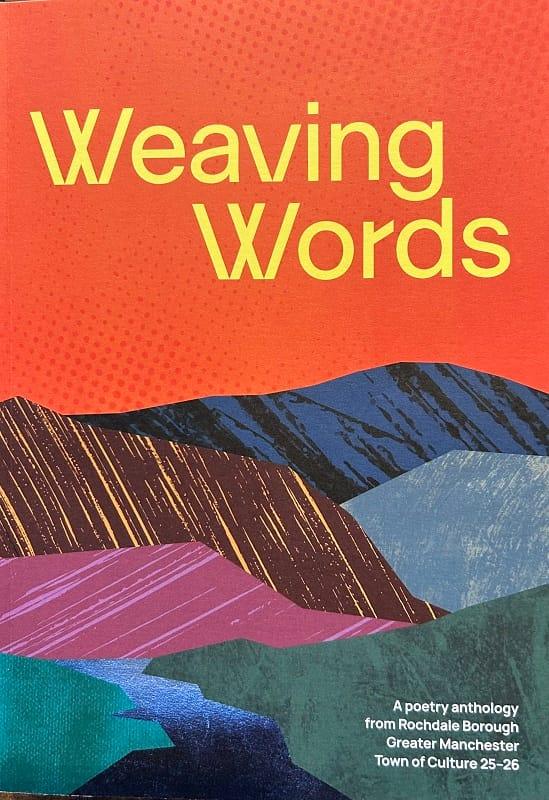
As part of Rochdale´s year as Greater Manchester´s Town Of Culture 2026, a brand-new poetry anthology, Weaving Words, was launched at the Rochdale Library at Number One Riverside. It was the culminmation of a year-lomng project, led by Rochdale´s first poet laureate, Sammy Weaver who has been busy delivering workshops for communities and schools, inspriing many people of all ages to submit their poetry. Sammy also mentored two Young Poets In Residence, Alende Amsi and Sasha Mustafa and all three have writtenand delivered work influenced by the Borough and its people.
A Saturday afternoon in Rochdale Central Library on a sunny spring day proved to be a joyous celebration of inspirational poetry from professional poets hand in hand with budding local wordsmiths.Rochdale in Rhyme was not only one of the highlights of Rochdale’s year as GM Town of Culture but a fitting finale to the wonderful Sammy Weaver’s year as Rochdale’s Poet Laureate.
It had all started with the serendipitous coincidence of Councillor Janet Emsley becoming Mayor of the Borough of Rochdale with Rochdale receiving the award of Greater Manchester Town of Culture. Janet (pictured above), has been throughout her time as an elected Councillor a very energetic and highly effective champion of the creative arts community and therefore the perfect person to be a catalyst for what was to be become a massively impactful year.
Inspired by a phone call from local artist Liz White Janet exercised her Mayoral prerogative to appoint a Poet Laureate.
Sammy Weaver was appointed alongside two young poets in residence Alende Amisi and Sasha Mostafa, appointments that proved to be essential to a wonderful year culminating in Rochdale in Rhyme and the launch of the superb poetry anthology Weaving Words.
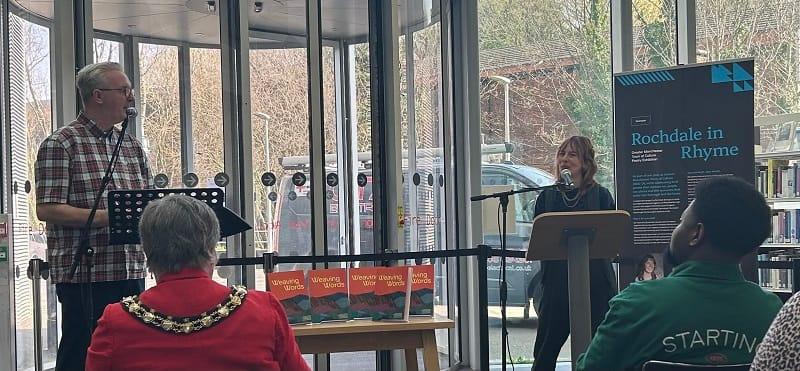
Rochdale in Rhyme was hosted by Tony Walsh (pictured right with Sammy Weaver), a poet who is a regular on television and radio, much in demand for a huge range of high-profile occasions, and renowned internationally for the now iconic performance of his poem “This Is The Place” in the wake of the Manchester Arena bombing in 2017. His passion for poetry and genuine warmth gave the occasion the perfect vibe to create an atmosphere of inclusivity and collective joy as he put a metaphorical arm around the performers who ranged in age from 10 to 81, some of whom had written their first ever poems and were making inaugural live performances.The poems they performed are all included in the anthology Weaving Words alongside a superb complementary selection from Sammy, Alende and Amisi.
As Sammy says, “This is poetry by the people for the people that captures the joys and griefs of being human.”
The collection reflects the outcomes of extensive workshops and community sessions led by Sammy, whose skills as a poet and teacher were enhanced by her beautiful personality enabling and inspiring a diverse group of people to find their voice through poetry. Sammy led 10 poetry workshops in community settings with adults, linked up with local writing groups, HMP Buckley Hall, U3A, Living Well sessions, and refugee and asylum-seeker groups, plus 20 workshops with primary school children in local libraries.
Rochdale in Rhyme opened with Tony, Sammy, Alende and Amisi treating us to some of their skilfully crafted poems, taking us on a roller coaster journey through the whole human experience. One of my personal highlights among many being Tony’s Poppadoms and Custard, a fitting powerful and timely celebration of diversity. Eileen Earnshaw read Maggie Kelly’s Lancashire Voices; Kirsty Olczak, What the walls know; 10 year old Rania Faisal, A potion to end wars; Beth Kilgallon, In love with myself; Farhan Zahoor, The Book and Councillor Janet Emsley Mayor Rochdale, AOB: Mayoral Matters.
These poems plus many others collected in Weaving Words are an uplifting and engaging reflection of what Sammy calls, “our people, our places, and the moments that make this borough feel like home”. Copies are available to buy for £10 each at local libraries across the borough.
I strongly advise you to visit your local library and buy a copy, you will not be disappointed!
There are also accompanying Library Poetry Exhibitions across the borough.
Huge congratulations and thanks to Sammy Weaver who as our first ever Poet Laureate has more than done justice to our borough of 235,561 people speaking over 80 languages and ranging from the Pennine villages to the post-industrial estates of Darnhill.
If you now feel ready to get creative yourself visit: www.rochdalecreates.co.uk to find out more.
Meanwhile, look out for Joanna Wood,…..a local poet who speaks, below, about her work.
Poetry Spotlight on Joanne Wood
I found my ‘written voice’ when I lost my spoken voice. Nine years ago, I had a seizure at work, which left me unable to speak. Rushed to hospital, a massive brain tumour was found. I had emergency brain surgery.
Now with a brain injury, I began to write my feelings down, as speech was a struggle.
Poetry, prose and stories followed. I am part of the Riverside writing group, in Rochdale Library. I’ve been able to be part of some fabulous projects with them, including a poetry tour, on our Lancashire Heritage Day at Rochdale Town Hall, where I am a volunteer.
Taking inspiration from a Lemn Sissay Poem ‘Invisible Kisses’ I have written a poem that is a reflection on my very slow recovery from brain surgery, how far I’ve come, the struggles and hope for the future.
There’s much more to my story, I never thought I’d be able to contribute to anything again with my prognosis, I have found my written voice, it’s brought a confidence to my life and with that my speech has returned.
I now have the privilege to be a tour guide at Rochdale Town Hall and use my written work in that role. I look to possibilities now, not limitations.
Although we are based here in The Canary Islands, Sidetracks & Detours are always delighted to include reviews of classical concerts promoted by Rochdale Music Society, and share them with our readers other pockets of the world. Today´s review came as something of a surprise, as you will see, but it was great to see normal service being continued.

Daniel Shao and Mark Rogers Concert
at. Michael’s Church April 19th 2026
by Shirley MItchell
Graham Marshall, a regular reviewer of the splendid series of concerts delivered by The Rochdale Music Society wasn’t able to a recent performance Rochdale Music Society concert, unfortunately, so he missed what was obviously a very rewarding occasion. I hope my review makes it clear how much I enjoyed the concert asnd and what a pleasure it was to to review not only for readers of the all across the arts pages of The Rochdale Observer.
The positive reviews available for these musicians cannot describe the wonder of their musicality. The Rochdale Music Society’s audience last Sunday afternoon were treated to a musical happening so rare, I can’t do them justice in this review.

From the opening of Debussy’s Syrink (1913) for solo flute, where the breathless magical melody finds its way out of the darkness through to a magical journey describing the Greek legend of Pan and the nymph where sadness, anxiety, and restlessness, combine with sensuality, hope and delicacy. This amazing beginning to the concert with the trills, grace notes, sudden changes in tempo, and the unbelievably fast scale passages held us in suspense. Daniel Shao (left) caught the feeling of spontaneity combined with strict tempo with enormous skill. The last dying note embodied the frozen stillness of a farewell.
By contrast, the Concertino; by Chaminade (1902) is a highly romantic, technical and melodic showpiece with a slow opening and a fast paced virtuosic section. It is a grand “show off” piece. Daniel and Mark managed its difficulties with little difficulty, and with great versatility.
The Chopin Nocturne in C sharp minor for flute and piano, an unusual treatment but no less beautiful, was arranged by Manfred Stahnke (sometimes played by violin and accompanied by orchestra or piano). Daniel caught the melancholic beauty of the melody and did great justice to the piece

This was followed by a number of piano pieces from the Scenes from Childhood by Schumann. Mark Rogers (right) showed his great sense of artistry and delicate nuances in these pieces. I have never heard them played more beautifully. Mark Rogers showed us the greatness of these miniatures, bringing out exquisite shades of expression and lifting these pieces to their rightful greatness.
The end of the first half of the programme gave us the treat of hearing the well-known tunes from La Traviata by Verdi and arranged by Taballione. This was a joyful playing of these tunes with a warm Italian attitude.
The second half began with the Prelude à l’Après-midi d’un Faune by Debussy. Mark played the orchestral part with great skill allowing the flute to rise above the accompaniment. The opening flute solo described by players as extremely challenging, requiring immense musicality and control, other than just technical skill. Piano accompaniment as opposed to orchestral offers a veiled and distant colour that is uniquely intimate. Daniel and Mark master the very slow tempo and the breath control of the piece especially the opening phrase. Daniel managed to emulate the muted dreamy atmosphere of the original orchestral score. This is a masterpiece like no other.
The three movement Sonata by Poulenc (1956-57), regarded as a cornerstone of 20th century flute repertoire, a quintessential example of Poulenc’s mature style, is deeply expressive and melodic. The piano part is an active virtuosic partner to the flute and often provides the rhythmic energy. Here is a master class in mood swings. It demands high level technique and a refined musicality which, of course we had in Daniel and Mark. The Dance of the Blessed Spirits, Gluck’s opera Orfeo ed Euridice, depicts the peaceful atmosphere of Elysian Fields, a plaintive melody, well-loved by all. The programme ended with the Grand Polonaise by Boshm.
Boehm is the composer who developed the flute and clarinet into the instruments they are today. This is a virtuoso showcase for the flute; composed in response to the 19th century “Polonaise Craze” and these musicians were certainly equal to it. These are definitely musicians we will want to hear again and soon.


all across the arts
SOUNDS FROM THE OTHER CITY (sftoc 2026))
Review by Steve Cooke with Jade Duckworth

Sounds From the Other City (SFTOC) 2026 refreshingly delivered a vibrant, genre‑spanning, city‑wide celebration of new music, art, and Salford’s creative identity — an urban adventure into the creative arts.
SFTOC has long been known as “the Christmas Day of Greater Manchester’s independent music scene”, and this edition underlines why. The festival transformed Chapel Street and The Crescent into a 17‑stage musical playground, using everything from pubs and churches to galleries, mills, and outdoor squares.
The line-up was focussed on the future, no greatest hits nostalgia here, with more than 100 artists representing electronic, punk, R&B, experimental, indie, and lots more.
The festival’s commitment to boundary pushing artists was exemplified by such as Moonchild Sanelly, Lynks, Blue Bendy, Pollyfromthedirt, Jasmine.4.t, and Sorvina.
The innovative and highly successful Immersive venue curation saw Maxwell Hall hosting major names; St Philip’s Church becoming a cathedral of post‑punk; Islington Mill running day‑to‑night programming from Band On The Wall, Reform Radio, BENT, and Swagga.
This fantastic celebration of Salford, in its centenary year, is demonstrably founded on local identity, grassroots venues, and community‑driven programming.
The real pleasure of SFTOC is wandering about and then finding yourself stumbling into a church to find baroque post‑punk, then into a tapas bar turned dance-floor, then into an art gallery hosting experimental electronics.
For this column Jade Duckworth lived the experience:
“On arriving at the press gathering once we collected our tickets, we had a wander around the Islington Mill complex. The music was lively and the atmosphere friendly and buzzing populated by a verity of colourful outfits and people.
Having found our bearings we followed a group down to The Green and listened to a variety of vibrant upbeat bands. In particular Inland Taipan at Salford Museum and Art Gallery. It was fabulous, great sounds, lots of punch but mixed in with effectively contrasting quieter interludes.
We then sat outside eating a gorgeous chicken curry with rice and momos from Tibetan Kitchen. Listening to the end of Hater and seeing the beginning of Red Rodeo Club was a great opportunity for people watching, admiring huge variety of colourful and sometimes outrageous but always brilliant outfits.

Next up was a toddle down to The Pint Pot (Downstairs) where Leucotome, an all female group, (left) were playing. They were absolutely fantastic rocking stunningly beautiful outfits and delivering atmospheric, gothic, ethereal sounds (… reminded me of the film Oh brother where art thou?).

Then Manifestation Group were next, with their chilled vibe. I thoroughly enjoyed the female vocals and guitarist/vocals; a band totally on point.
Moving further down the road we popped into Chung’s Chippy for more sustenance which was delicious.
Then we went on to Bexley Square where there were a number of busy venues with a cute little square to sit in and soak up the atmosphere.
Finally arriving back at Islington Mill, up to the fifth floor where there was plenty of dancing to be had before heading home and hitting the hay, head buzzing with a day like no other.”
On the day, for our AATA Column, Jade was accompanied by Joey Critchley who summed up SFTOC with “The bands we watched were excellent, food was good, happy vibes off everyone and loads to explore.”
SFTOC has deservedly become recognised as one of the UK’s most distinctive independent festivals — not because of headliners, but because of its spirit of exploration, its commitment to emerging talent, and its use of Salford as a living, breathing stage. For those of us who enjoy discovering artists before they break, wandering through unconventional spaces, and immersing yourself in a city’s creative pulse, SFTOC is unmatched.

all across the arts
STEP INTO THE SOUND OF RENAISSANCE
Preview by Steve Cooke
The Friends of St. Edmund’s are presenting “an unforgettable live experience in one of Rochdale’s most breath-taking historic spaces”.
This is an opportunity to be transported to the courts of Tudor England and Renaissance Europe as Edward Foster performs hauntingly beautiful music from the 16th & early 17th centuries on the Renaissance Lute – the instrument that defined an Era.
His programme will include both Music of Dowland & da Milano along with Edward’s own compositions for lute.
There also will be an exclusive display of Edward’s Artwork & Published art book. This promises to be more than a concert- it’s an immersive journey into history. art, and sound.
Tickets priced at £10 from:
3pm, doors Open 2:30pm on Saturday 23 of May at St. Edmund’s Church, Falinge Rochdale


PAMELA ASHTON’S GREAT AUNT MARY
The true story of a pioneering lady footballer
by Steve Cooke

Pamela Ashton (right) is a much loved and highly respected follower of her home town, Rochdale. She is a local heritage ambassador, a charity fundraiser for many years, a keen and very good writer and poet and a valuable champion of creativity encompassing all forms of the Arts.
If you are lucky enough to have met Pamela, you will have been immediately aware of just how passionate and proud she is about the development of her town.
I was excited to learn that she had written a new short story that she was happy to share.
Great Aunt Mary is the true story of Mary Moran a clog wearing Rochdale lass whose exploits as a footballer got full page coverage in the Rochdale Observer. The story of a John Bright mill girl who became captain of their football team.
An inspiring, moving and very informative read with plenty of local dialect, a story that celebrates a local lass who became one of the pioneers of women’s football.
GREAT AUNT MARY
CHAPTER ONE
The sharp heavy metal sound of Mary Moran’s clogs could be heard striking the cobbles of Elliot Street. Gasping for breath she excitedly ran hell for leather down the alley, through the back yard, flung open the kitchen door, and tore through the house to the parlour.
“Wot th ell lass” said her dad Jimmy as he dropped his pipe and newspaper onto the floor.“Ar ya bein follerd ?´
Mary was red in the face, out of puff, and tears of happiness streaming down her cheeks.
“No dad” she blurted out “No, av got best news in al’t world” she said, jigging about from one foot to the other.
“Better call yer mother” “Ellen cum ere, owr Mary’s in a right state”
Ellen hurriedly appeared looking worried “What’s up Mary, tell us, ar ya alright luvvie”
“Mum Dad, av dun it, av wun it, av bin picked as captain of owr football team”
“Never” Ellen and Jimmy were dumbstruck, as Mary gabbled on and on about her achievement. She had indeed been chosen as captain of the local Ladies Football Team.
CHAPTER 2
Jimmy and Ellen were soon as excited as Mary, hugging each other, and dancing a jig round and round in the parlour.
“Wait ‘til thi all cum ome fer tea. Am sure thil all bi as chuffed and proud of ya as we ar lass. Ellen, put kettle on luv, wi need a brew t steady owr nerves.”
By 6 o clock, Mary’s brothers Jimmy, Frank and Tommy, her sisters Katy, Rosie, Margaret and Marie had all come home from work.
“Sit thi all down int kitchen” Jimmy said “Av got an announcement t make about owr Mary” One by one they all gawped open mouthed, as Dad told them of Mary’s fantastic achievement.
“Well dun our sis”
“Will ya get a medal”
“Well that’s to go int t Rochdale Observer”
“Fancy, our Mary goin to bi famous”
“Mother” said Tommy “This calls fo a celebration, fetch that bottle o sherry wi wur savin for Christmas”
He called for order, and glasses chinked as he announced “I propose a toast to owr Mary”
CHAPTER THREE
The first recorded International Women’s Football Match was played in Edinburgh in 1881 Scotland 3 Rest Of The World 0. Subsequently the British Ladies Football League was formed in 1895.
These women wore buttoned up white woollen blouses and black elasticated bloomers, thick woollen knee high socks, a black bobble hat and hob nailed brown boots.
When they took to the field,the sight sometimes sparked riots amongst the crowd. Women supporters shouted “Well done, you’ve cast aside your corsets”.
Feminists carried placards reading WOMEN ARE NOT ORNAMENTAL OR USELESS.
For many years female players had to defy an openly hostile Football Association. “The game of football is quite unsuitable for females, and ought not to be encouraged. Novelty women’s matches have no place in a mans game” said a spokesman from the FA.
Rather than celebrate their success, during 1921, the FA banned all women’s games from being played at affiliated venues.
However, during the 1920s women’s football was at it’s height of popularity.
CHAPTER FOUR
All over England, particularly in the north west, cotton and engineering mills had successful ladies football teams.
John Brights Textiles Rochdale, was the team that Mary Moran captained. They played all home games on a pitch in fields behind John Brights house, 1 Ash Mizzy Road.
Netty Honeyball from Haslingdon, whose husband owned an engineering company, also had an excellent team.
Throughout the footballing fraternity, Honeyballers became the recognised nickname given to women footballers.
Dick Kerrs munitions factory in Preston had a particularly successful team formed during WW1. They recruited women from all over the north west, apparently similar to playing in todays superleague. Aunty Mary is mentioned in the roll of honour, having played for Dick Kerr’s team.
Huge crowds attended matches, a record 53,000 spectators attended one particular match between Everton and Arsenal at Goodison Park.
Today, these sporting females are forgotten pioneers of womens football –
Not in Mary Moran’s family.
CHAPTER FIVE
Mary enjoyed continued success. When local games were played, her entourage of Mum Dad, brothers sisters, friends and fellow workers from John Brights, were always stood on the touchline cheering her on.
“Look kids, our Mary’s got a full page int Observer, ood a thowt it.” Everyone craned their necks around the kitchen table to read the article
“It’s like avin a film star int family” Rosie said.
Don’t be daft sis, film stars ar allus glamorous Katy replied. ´
Frank made a snide comment “Owr Mary wer never glamorous, she looks more like a fella”
Ellen was getting cross “You lot, don’t start on abaht that agen, shiz one of us, sheel allus be loved no matter what shi looks like.”
Dedicated to the game, Mary lived breathed and ate her unexpected sporting life. The proudest family in Rochdale were overjoyed. One morning an unexpected letter was delivered. It was an invitation from the Mayor and Mayoress of Rochdale, inviting Mr and Mrs James Moran and daughter Mary, to join himself and local dignitaries to a celebratory lunch at the Town Hall.
CHAPTER SIX
“Oh my God” shrieked Ellen “That’ll mean al need a new at.” The whole family whooped and cheered, “Eee a never new that such an ‘onor could ever come to us. Goin t Town All, me an yer dad ar bein treated like royalty”.
Locally, Mary became a minor celebrity. Whenever she was at home, it became well known that she could always be relied upon to make a guest appearance.
Unlike modern day football theRE was no financial fortunes to be made. However, John Brights where she was still a mill girl, were lenient with time off work when needed. A charabanc (motor coach) was provided to take the players around the country.
Mary used to pinch herself regularly. What a star, in the 1920’s it was an unbelievable opportunity for anyone, let alone a woman.
British Lady Footballers had fixtures against International teams in Europe, particularly France Germany and Belgium.
CHAPTER SEVEN
Towards the end of Mary’s football career the team did tour abroad. The ladies were away from home for nearly a year. Months and months of this time included
long distances travelled, returning at the end of the season to Blighty.
Mary’s sisters fretted about her being so far away from home. In one tearful outburst Ellen cried “A got all mi boys back safe from t war, a never thowt a would bi losin owr Mary”
“Now lass, dry yer eyes, shill not bi gone forever” consoled Jimmy. Frank secretly held a tinge of envy, wishing it was him. He still heard hostile comments from workmates about the very successful women footballers. When Mary eventually returned to Rochdale, many tears of joy and relief were shed by her loved ones. A big gathering of the clan was arranged, everyone rejoiced with a hero´s welcome.
CHAPTER EIGHT
Many years and several months passed, Mary unfortunately never settled back in Rochdale from her footballing career.
At that time, Australia was welcoming people from all over the Commonwealth. A scheme called TEN POUND POMS was created by their government. Passage was free to become settlers down under. Basic accommodation was available and included in the scheme. Many UK immigrants, returned to their motherland, but the majority did stay making a new life.
Auntie Mary was one such lady. It must have been very hard being a single in those early days so far from home. The future for her didn’t end in fame and fortune. Mary met an Australian guy and become pregnant, apparently she wanted to return home, some of my older relatives remembered her plight. For whatever reason, no one helped to bring her back to Rochdale. Was it shame? was it financially impossible? her sad demise has been lost in time.
For whatever reason, Great Auntie Mary never returned home. However she has not been forgotten, as I hope this story will live on in the memories of her family.
Pamela Ashton 2025

SIDETRACKS & DETOURS SUNDAY MAY 31st 2026
Choosin´ Texas,…or Country,…or Americana?

SIDETRACKS & DETOURS SUNDAY JUNE 7th 2026
A Town With A Feel Good Factor
SIDETRACKS & DETOURS SUNDAY JUNE 14th 2026
Music In Portsmouth, Alexandra Peel profile
SIDETRACKS & DETOURS SUNDAY 21st JUNE 2026
Town Of Culture creative awards
SIDETRACKS AND DETOURS SUNDAY 28th JUNE 2026
In Search Of Where Truth Lies
SIDETRACKS & DETOURS SUNDAY JULY 5th 2026
The Radio Ballad Of The Miners´Strike
featuring
John Tams, Barry Coope, Sally Ward, Rube Leonard, Julie Matthews, Jez Lowe & Ray Hearne
SIDETRACKS & DETOURS SUNDAY JULY 12th 2026
Lendanear to Songs Of Old King Coal
SIDETRACKS & DETOURS SUNDAY JULY 19th 2026
Working In A Coal Mine with Lee Dorsey
SIDETRACKS & DETOURS SUNDAY JULY 26th 2026
jazz and classical music explore themes of unity and social progress
featurng
Wynton Marsalis
SIDETRACKS& DETOURS SUNDAY AUGUST 2nd 2026
Songwriters & Invisible Angels chapter 3
by Peter Pearson and Norman Warwick
featuring
Kate Wolf and Julie Matthews
SIDETRACKS & DETOURS SUNDAY 9th AUGUST
a year as poet laureate
featuring
´´Sammy Weaver
SIDETRACKS & DETOURS SUNDAY 16th AUGUST 2nd 2026
Michael: a film about art for arts´sake ?
SIDETRACKS & DETOURS SUNDAY 23rd august 2026
Buddy Mondlock is a songwriter !
SIDETRACKS & DETOURS SUNDAY 30th AUGUST 2026
Too Darn Hot: live jazz
SIDETRACKS & DETOURS SUNDAY 6th SEPTEMBER 2026
Canary Cruising,…cool
SIDETRACKS & DETOURS SUNDAY 13th SEPTEMBER 2026
secretly recorded live gigs legitimised on line?
SIDETRACKS & DETOURS SUNDAY 20th SEPTEMBER 2026
Waiting For Godot and Music At Lunchtomes
SIDETRACKS & DETOURS SUNDAY 27th SEPTEMBER 2026
r.i.p. David Alan Coe, songwriter and unreliable narrator


Leave a Reply
Want to join the discussion?Feel free to contribute!