
SIDETRACKS AND DETOURS: 29th March 2026: Jonathan Ellis, a pianoman & Neil Sedaka, showman and songwriter of Solitaire and Labi Sifre, songwriter of (Something Inside) So Strong.
IT´S ONLY ROCK ´N ROLL, BUT I LIKE IT.
r.i.p NEIL SEDAKA
by Norman Warwick
Even as the familiar title of the Rolling Stones hit came to mind, I almost dismissed it because it seemed to have nothing to do with central subject of the article I had in mind.
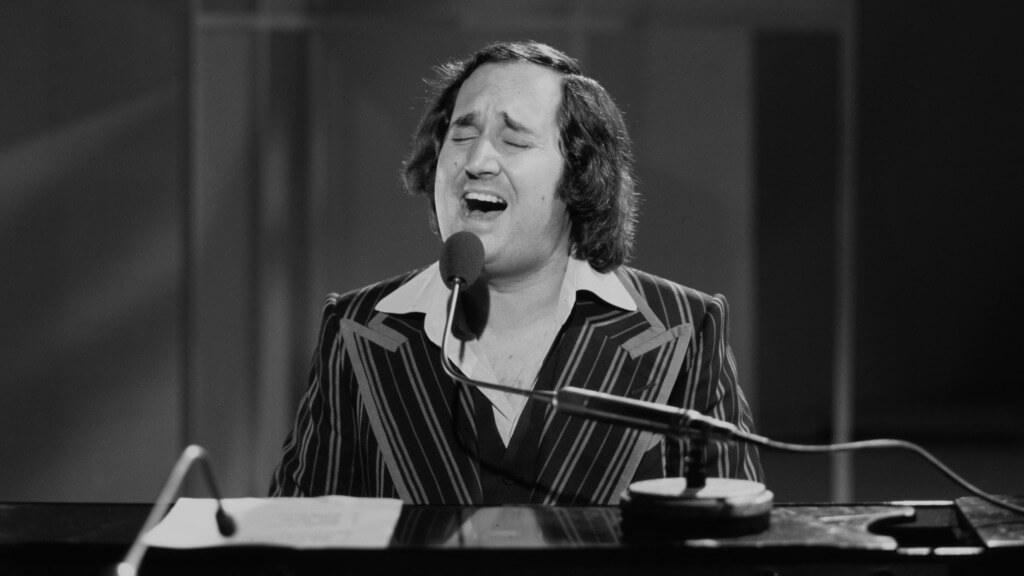
After all surely Neil Sedaka was a pre-cursor of Barry Manilow as an American pop singer, pianist, and songwriter, rather than man who could move like Jagger. Since beginning his musical career in 1957, he sold millions of records worldwide and wrote or co-wrote more than 500 songs for himself and other artists, primarily collaborating with lyricists Howard “Howie” Greenfield and Phil Cody.
His father, Mordechai “Mac” Sedaka (original surname Tzadaka), was an immigrant of Lebanese origin and Jewish ancestry who worked as a taxi driver. Sedaka´s mother, Eleanor Appel, was also Jewish, though of Russian and Polish descent, born in. Neil grew up in a small coastal town, Brighton Beach, near New York City, where many Russian and Ukrainian Jews lived. He soon demonstrated a talent for the piano and an astonishing musical ear, which led him to study at the highly regarded Juillian School.

Sedaka wrote his first hit in 1958. Stupid Cupid was recorded by Connie Francis, (right). I would have been six years old then and I guess my cousin Diane Clayton was perhaps thirteen or fourteen when we danced in my aunty´s living room, and every time the catch phrase of ´Stupid Cupid stop picking on me´ was sung on the record ´grown up cousin Di´ pointed at me in mock anger and scared me half to death. For Sedaka, though, this started a five year run of regular hits being churned out of his own compositions.

In the Top 100 Songs chart, he appeared with his tracks Oh! Carol (#9 in 1959), Calendar Girl(#4 in 1961), andHappy Birthday, Sweet Sixteen (#6 in 1961), and (#1 in 1962) Breaking Up is Hard To Do. Oh! Carol is a song that refers to songwriter Carole King (left), Sedaka’s girlfriend and classmate at the time. She would soon reciprocate with the song Oh! Neil, which references Sedaka’s song and her name.
Between 1960 and 1962, he had eight songs in the Top 40. But he was among the artists who´s careers would be besieged by the British Invasion, as well as other shifts in the music industry. His singles began to decline in the charts before disappearing completely.
In the mid-1960s, he recorded an album of traditional Spanish songs, and even some of his English hits were translated into Spanish and sung by him. This album was well-received in Mexico and Latin America.
In 1973, he helped with the English lyrics for Ring Ring, the Abba song for The Eurovision Song Contest. He then worked alongside Elton John before Elton subsequently signed him to his Rocket Records label.
In 1975, Neil returned to the top ten. That year, he had a number one hit on the Billboard charts with the song Laughter in the Rain. Captain & Tennile then accompanied him, again at number one, with Love Will Keep Us Together, also in 1975. Bad Blood was another number one hit in 1976.
At London´s Royal Albert Hall, thirty years later, in April 2006, Sedaka won an award as the author of the best-selling hit of the 21st century for his song Amarillo by The Guinness Book Of Records
Later In 1985, he composed new songs , such as some songs written especially for the animated series Mobile Suite Zeta Gundam, including the opening themes Zeta-Toki wo koete (originally written in English as Better Days Are Coming ) and Mizu no hoshi e ai wo komete (originally written in English as For Us To Decide ). However, the English versions were never recorded, nor was the ending theme Hoshizora no believe (originally written as Bad And Beautiful ). Due to copyright provisions, the songs were replaced with others on the American DVD release
In 1994, Sedaka lent his voice to a character, Neil Mousaka, that parodied him on the Food Rocks Show.
Sedaka was hospitalized in Los Angeles after suffering an undisclosed medical emergency, ] and died on February 27, 2026, at the age of 86. As I read the generous tribute paid by Paste magazine on-line to Sedaka on his death, it dawned on me, as it so often does, that I had perhaps allowed my musical stereotypes to dissuade me of the singer-songwriter´s genius.

In the same way as Texan sing-writer Joe Ely, (right) tadmitted in song that (he) and Billy The Kid Never Got Along, I realised that my lofty disdain for Sedaka was based on my generic musical snobbery of those who don´t conform to my own stereotypes.
I saw Sedaka as an extrovert, or a livelier than life showman who, I thought, overshadowed, and somehow demeaned, his own canon of songs. He was never going to look or sound like my favourite wounded ´cowboy´ songwriters.
What nonsense !
I now realise that his style of performance at the piano and the vocal mic invariably accompanied his stage shows, in which, throughout a sixty-odd year career, he explored teenage angst and the ´glory of true love´ which is, kind of, the very meaning of rock and roll. Let´s not forget, either, that he also wrote the painfully poignant song Solitaire, and recorded his own beautiful piano and vocal version.
My apologies to Mr. Sedaka.

NEIL SEDAKA
LABI SIFFRE
life shaped the artist & the artist shaped life
Interview by Jamie Atkins for The Big Issue 2024
The artist is more critical of himself than anybody, but his songs have made an impact
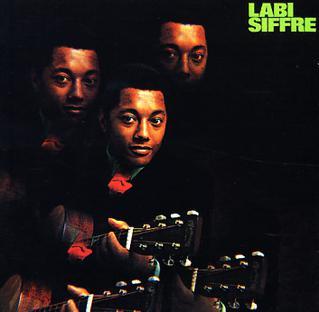
photo 1 self titled debut album Labi Siffre was born in June 1945 in Hammersmith, England. He formed his first band at 16 and began playing jazz guitar in groups around Soho in the late 60s. He released his self-titled debut album in 1970 and followed it up with classic albums including The Singer And The Song, Crying Laughing Loving Lying and For The Children. Hit singles in the70s included It Must Be Love (later a hit for Madness), Crying Laughing Loving Lying and Watch Me.
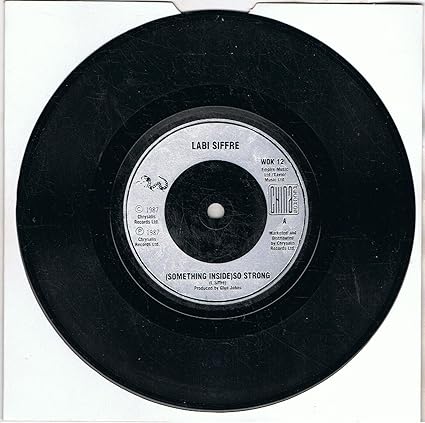
A sabbatical from music ended in 1984, when Labi Siffre was inspired by a documentary about apartheid in South Africa to write Something Inside So Strong, a song that would reach No 4 in the UK chart on its 1987 release and go on to become an anti-apartheid anthem.The single is available at Amazon, even in vinyl format.
His music received a new lease of life in the 90s and 00s thanks to it being sampled by hip-hop artists, most notably when Eminem and Dr Dre used an instrumental element of Siffre’s 1975 track I Got The… as the hook for the 1999 global hit My Name Is.
When Speaking to The Big Issue for his Letter to My Younger Self, Labi Siffre reflectrd on a youthful obsession with music, single-minded approach to life and what has been important to him.
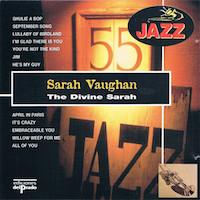
At 16, I was trying to be Jimmy Reed. I’m the penultimate son of five boys and my brother Kole, who was five years older than me, was probably the largest influence on my life as a musician. He had an amazing record collection and still has excellent taste. So I grew up listening to the best of blues and modern jazz – Ornette Coleman, John Coltrane, Monk, Miles, Mingus, Howlin’ Wolf, John Lee Hooker, straight through to Ellington, Bird, Wes Montgomery, Oscar Peterson, Erroll Garner, Ella, the divine Sarah Vaughan (left) , Mel Tormé, Little Richard, Fats Domino. That was the musical life that I grew up with, so I was very fortunate.
I’ve always been a serious person. At 14 I wrote my manifesto of what I was going to do with the rest of my life. It started with me thinking most people would do anything rather than evidence-based, critical thinking. Then I thought surviving is so tough for many millions, billions of people that perhaps they don’t have time for deep philosophical thought. I came to the conclusion that there was a group of people who took it upon themselves to think – as a duty, as a vocation – and those people would be philosophers and artists. I decided that I would be an artist-philosopher or a philosopher-artist. Somewhat to my surprise, it seems I stuck to my guns
I was six the first time I saw a postcard in a window that said, “Room to let: No Blacks, no Irish, no dogs.” That was the first time I was trolled. I was brought up by the society I lived in. I was brought up to have very little self-esteem. I was brought up in a society that told me that as a man, I was supposed to be homophobic, racist, misogynistic and ableist. Because everywhere that I looked, that’s what I was being told was the right thing to be.
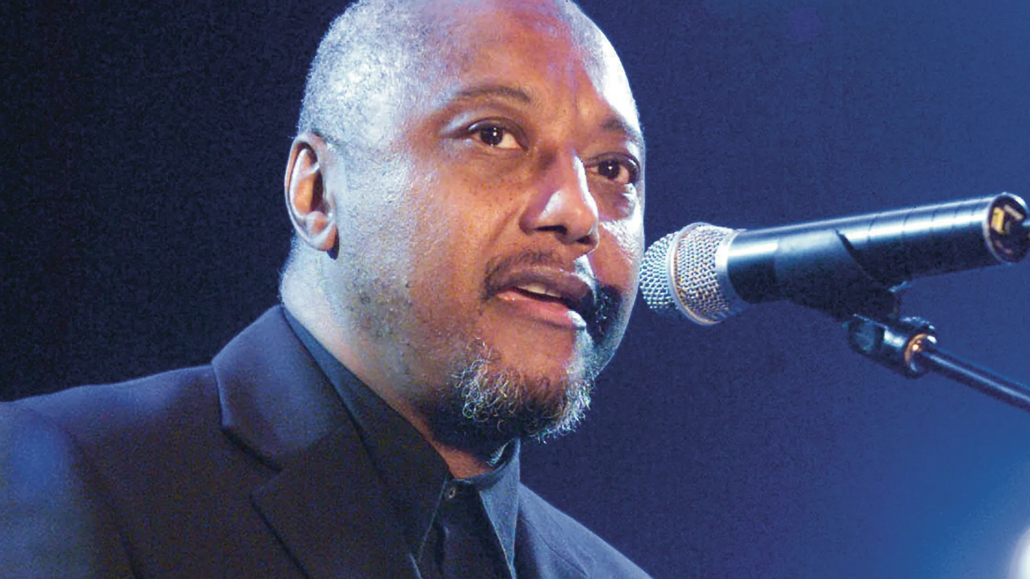
I gradually realised that everything I was being told about myself by the society and the country and the world I lived in, was a lie as a homosexual, Black atheist artist. So I decided that my roots had to start with me and I have progressed believing that ever since. I’ve never had time for people who base their lives on what their ancestors did. Especially when what their ancestors did was nothing to be proud of.
I decided very early on in my life that I would search for and find somebody, make them fall in love with me and we would live together happily ever after. I had decided that by the time I was 10 or 11 years of age. And I pursued that very seriously indeed. I doubt that there are even a handful of heterosexuals in the world who have considered this fact: while these things vary, only 6 or 7% of the population are homosexual and so it’s very much more difficult to find the person you want to spend the rest of your life with. You really have to take it rather more seriously.
I was very fortunate. In July 1964, I met Peter, who would have been my late husband had he lived long enough for marriage equality, so we were civil partners. Then in 1997, I met my husband Ruud. The three of us lived together for 16 years until Peter died in 2013 (we were together for 48 years). Ruud died in 2016. We were together for 19 years.
I have had far more difficulties in my life due to being a homosexual than being Black. And I conclude that your sexuality is who and what you are. And your colour is what other people say you are. If you are Black, you have to put up with the ignorance and arrogance of people who aren’t Black. If you are a homosexual, you must put up with the ignorance and arrogance of white people, blue people, green people, adult people, children who have been taught very early – just about every group of people.
I’d tell my 16-year-old self, if you want to grow up to be me, I shouldn’t give you any advice at all. But if I was to give advice – certainly from a musical point of view – I could say honestly, that had I known I was going to be as good as I was, I wouldn’t have given up so often. So possibly my advice would be, just keep doing what you’re doing.
Fame and fortune were not in my plan. Not for any high moralistic artistic reasons, it just merely never occurred to me. I wanted to be a musician. That was it. I wanted to be able to earn enough money so that I could be a musician all the time, rather than having to take day jobs. When I became a ‘public figure’, it took a very short time, a matter of a few months, for me to realise I was never going to be comfortable with that attention, but it was part of the job.
My real life was at home. That was the thing that was overwhelmingly the most important part of my life. The rest of it you could call it a fascination or obsession or an inability to get away from music and learning about it. During the early part of my career, probably by the second album, I was asking myself, why exactly am I doing this? Because I knew that I was not part of the mainstream. I started by saying, I’m trying to write good songs. And then I quickly thought, hang on a minute, that’s not a good enough explanation. And I came to the conclusion that I was attempting to write songs that are useful.
I don’t pat myself on the back. I find that very difficult. In fact, I spent the past few years telling myself to be more forgiving of myself. I would doubt that there is anyone more critical of me than I am. So I wouldn’t have been especially self-congratulatory when the songs I’ve written have made an impact and been useful to people. I wouldn’t have thought about it like that. I would have just got on with writing.
For 14 years, I was Peter’s 24/7 carer and I mean 24/7. During that period I probably spent, in total hours, less than two weeks working on music. And when I started to be able to function again, which is only a short while ago, I was very, very pleased to find that I’m still eager to learn. That’s one of the things about a career in music, or arts. It is constant learning.
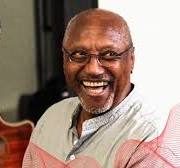
My new material is me now, not me then. I’m still me and I know more now. At the moment, I’m doing the part of the job that is getting as much of me into the work as I can. I have no intention of trying to be somebody else. And once I’ve gone through that process, that’s when I go into the studio with other people who might do something I’ve done better, or have an idea that I haven’t had. The most important thing first of all though, is to get as much of me into the work as possible.
If I could go back to any time, that’s obvious. It’d be to when Peter and Ruud were alive. I’d say “I love you” and they’d say “I love you”. It would be very straightforward. And I would refuse to leave.
This article is taken from The Big Issue magazine, which exists to give homeless, long-term unemployed and marginalised people the opportunity to earn an income. To support our work buy a copy!
If you cannot reach your local vendor, you can still subscribe to The Big Issue on-line or give a gift subscription. You can also purchase one-off issues from The Big Issue Shop or The Big Issue app, available now from the App Store or Google Play
Labi Siffre’s catalogue is currently being reissued on half-speed mastered 180g vinyl by Demon Music Group. The latest in the series, 1973’s For the Children, will be released on 26 April.
The British song-writing legend has now shared his first released music in five years with the brand new single, Far Away, a quietly powerful piano-led song that reflects the clarity, depth and emotional generosity that have long defined his work.
The song is taken from an upcoming new album Unfinished Business due later this year on Demon Music Group, marking his first full-length release since 1998.
He recently performed Far Away live on BBC Radio 2’s Piano Room as part of a 3-song session with the BBC Concert Orchestra at London’s Maida Vale studios.
Far Away was first shared publicly during the 2022 BBC Imagine documentary, Labi Siffre: This Is My Song, presented by Alan Yentob.
Built around a simple, elegant piano arrangement, the song allows Siffre’s voice and words to take centre stage: thoughtful, searching and unmistakably his own. It feels rooted in the language he has always spoken musically, yet alive to the present moment.
An Ivor Novello award-winning British singer-songwriter, poet and composer, Labi Siffre remains one of Britain’s most quietly influential and genuinely ground-breaking artists. Since the 1970s, he has carved out a singular path blending folk, soul, jazz and spoken word with an honesty that set him apart from his contemporaries.
He has been sampled by countless artists over the years, most famously Eminem in the song My Name Is which draws from Labi’s 1975 track ‘I Got The…’, but also by the likes of Dr. Dre, Jay-Z, Kanye West, Miguel, and Nourished By Time.
Labi Siffre (above) has always written with clarity and purpose. His songs are direct and unguarded, rooted in lived experience rather than fashion or trend: from the intimate beauty of Bless The Telephone, to the enduring romance of It Must Be Love, and the classic, transcendent song of resolve and protest (Something Inside) So Strong.
Labi’s music continues to reach new audiences across generations. Bless the Telephone became a hit across TikTok last year leading to 52m streams in 2025, whilst Labi’s own discography recorded over 118m streams.
Alongside the new single and forthcoming album, a special 2LP edition of ‘Crying Laughing Loving Lying’ will be released for Record Store Day 2026.
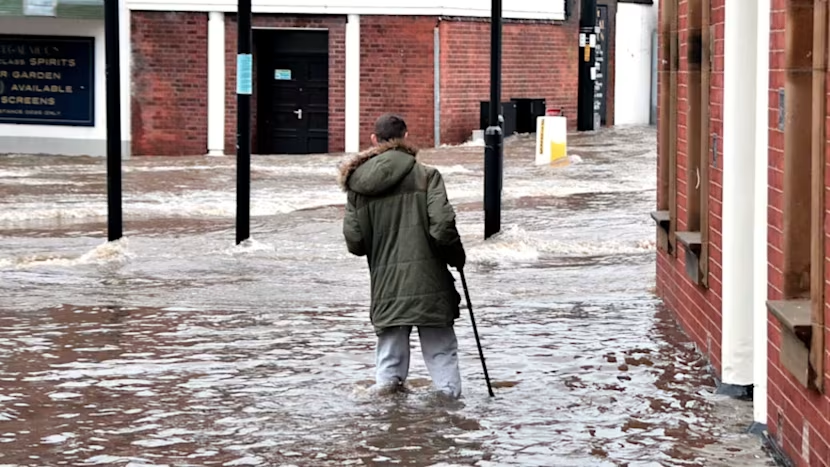
Man walks through Rochdale during 2015 Boxing Day FloodsCredit: MEN Media
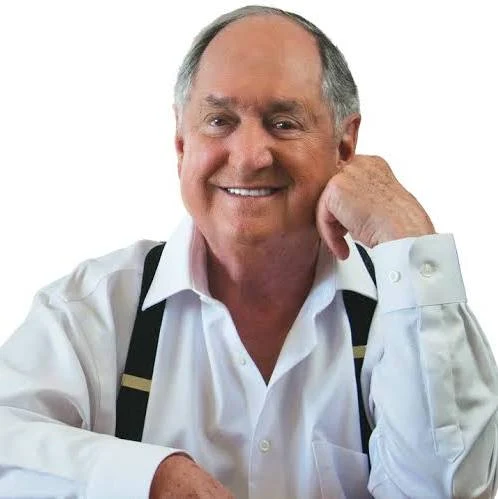
Like Neil Sedaka, Labi Siffre drifted under my radar as I became what my wife still calls my barmy obsession with all things Americana. In truth, though, thanks to platforms like Spotify and Paste on-line magazine I am now listening again to a replacement collection of my cds that were swept away to sea by the Rochdale floods of Boxing Day 2015.
It is strange to be writing this double header that offers me a compare and contrast exercise of the single releases written by Neil Sedaka and ultimately covered and released by others in his early years, and later in his career wrote an all time great song Solitaire song and that remarkable eponymous debut album by Labi Siffre that contained a pocket full of catchy songs. These were followed later in his career with the all time great song, (Something Inside) So Strong.
Compare and contrast, indeed !
ROCHDALE MUSIC SOCIETY CONCERT 15.03.2026
JONATHAN ELLIS Piano·
A review by Graham Marshall
This was the first of the four concerts making up the Rochdale Music Society’s 2026 Spring Series at 3.00pm on Sunday afternoons in St. Michael’s Church, Bamford.
Jonathan Ellis, well-known for his concert performances and work as accompanist here in the North West, produced a delightful programme of music by Mozart, Beethoven, Debussy, Brahms and Chopin which demonstrated his masterly command of the ever widening range of musical invention and expression that these composers brought to the nineteenth and early twentieth century.
Jonathan is one of those artists whose interpretation of the score shows that he has delved deeply below its surface to discover hidden challenges and opportunities to bring to the surface to attract and keep his audience’s attention. This was evident from the word go as he began his programme with a performance of Mozart’s Fantasy in D minor, a single movement work, improvisatory in style, opening with a haunting theme and proceeding with emotional depth and dramatic keyboard contrasts to its very satisfactory end. This was followed by an equally revealing account of one of Beethoven’s late Sonatas (in A flat Op. 110), which begins in a very gentle, disarming fashion and continues with what at the time of its composition would have been heard as somewhat revolutionary sounds set in strange structural contexts, including an extensive fugue, and working up to an almost riotous conclusion.
To add to the excitement of the ‘experimental’ music of Mozart and Beethoven the first half of the concert concluded with the three pieces which make up Debussy’s Images Book 1. Written in the early years of the twentieth century these ‘impressionistic’ pieces take music beyond the bounds of nineteenth century musical imagery, which was largely of Germanic origin and design, and begin to make use of the vast range of modern piano sonorities discovered by the adventurous minds of composers not feeling obliged to submit to their Teutonic predecessors’s way of doing things. At the same time, performances such as Jonathan’s show just how interrelated are the resources of musical expression, and how satisfying the artistic achievement of music of all kinds and eras can be.
Two ‘late Romantic’ works of genius occupied the second half of the concert, one of Austro-Hungarian origins and the other of Polish-French, both calling for the technical brilliance, intensity and restraint that Jonathan brought to their performance. The first was Brahms’s Sonata in F♯ minor, which, with its visionary content, shows at an early stage in his life the composer’s intention to make a significant contribution to the repertory in the wake of Beethoven. The other was Chopin’s Barcarolle in F♯ major, one of those works of musical magic destined to send anyone, who just been listening to it as played by the likes of Jonathan, away rejoicing in the pleasure to be found in the making of music.
The next concert will be on Sunday, 19 April, when Flautist Daniel Shao and Pianist Mark Rogers will be playing a varied programme of music by Gluck, Debussy, Mendelsssohn, Poulenc and others. Full details on the website

SIDETRACKS & DETOURS
Sunday April 5th featuring
SONGWRITERS & INVISIBLE ANGELS
chapter two
by
Peter Pearson & Norman Warwick
featuring
BILL MORRISEY & GARY HALL
Sunday 12th April featuring
MUSIC IN PORTSMOUTH
featuring
KAREN KINGLEY pianist
&
THE FREE RADICALS a cappella
+
r.ip. CHIP TAYLOR
+
SOPHIE ROSE MUSIC
a career in the making
Sunday 19th April featuring
ROCHDALE RISING
featuring
ELYSSE MASON, THE TAILS, 25th HOUR, COYOTE
&
DJ ADAM STATHAM
Sunday 26th April featuring
GORILLAZ IN THE MISSED OPPORTUNITY?
featuring
reviews of The Mountain
Sunday 3rd May featuring
HOW MUSIC MOVES IN US AND AROUND US
an appreciation of
DAVE COUSINS & HIS STRAWBS ASSOCIATES
Sunday 10th May featuring
WHAT DO YOU DO WHEN YOU´RE LONESOME?
The life and legacy
JUSTIN TOWNES EARLE
Sunday 17th May
WHERE IMAGINATION BEGINS.
++ remember that we also publish occasional Sunday Editions ++
containing
news, previews, interviews and reviews
++ so why not log in each Sunday if you wish to catch up ++


Leave a Reply
Want to join the discussion?Feel free to contribute!