
SONGWRITERS & INVISIBLE ANGELS: Bill Morrisey & Gary Hall 5 4 2026
songwriters and invisible angels chapter 2


Songwriters & Invisible Angels Chapter 2
BILL MORRISSEY-LIVE FREE OR DIE
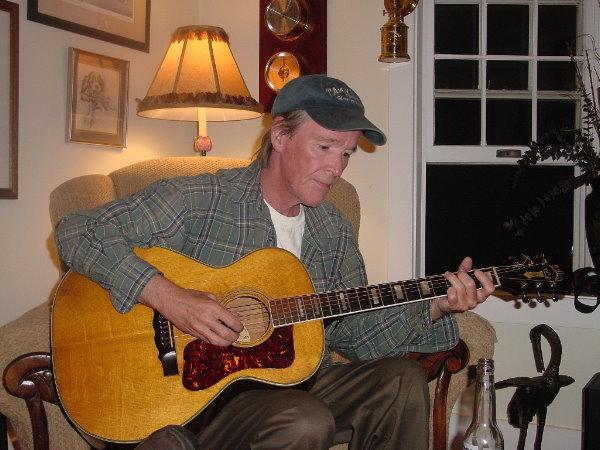
by Peter Pearson (left)
Live Free Or Die is the official motto of the US state of New Hampshire. It is also the title of a song and album written by Bill Morrissey (right) and could equally be a symbol of the free spirited way in which he lived his life.
He died on July 23rd 2011 in a modest hotel room in Dalton Georgia at the young age of 59.You may have not heard of him -unless you read Norm’s Sidetracks and Detours piece of the 7th August 2020 and/or, you attended gigs (in my case in the UK) by equally obscure fellow USA artists, such as Eric Taylor and Dave Alvin, who have championed his works.
Eric was a frequent visitor to the UK and spread the word of his friend and fellow touring artist. It was how I came to explore Bill’s catalogue. To the best of my knowledge he never toured the UK, although he visited France in 2007.He is high on my list of artists that I wish I had seen in concert.
Even in the states his profile was far below that of contemporaries Guy Clark, Townes Van Zandt and Steve Earle. They were drawn towards Nashville and toured regularly outside the States.
Bill was born in Hartford Connecticut but soon migrated to Hampshire, New England (a mill town or as we in the UK would call it-a factory town) and eschewed the Nashville scene. Nevertheless in the early 1990’s his song writing abilities were starting to become recognised in the States, sufficient to obtain plaudits in Rolling Stone and Entertainment Weekly. His career would rise before dropping like a stone.
He began playing guitar at 13 and after forming a jug band (a sort of skiffle band with some homemade instruments) in high school, began to teach himself the songwriting process, at first leaning heavily on the tunes and lyrics to the latest pop songs. After graduating in 1969, he studied literature at University, then worked on a fishing boat in Alaska, before embarking on a musical career.
Armed with a few songs, he began playing the mill town bar and coffee house circuit. It was here that he honed his songwriting skills and learned how to deal with an audience. His musical influences ranged from The Beatles,”they’re textbook in arranging and harmonies” he said, to delta and country blues musicians such as Mississippi John Hurt, Robert Johnson and Skip James.
After a number of years of working the bars and coffeehouses, he signed with Rounder Records and recorded his self-titled debut album in 1984. Accompanied only by his acoustic guitar, the album comprised a dozen original songs laced in literary detail. The album includes the song “Small Town On The River”, which, as with much of his work, reflects life in New England mill towns. In this case, it’s a song about a small town in New Hampshire after the mill closes.
His second album, North, continued in the same vein.
While his first two albums were warmly received, it was not until the release of his third album, Standing Eight, that he caught the attention of the national music press. The album featured fuller musical arrangements; an array of guests including Suzanne Vega, Shawn Colvin, Patty Larkin, and Johnny Cunningham; and top-notch material. The song Handsome Molly is perhaps the standout track but the whole album received widespread critical acclaim. Rolling Stone magazine wrote- “In remarkably compressed portraits Bill Morrissey melds the vaporish world of desire with the hard- edged world of daily life.”
Critics began to compare his lyrics to the likes of American short story writer and poet Raymond Carver. When asked to discuss his literary influences and tastes in fiction he responded- “I think as a teenager. I just read the usual stuff that you read in high school. A little later, though, I discovered the Beats, Kerouac and those folks. Kerouac was from a couple towns over, in Lowell, Massachusetts and so I used to hear him on the radio. Allen Ginsberg had a talk show and Jack Kerouac would call in. The French Symbolist poets´, Baudelaire and Rimbaud, people like that really got my attention as well. But I always kept going back to very American stuff. Mark Twain was a big influence. He does it all. He’s funny, he’s serious. He’s got a good edge. He was not a `mellow’ guy, especially in his later days. And then, as I got older, people like Robert Frost really hit me. I probably lived most of my life in New Hampshire, but Frost had a way of capturing the cadence of New Hampshire speech without making it sound like a parody or a Burl Ives record. He was rhythmically just incredible. And his poetry is also very sparse, which is a typical Yankee kind of thing, which is what I like.”
The list of singer songwriters whose lyrics are inspired by the Beat Poets and literary writing is a long one. Bob Dylan, Tom Waits, Greg Brown, Eric Taylor and Tom Russell are amongst them. Conversely, John Stewart, a favourite of Norm and I, was influenced more by the visual images of art, the American landscape and its characters.
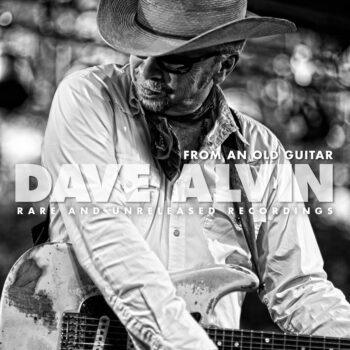
In 1992 Morrissey released the album Inside produced by John Jennings, a guitarist and producer long associated with Mary Chapin Carpenter, until his untimely death. The title track, featuring a duet with Suzanne Vega, is one of my favourites and has been covered by Dave Alvin (left) and many others. Bill’s fishing and recording buddy, Greg Brown The subject of my opening chapter of Songwritgers & Invisible Angels, sings harmony on one track and John Jennings plays lead guitar on the song Robert Johnson.
The following year came the album, Friend Of Mine, a joint album with Greg Brown. Later that year came Night Train, which contains the song with which he is most commonly associated Birches, a song that is generally considered to be his masterpiece.
Most story telling songs seem to take the listener through time from beginning to end, not leaving much to the listeners imagination. Birches takes us straight into a conversation between a mature married couple beside the fireplace in their living room as they prepare to retire for the night. It paints a vivid picture of their relationship in a single scene. For a full appreciation of the brilliance of the lyrics they should be read in full.
Essentially, Warren, the husband, wants to put oak in the fireplace, because it will burn long and steady. His wife would prefer to have a glass of wine, and dance to the flickery exciting light of birch wood, even though it will burn out and leave the house cold that night. He goes to bed, and she drinks her wine, puts “logs as white as a wedding dress” in the fireplace, and dances with herself. The final lines are pure genius: “She thought of heat, thought of time, and called it an even trade.” The couple have begun to drift apart, her wish to rekindle their younger relationship blunted, leaving her only with an act of defiance by which she can recall their more youthful romantic days.
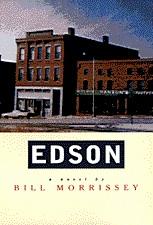
By 1996 Bill’s star was in the ascendancy. He began to play larger gigs with his own band and published´, Edson, a much acclaimed novel. The book (right), set in the fictional New Hampshire mill town of Edson, tells the story of a once promising musician returning to his hometown after 20 years, where he faces the option of giving music up completely or starting again from scratch. It is a story of relationships, much like his songs and contains quite a few autobiographical references. A second novel, Imaginary Runner, was published posthumously in 2011.
In 1999 he released a wonderful 15 song tribute album to his idol Mississippi John Hurt. Whilst Bill’s singing voice was something of an acquired taste, his guitar technique was widely regarded as above average, enabling him to do an excellent job of reproducing Hurt’s finger style guitar rhythms.
An acquaintance of mine, Arthur Wood, for many years produced a folk music fanzine titled Kerrville Kronikle. A UK resident, he used to make an annual visit to the famous Kerrville Folk Festival in Texas. Essentially a songwriters festival, it featured a song writing competition for emerging artists. Its winners over the years read like a who’s who of folk singer-songwriters.
Meeting Arthur one day at a gig, I asked him what Bill Morrissey was like on stage. His first response was “short”. He meant Morrissey was physically short! He then went on to tell me that he was a cheeky chappie type figure with lots of stage banter coupled with a wonderful collection of songs delivered in a clean and sparse manner. He was a favourite regular performer at the Kerrville Festival.
Bill was twice married and divorced. His second wife, Ellen Karas, continued to be his manager, producer and supporter of his music after their divorce and has created a wonderful tribute website in his name.
Sadly, Morrissey had always been plagued with demons which, in his early days, over which he managed to maintain some measure of control until eventually they caught up with him, crashing his career and leading to an untimely death at age 59. The esteemed late Nashville musician and journalist, Peter Cooper, in a moving tribute to Bill on his death, wrote: “If you’d asked me in ’96 what I figured Morrissey would be doing in 2011, I would have predicted he’d be playing concert halls and collecting accolades, much like John Prine and Guy Clark“.
He then goes on to say: “My Morrissey prediction, though, would not have taken the whiskey into account. His was not a swashbuckling, Hemingway-style drinking life, it was a hot bourbon bottle under the driver’s seat on a July afternoon kind of deal. It wrinkled him, clumsied his nimble fingers and sometimes maneouvered his elliptical stage banter past the point of charm. He became unpredictable, and generally unmanageable. Never unloved. Morrissey was revered, garnering a couple of Grammy nominations, influencing songwriters such as Suzanne Vega, Hayes Carll, Mark Erelli and Ellis Paul and earning a devoted following of fans who purchased his albums, who wrote to ask why his touring schedule had slowed and who often went out of their way to attend his infrequent shows”.
Fellow musician and touring friend Eric Taylor composed a song in his memory, simply titled Bill and featured on his 2013 album Studio 10. In concert Eric, previewing the song, would recount a tale of touring with Bill towards the latter stages of Bill’s life when they would often share a car and even lodgings, as they travelled to house concerts and small scale gigs in far flung places.
Eric’s song refrain contains the lyrics ´I’ve been through this town before-it’s got a four-way stop and a liquor store´.
When they approached each town on the tour Bill would frequently comment on the quality of the liquor store. Eric suffered his own demons but not as bad as Bill and he became a little weary of Bill dwelling on liquor stores, though understanding his underlying health issues.
Bill’s alcoholism was aggravated by a bi-polar diagnosis, depression and substance abuse, causing him to become completely unreliable, to the point of frequently failing to turn up for gigs.
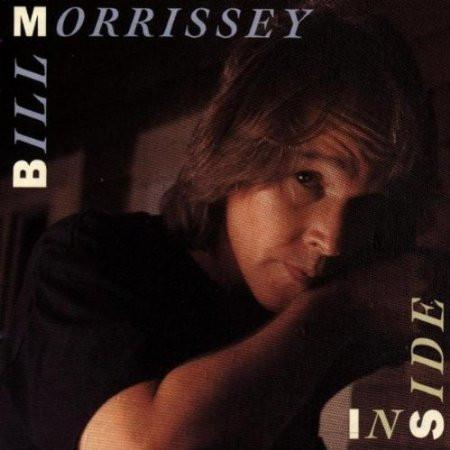
During his career he turned out over a dozen albums. His last album was his 2007 release Come Running. The album features Dave Alvin on slide guitar. Alvin has continued to be a champion for Morrissey and has recorded perhaps the definitive cover of Inside considered by many as Bill´s standout song.
Bill Morrissey continued touring to his last day. The venues however became increasingly smaller.
Peter Cooper recounts his last days as follows:
Morrissey played the last show of his life on July 16 in Lebanon. It was a house concert, and 13 people showed up. The star of the humble show wasn’t upset about the turnout. He arrived at hosts Denise and Rick Williams’ Lebanon home a few days early and used the time to chip away at some songs that no one will ever hear. He told some funny tales from his decades on the road, and he talked about his beloved Katrina rescueing a dog they called Molly. Molly was a pointer, he said: She pointed out trout, so he knew where to cast his line.
That Saturday, Morrissey plugged in and played, told stories and stayed the night. Then he went to his songwriting friend Fred Koller’s house for five days of swapping songs and more stories. On July 22, he packed his two Epiphone guitars into his Toyota, drove to a modest hotel in Dalton, Georgia. (carpet capital of the world, don’t you know?), called Koller and some other friends, and, at some point in the night or the next morning, died. Complications from heart disease. He was 59 and looked older.
Fred Koller, Nashville based singer songwriter who wrote hits for Nanci Griffith, Kathy Mattea, John Prine and a great many more said: “If you went down to Music Row and asked any of the top 10 writers about Bill, they might not be able to tell you anything, But he was an artist, with a painter’s eye that shows up so strongly in his lyrics. You can study almost any of his songs, and there’s not any room for improvement. Twenty years from now, those songs will be just as good as they are today.”
Bill´s pal, Gregg Brown , composed the following poem in his memory:

BILL
Pain down in him rang like a church bell,
sang like a little river, flowing on & on,
rolled like a loop in a well cast flyline.
All still here but Bill is gone.
Sang like barbwire hit with a walking stick,
sang like midnight talking to the dawn,
sang like an old man though he never was one.
All still here but Bill is gone.
Wrote songs like the dirt & granite he came from,
songs like mill town boards, rough sawn,
songs built to last through years of hard weather.
In them he lives, & will never be gone.
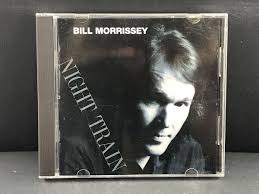
Gil Bliss, a correspondent for The Boston Globe, concluded his obituary as follows: “Mr. Morrissey’s legion of fans and friends would find it poetic justice if he were now enjoying the fruits of the afterlife, as described in his song Letter From Heaven, from his album Night Train (1993)”.
And me, I couldn’t be happier. The service here is fine. They’ve got dinner ready at half-past nine. And I’m going steady with Patsy Cline. And just last night in a bar room, I bought Robert Johnson a beer. Yeah, I know, everybody’s always surprised to find him here.
songwriters and invisible angels chapter 2 part 2

GARY HALL
songs for invisible angels

B
Songwriters & Invisible Angels
GARY HALL AND HIS WATCH ME WALK
by Norman Warwick Right

Log in to Gary Hall Music and you will find a comprehensive round up of Gary´s career to date, stating that he was was born and raised in the north of England. He released his first album, Garage Heart for Run River Records in 1989, to much critical acclaim. This culminated in being voted second best album of the year in the Folk Roots’ end of year poll, sandwiched between Bob Dylan’s Oh Mercy and The Healer by John Lee Hooker. After an extensive European tour to promote the record with his band The Stormkeepers, Wide Open to the World was released in 1991 to more critical acclaim and an ever-growing live fan base.
In 1993 Hall disbanded The Stormkeepers and relocated to America where he made two solo albums in Nashville for Round Tower Records. What Goes Around was released in 1993 and Twelve Strings & Tall Stories in 1996, the latter being described by renowned British music journalist John Tobler (right) as ‘an album containing one classic after another’.
In 1997 a deal was signed with Goldrush Music for the release of Return to the Flame and Hall embarked on an extensive tour schedule in support of the album, sharing the stage along the way with songwriters the calibre of John Prine, Guy Clark and Townes Van Zandt. In 1999, after a decade of ‘cheap motels, white lines and one night stands’ Hall hung up his travellin’ shoes and settled back in England, where he set up the Voodoo Rooms recording studios to produce up-and-coming singer/songwriters.
In 2011 he re-emerged with That Old Brand New, his first solo album in fifteen years, followed in 2013 by Winning Ways on Losing Streaks , 2015 Warm Valve Glow and 2017 Red Mist Blues.
His latest offering Songs From the Inside Out was, once again, produced by Hall at his Voodoo Rooms Studios and uses the same cutting crew he has worked with for the last decade. Featuring original songs of fresh and soulful rock’ n’ rolls roots music drenched in all the essential ingredients of folk, blues and Americana, this album sees Hall continue to march to his own inimitable beat.
The above notes are on the front page Gary Hall Music and will introduce you to a treasure chest of a long line of excellent albums showing a coninuous growth of thoughtful, provocative and evocative at once, great arrangements, increasingly poerful yet tender vocals, and the UK press presidents were very supportive.
For a shortish period of his career I became freindly with Gary when he was being promoted by Stampde Promotions, run by Ian Johnson. Although we have becomesomewhat estranged since I retired to live here on Lanzarote I have found the writing of this piece has brought back some fantastic memories and on re-visiting his discography I still find it as satisfying as all my americana favourites, with its rock feel giving it an interesting edge.
Gary Hall grew up in a hotel / guest house / hostel run by his mother, and their guests provided much inspiration for the songs he would later write.
‘Some of the boarders were mental patients, some had just come out of prison and so I met a lot of interesting people, and possibly some of the despair I felt for those people, the sheer anger, and pity, affected my songs and added the ‘sweet and sour’ they might have lacked had my parents been dentists bringing me up in the middle of suburbia.’
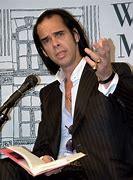
His earliest remembered listening is Slade, and he first began writing his own material during the last days of Punk. He recalls that in his teenage years he was ‘searching for depth’ in music by the likes of Echo And The Bunnymen, Concept Angels and The Sound. Moving into his twenties he was listening to The Waterboys, The Triffids and Nick Cave (left) And The Bad Seeds,…. ‘getting a bit more towards the real stuff’,… and then REM and the whole American thing round the end of the eighties and discovering, en route, the Australian scene and bands like Green On Red.
‘And then, through a friend who was a lot older and who had a great record collection, I heard Tom Waits, Gene Clarke, Gram Parsons, Bob Dylan and Van Morrison and just this last year I’ve really got into the singer-writer genre in so much as I listen to Townes Van Zandt and Guy Clark etc.’
From infancy, Gary Hall was employing teddy bears as backing musicians and a cricket bat and cardboard box as guitar and drums.
‘I always wanted to be a rock and roll star, with drugs and fancy limousines and all that. Only when I got them did I realise I was desperately unhappy and just recently I’ve decided to take two steps back in order to take a million steps forward, for the sake of my health and state of mind.’
At sixteen, Gary Hall was playing at youth clubs in his Preston environment, with an amp and a p.a. and a band called Project One, and by nineteen was making demos with the first group of his own, Blue Seige. His mother let him convert half the garage into a rehearsal room and, realising his only skills were with a guitar, steered him towards a career in music.
‘It was a staggering thought, at that age, to realise I might make a living at something I enjoyed more than sex,…or even eating!’
The actual writing of his songs has never come easily to Gary, although on disbanding Blue Seige he began to realise his material had something special and that, drawing on his background, he could at least make the process a little less difficult.
‘I remember one song, which I called Shapes On The Paper, that I wrote after seeing my mum crying, weary of looking after hardened criminals who were robbing our gas meters and such. At twenty one, there wasn’t much I could do,… these guys really were hardened criminals. That song came very quickly,… eight verses, no chorus, and I still think it’s a great lyric,… but usually my work takes a bit longer than that.’
Gary, though, is a pretty dogmatic character, and acknowledges he might prove an awkward partner in any writing collaboration.
‘I can’t play industry games,… wearing what I’m told, or saying what I’m told and I’m pretty sure I couldn’t handle somebody suggesting alternative lines to my lyrics.’
He has, however, constantly written songs when needed and m collaboration with his band. With The Stormkeepers he recorded three albums of his material. Each successive album was increasingly acclaimed by the critics but the big TV or radio break they required proved tantalisingly elusive.
‘Twelve months ago I felt pretty bitter about it all and at twenty seven, as I was then, I felt like chucking in all this rock and roll nonsense. Then I remembered that Guy Clark, for instance, didn’t even cut his first record until he was in his thirties, so I try to be philosophical about it all. I still hear some of the crap that is commercially successful, and I wonder what the hell is going on. Then I hear somebody brilliant who doesn’t sell as many records as I do and I realise none of it makes sense.’

‘Sometimes I go to sleep thinking God bless John Tobler, because there have been times when journalistic support like his and from people like you, Norm, and Graeme Livingstone at the specialist magazines, has really kept me alive,…. and music is far more important than life! A review by a credible journalist can help fill a venue and keep a band on the road, or might prove to be the spark that sends somebody into a record shop in search of the album.’
‘Oddly enough, though, some of those favourable reviews labelled our sound as ‘country’. Now, I love country music, not only the new stuff like Nanci Griffith either but also straight stone-country. I also love REO Speedwagon or anyone with good songs. I would say that, as a genre, country has more than its share of good songs.’
‘However, the critics might say I’m country but audiences probably don’t. Some country fans at my gigs have to be treated by St. John’s Ambulance people because I’m so far from what they were expecting. People seem to see me for the first time and instantly assume I eat babies or something. I don’t mean to appear that way, or as any kind of outlaw, or British equivalent to Willie (Nelson) or Waylon (Jennings). But I can only be myself, and I won’t go on stage in a country outfit and sing Big Bad John. People on the country circuit are always suggesting that if I would just do this, that or the other then I could really make it big on the country scene. But if that is what it takes, then forget it ! I feel that if I write a good song, with a good lyric, in the country genre, then people should accept it for what it is, but not expect me to play games to package it.’
After years of writing material suitable for adaptation and enhancement by The Stormkeepers, Gary began penning songs designed to be performed solo on guitar, and we can still hear in those songs subtle influences from country regions as diverse as Steve Earle and Townes van Zandt.In my opinion, though, Gary Hall has already written several songs that deserve to be hailed one day as rock classics, such as Keep On Burning Bright, Where Every Diamond Shines and Shipwrecked or Passing Through. These all perfectly illustrate the lyricism, arrangements and integrity which The Stormkeepers invested in Garage Heart and Wide Open To The World, their two albums still available on the Run River label, and permanently on my playlists.
Gary and the band had played to audiences of thousands on the Continent, but the absurd myopia and narrow mindedness of the British music press (and so, too, the fans) allowed these albums to become trapped in the sieve of categorisation.
Where The Stormkeepers, brilliant musicians to a man, go from here is difficult to forecast.
It seemed inevitable that Gary Hall would have to lean further into the role of solo singer/writer and hope that his material eventually receives the deserved recognition so far denied to him and his excellent band.
In truth, perhaps, he has yet to receive the consistency of writers like Townes, Tom Russell or Guy Clark, but with one of his latest and as then unrecorded compositions, She’s Out There Somewhere, I feel Hall has at least proved he can match their heights of perfection. It’s a soul number, over a gentle country picking and is performed with a rock and roll heart. Those cover versions all those years ago, of country rock classics like Wild Horses and Helpless, were the pointers to where the artist stands today,… at a crossroads from where he has to choose a direction.
Gary Hall never ate babies and behind the unkempt façade and provocative faux arrogance was a caring, concerned and perhaps even insecure young man, only occasionally revealed in his music.
He lives to be loved, but like all rock musicians he was born to be wild. Listen to his songs and look at him on stage,…‘Partly truth and partly fiction, he’s a walking contradiction’,…and wonder just who the hell those lines were really written about.

Ian Johnson and Gary and Mike Weston King , another excellent songwriter in The Stormkeepers, came round for a meal on the occasion of my fortieth birthday for one of Dee’s slap up suppers. It was light-hearted and full of laughter but there were tensions just below the surface. Ian and I knew some of the concerns Gary now had about the direction of his career, and knew he hadn’t yet shared those concerns with Mike.
Over the next few months Ian and Gary and I would regularly meet up around the Preston area, as Gary didn’t then drive. We would often wander down to the city’s recently newly gentrified dockland areas and have a Tex Mex dish and a pint in one of the many family friendly pubs that had sprung up on the waterfront. We’d head back to Gary’s (mum’s) place in pretend insobriety singing out Tom Waits lyrics into the cold, dark night. ‘I’m wasted and wounded, but it ain’t what the moon did.’
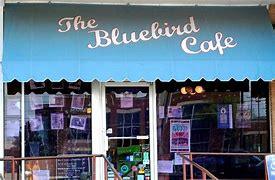
Suddenly, after a couple of weeks of frantic dramas, Gary was in Nashville for recordings for his debut album, as a solo artist, on the Roundtower label. During that visit Gary performed at an already famous venue, The Bluebird Café, that is now also the setting for A Thing Called Love, a new movie by Peter Bogdanovich.
The film dramatises a story, well worth the telling, of Amy Kurland, who opened The Bluebird Café as a casual gourmet restaurant in 1982, with the further intention of utilising it as an occasional venue for live music.
The implementation of Sunday ‘writer’s nights’ three years later proved an immediate success and continues today to afford new writers the opportunity to audition and perform before a special guest writer.
Singer writers, whether local or from far afield or even from foreign shores can be sure that if they pass the audition then they will play to a knowledgeable audience in the listening room where the club’s famous ‘shhhh’ policy is strictly enforced.
Mary Chapin Carpenter, Rodney Crowell, Marshall Chapman, Guy Clark, Steve Earle, Joe Ely, Steve Forbert, Trisha Yearwood and Maria Muldaur are artists who might well have their names carved into the table tops at The Bluebird Café,….and so, now, might Gary Hall.
The Preston based Roundtower artist, who was in Nashville recording his debut album for the label, had gladly accepted the invitation to perform at a venue that has played host to so many of his heroes. Imagine his nerves, stepping on to the stage in a club where even its menial employees sometimes become stars, —
Bartender Mark Irwin wrote Here In The Real World for Alan Jackson, waitress Liz Hengber has penned a hit for Reba McEntire, the open-mic host Barbara Cloyd slipped a hit to Lorrie Morgan and even the cook, Kim Richey, wrote a big song for Radney Foster called, inappropriately ot seems, Nobody Wins.

Hosting the show was Cathryn Craig, (right) a well established session singer in Nashville, who was delivering backing vocals in the studio for Gary as he laid down his tracks. She herself performed the three opening numbers of the evening. The rocky Jealous Heart, the happy song, a rarity for her she joked, In Nashville Tennessee, and the beautiful I Knew The Truth.
She then gave Gary Hall a generous but genuine and professional introduction, informing the 200 capacity club audience (only 21 tables can be reserved, though, after that its prop up the bar time) of Gary’s ability as a songwriter and his deserved new deal with Roundtower. Such commendations were immediately rendered superfluous, though, as Gary Hall burst into Where The River Meets The Sea, a rites of passage number, slated for the new album.
With adrenalin flowing, and in such a hallowed arena, it must have been tempting to thrash the guitar and bellow out the lyrics, but with remarkable composure and with great dignity Hall slowed down to perform perhaps his best composition to date. She’s Always Been A Hotel,with a lyric even Butch Hancock would be proud of.
Then came Let the Music Take You, a new song, written even during the mixing of the current album, but that will surely be on the second one. It is a celebration of how music helps us make it through and you can’t help punching the air every time he reaches the chorus.
Admitting his nervousness, he nevertheless remained true to his spirit with a handful of the vague but witty asides that somehow always seem to make perfect sense. There is, behind his brilliant disguise, a real troubadour in the rock n roller, and he is never afraid to wear his heart on his sleeve. She’s Out There Somewherewas beautifully delivered and I go into print my assertion that this song compares with the best by any of the great writers Gary and I so admire. Clark, Van Zandt and others, its true, have a bucketful of songs this good but Hall at that time still only twenty seven and has, with this song, shown what he is capable of. He ‘dedicated’ the song to me and another mutual pal back in England,… he then mumbled to himself, then, that he doubted we could hear it!
Her Devils Kept Dancing, about a lady with a split personality, is a song with an insistent guitar run that will, I am certain, be a highlight of his album when it is released. He introduced the next number Oceans Apart, somewhat dismissively, as being about a holiday romance, … but those of us who know, know !
Unsure of the audience and on stage, for the first time in years, without the security of The Stormkeepers, whilst in a strange land and on a bill topped by a much covered and famous writer, Gary maintained a continuous between-song dialogue with his audience. It sometimes requires great courage to talk openly about the meaning of a song, especially when that song is a hardly commercial one about a sight-saving medical operation. My Father’s Eyes, however, is an uplifting tale rescued from mawkish sentimentality by a passionate delivery. It was well received by the country fans rapidly filling the room to catch more of Gary’s set.
He closed the set triumphantly with the raunchy Stay All Night, which sounds overtly sexual but is in fact more to do with a sense of loneliness.
And suddenly, it was over.
Gary Hall had taken his songs out among his peers and had not only survived but also triumphed. He is proof that a British musician can write, play and sing country music to an American audience, so long as he remembers that country music is, in fact, neither American nor British, but is universal. Heartache is a heartache in any language.
Tennessee is surely Gary’s spiritual home where he is among like-minded folk who don’t give a Flying Fish about the length of his hair, the holes in his jeans or even the rapid-fire bursts of opinion he shoots out indiscriminately whenever he feels threatened.
As Gary settled back to watch, and learn from, Hugh Moffatt’s top of the bill set, it must have seemed to him that Worthing Festival (past) and The Bluebird Café (present) were, to coin a phrase, Oceans Apart, and he could have been forgiven a smile of satisfaction. Later, though, he could talk only of the brilliance of Hugh’s Rose of My Heart.
Those who have ever seen Hugh Moffatt perform in concert in the UK might have been amazed at just how much confidence he exuded here on stage. Obviously much less intense in this, his natural habitat, he performed a light and lovely set. He opened with a song which will be familiar to his British fans. I Know What Love Is, and then told a funny monologue to introduce a new song, to me anyway, called You And The Money Too. He told us that this had been written after a long consideration of the phrase ‘not for love nor money,’ after which he arrived at the conclusion that love and money need not be mutually exclusive!
This he followed with perhaps his three most successful compositions of Carolina Star, Words At Twenty Paces and the often covered Old Flames Can’t Hold A Candle To You.
I doubt if, when she moved to Nashville at eight years old, Bluebird proprietor Amy Kurland ever in her wildest dreams had a vision of what she now owns. Down the years, though, she gained a double major in American Literature And Studies, and then used the experience she had gained working as a student in restaurants in Washington and Nashville to open The Bluebird Café. Today, she and her dog Daisy live almost next door to the premises.
A great deal of interest wasd generated by the film, which focussed on the musicians eager to be heard there, and this tight-knit, creative communitywas revealed in a positive light.
And so Gary Hall returned from Nashville on completion of the recording of his first solo album, his first to be recorded in the States and his first on the RoundTower label. He hadpreviously recorded with his then band The Stormkeepers and their albums drew massive praise from the country / roots journalists in the music press. Somehow, though, being ignored by the most important radio play lists and the sheer frustration of constantly standing on the very cusp of the big time seemed to break the individual and collective hearts of this band of classy and committed musicians, and they were forced to disband.
Those of us close to Gary knew better than most how painful that decision was and, although Claire Hudson of RoundTower recognising the quality of his writing and persuading her fellow directors to sign him, may have salved his wounded professional pride, the hurt of the break up might have lingered for a good while. However, he owed it to his songs to seek whatever was the best outlet for them, and the rest of the band are surely talented enough to re-emerge and, as men, are all big enough to realised that their friendship is so strong that it will surely survive what was simply a pragmatic career move that was in the best interests of all concerned.
So, off he went to Nashville, full of the bravado and sheer, naked terror that makes him such fun to know.
Unsure of the drum sound that is an integral part of recording in this city, worried about the ‘bottom end’, concerned that he might not be able to adequately describe to the session guys the precise sound he required Gary was even scared that he might not be accepted by the Nashville movers and shakers. Notice though that there were no thoughts of concession or compromise, for Gary is a determined man and carries complete and utter faith in his material.
Wanting to have someone in his corner, though, he insisted on taking along his guitarist mate Phil Abrams, from the Mirrors Over Kiev line up of The Stormkeepers. Gary knew that Phil’s knowledge of studio engineering and technique would prove invaluable and that his guitar playing would blow away any cobwebs any seen-it-all-before session musicians.
For the three weeks of his time in the studio his mates in the UK have been almost too scared to breathe, waiting to hear that Gary’s demanding perfectionism or his unerring ability to say precisely the right thing to the wrong person at the wrong-est of moments had brought the whole recording to a halt. I, and one or two others, were on the phone, almost daily, to Claire at RoundTower and grew ever more suspicious of her reports that things were going just fine, that the Americans were astonished at the quality of Gary’s songs and were enjoying making a country album from a new perspective. Gary was making friends, she said, with fans, songwriters, session men and girl backing singers.
That could mean only one thing, I worried, … he’s backed down and he’s going to come home with a wishy washy echo of how powerful his music really can be.
We met up within hours of his touching down back in England and it was immediately apparent that he was delighted with the finished product which, naturally, was in the car’s tape deck before we had finished shaking hands. Ian Johnston and I listened in amazement to You’re My Lover Now, the inclusion of which we had both argued so hard for. It is an incredibly commercial number with its catchy chorus ideal for radio play.
She’s out There Somewhere, a song Gary had performed so emotionally at one of John Nelmes’ singer writer nights only a few weeks earlier, was given added poignancy by ghostly backing vocals and Another Back Seat Driver is stuffed full of barbed lines that should be pondered upon by anyone who ever misguidedly would have had him dilute his music to achieve success. I can tell you he ignored all such advice and has instead delivered twelve excellent, powerful tracks, punctuated by bursts of brass, beautiful guitar runs and dobro as you have never heard it played before.
But it is the female backing vocals that highlight the album, (as then untitled by the way), with Kim Morrison, arguably the most respected female session singer in Nashville, and Cathryn Craig, performing miracles to sound at times as vibrant as a tabernacle choir and at times as soft as the brush of angel wings.
Catherine has an uncanny knack of singing almost counterpoint rather than straight harmony and Gary tells me she has an ability to create new melody lines to enhance a song from first hearing. He even played us a demo tape of her singing her own material, proving she writes good stuff too ! Her voice and Gary’s lyrics seem to me a match made in Heaven.
As we listened to the tape in full, Gary sat nervously behind us for forty five minutes, awaiting our verdict. Well, I’ll tell you what I told him. Too often I have been disappointed by British musicians who have taken rock and roll songs over to Nashville simply to allow that city’s musicians to turn those songs into formatted country music. Gary Hall, tossing his waist length hair from shoulder to shoulder, shirt open to the waist, simply grabbed those musicians by the short and curlies and showed them how he rocks. The result is a stunning album that stands as testament to Gary’s courage in leaving the band and refusing to sell out. It is, quite simply, a rock and roll album by a British writer with an American heart, played by Nashville Cats prowling dirty British back-streets and proving that music really is an international language.
We were all all grown men after all, (well, Ian and I were: Gary’s only twenty seven. Itt would have been unseemly to have appeared anything other than nonchalant, so after we had congratulated him and he had thanked us for our support, we decided to go for a meal to disguise our child like excitement at his massive achievement.
Sitting in Owd Nell’s Arms, picking HenryV111 style, on chicken wings, cheese sticks and assorted dips, we listened to Gary telling us about Nashville, Tennessee,… about Tootsie’s Bar and how he stayed there, about the friendship of producer Jay Vern, about standing at the gates of Graceland and, most of all, about the back-porch picking.
He had photographs, of course,….
‘Here’s one of me with Hugh Moffatt.’
‘This is me with Cathryn.’
‘That’s Richard Dobson and his lady.’
‘This is me with Cathryn.’
‘That’s Phil and me at Graceland.’
‘This is me with Cathryn.’
‘B.B. King’s club.’
‘This is me with Cathryn.’
You get the picture? We did !

He told us about meeting up with Katy &Hugh Moffatt and his family and singing and picking until four in the morning, about striking up friendships with the likes of Richard Dobson and told us tales that he made me swear never put to print, about,…
All of the above now sounds like stories from a bygone era, the echoes and ramblings of nostalgia. So I should say here that Michael Weston King has forged himself a successful career as a solo artist´, as one of The Good Sons and as half of a weirdly charismatic duo called Darling Clementine and Cathryn Craig built a career in the UK and became Part Of The Union with, and eventually married, Brian Willoughy, formerly of The Strawbs.
Gary had a razor sharp wit, a great sense of humour, but if he started tongue-lashing you he could reduce you to something like fear.
His true personality, though, was that of an invisible angel, writing and delivering songs that told a far deeper love and compassion than he might have stated in conversation. Songs like My Father´s Eyes, She´s Out There Somewhere, and She¨s Always Been A Hotel are the kind songs that seem to me to be invisible angels, that touch us on the shoulder and whisper lines we will ponder and take solace from for the rest of our lives.
Nevertheless, the Roundtower label turned down only a couple of years later. Gary and a dozen or so other great artists, deserving of great critical acclaim and of higher sales, were suddenly without one of the most patient and considerate labels there has been.
I retired only a few months after that, and transferred my ´writing career´ from the UK to Lanzarote, from a very low earning self-employment to a not for profit hobby.
I think back in admiration of him to our period of friendship and can´t help feeling I let him down in some way. I didn´t work on my writing career as hard as he did on his music, and maybe I wasn´t as kind to those who needed kindness as he invariably tried to be.
Gary has created his own legacy of a couple or more albums recorded on what was a wonderfully independent record label, Roundtower, and has a legacy of scores of great songs of observant and honest lyrics set to rock music of great integrity. Songs from that part of his career sit among Stormkeeper songs on my playlist. I particularly love She´s Always Been A Hotel, a song for his mother, whom I met on occasions. Our first meeting was when she burst into Gary´s studio, an adjoining room to his mum´s large house, to tell us (her then twenty seven year old son and a nearly forty year old ´journalist´) to ´turn that music down !´
A few years later he sent me a copy of a witty but persuasive copy a book about the shortcomings of The Beatles, putting into printed word discussions he had in my house with my young son Andrew, advising my boy to disregard the band, as they really weren´t that important, and to go in search of his own music. My son, who worshipped him, listened and did so.
Gary has since proved himself an excellent record producer, and has nurtured some raw talents and made them fit for purpose and able to find their way in the industry.
He has recorded a number of his own critically acclaimed albums, too, but mass public approval, which he has never sought, refused to come to him. Maverick talent scares the hell out us doesn´t it?
He perhaps looks, on the cover of one of his later albums, Songs From the Inside Out. somewhat comfortingly, more like Val Doonican in a woolly jumper and an armchair, than he used to. That same photograph used on our cover for this post, was also used on Gary´s facebook promo flier for a gig he recently delivered, for the first time in the covid-riddled times. It is great to hear he is still playing live gigs. He seemed to bestride a stage like a colossus back in the day, and with what seems on that poster to be the Pennine Moors as his theatre, his voice, whether in rage or compassion (for he is eloquent and powerful in either) will have boomed across the landscape for miles.
That first time I saw Gary Hall take to the stage, with The Stormkeepers was at Bury Met in 1993. Wearing an untucked, long-tailed Persil-white shirt unbuttoned to the navel, over his jeans with the cuffs flying loose, and his lustrous black hair tumbling like a waterfall down to his waist, he entered the stage with a swagger, with a watch-me-walk and with a very visible attitude. His voice hit me with all the power of Lulu crying we-e-e-e-ll before she started to SHOUT. When Gary started to sing he did so with the soul of Van Morrison and like Joe Cocker years before he sounded like he trusted he would be offered and would accept a little help from his friends. His between-songs patter was spoken in a deep-voice confidence; and was just a touch, knowingly, abrasive. He led the Stormkeepers, without a doubt, but he led them to a shared glory. His energy and patent love of his music, including especially his own songs, drove them on whilst at the same time giving them the autonomy to enhance his lyrics. For seventy five minutes I sat as transfixed as John Landau must have felt when first saw Springsteen, and recognised the future of rock and roll.
Gary Hall might not have created a global fan base like The Boss has, but he produced an impressive discography and still is adding to its contents. Those songs include a throng of ´invisible angels that will serve in the future to what John Stewart called ´some lonesome pickers who find some healing in my songs.
I´m a huge fan of Gary Hall but you can find out for yourselves just why that is by visiting his web site gary hall music
CHECK OUT BELOW
all tracks listed were idne4tified on
SPOTIFY
included are as many songs that we could source
we also include tracks of musicby others who affected
BILL MORRISEY & GARY HALL
and therefore earned their place in
SONGWRITERS AND INVISIBLE ANGELS chapter 2
| song title | composer | performer | album |
| thirsty boots | eric taylor | eric taylor | about changes and things |
| boatgs to build | guy clark | guy clark | boats to build |
| guitar town | steve earle | steve earle | guitar town |
| here there & everywhere | the beatles | lennon mccartney | revolver |
| border radio | dave alvin | dave alvuin | border radio |
| SMALL TOWN ON THE RIVER | BILL MORRISEY | BILL MORRISEY | BILL MORRISEY RE-RECORDED |
| tom´s diner | suzanne vega | suzanne vega | tom´s diner |
| SMALL TOWN ON THE RIVER | BILL MORRISEY | BILL MORRISEY | EPONYMOUS |
| HANDSOME MOLLY | BILL MORRISEY | BILL MORRISEY | STANDING EIGHT |
| INSIDE | BILL MORRISEY | BILL with SUZANNE VEGA | INSIDE |
| BIRCHES | BILL MORRISEY | BILL MORRISEY | NIGHT TRAIN |
| bill | eric taylor | eric taylor | studio ten |
| LIGHT FROM HEAvEN | BILL MORRISEY | BILL MORRISEY | NIGHT TRAIN |
| friend of mine | BILL MORRISEY & greg brown | BILL MORRISEY & greg brown | friend of mine |
| hey honey right away | mississippi john hurt | BILL MORRISEY | songs of mississippi john hurt |
| speed of the sound of loneliness | Joihn Prine | john prine | gerrm,an afternoon |
| she´s that kind of mystery | bill morrisey | bill morrisey | COME RUNNING |
| friend of mine | bill morrisey | BILL MORRISEY & greg brown | freind of mine |
| xxxxxxxxxxxxxxxxxxxxxxxxxxxxxxxxxxxxxxxxx | GARY HALL | GARY HALL | xxxxxxxxxxxxxxxxxxxxxxxxxxxxxxxxxxxxxxxxx |
| mama we´ree all crazee now | slade | come on feel the noize | |
| bring on the dancing horses | echo and he bunnymen | best of | |
| concept angels no merchandise found | concept angels | ||
| silent air | the sound | from the lion´s mouth | |
| the whole of the moon | the waterboys | whole of the moon | |
| tarrilup Bridge | the triffids | born sandy devotional | |
| west country girl | nick cave | nick cave and the bad seeds | the boatman´s call |
| sixteen ways | green on red | gas food loding | |
| l.a. freeway | guy clark | guy clark | the esential guy clark |
| once in a very blue moon | nanci griffith | nanci griffith | country gold |
| music man | reo speedwagon | two | |
| crazy | willie nelson | willie nelson | the original crazy album |
| amanda | waylon jennings | waylon jennings | nashville rebel |
| copperhead road | steve earle | steve earle | copperhead road |
| rex´s blues | townes van zandt | townes van zandt | live at the old quarter |
| complete album GARAGE HEART | GARY HALL & THE STORMKEEPERS | GARY HALL & STORMKEEPERS | GARAGE HEART |
| WIDE OPEN TO THE WORLD complete album | GARY HALL & THE STORMKEEPERS | GARY HALL & STORMKEEPERS | WIDE OPEN TO THE WORLD |
| navajo rug | tom russell | tom russell | wounded heart of america |
| SHE´S OUT THERE SOMEWHERE | GARY HALL | GARY HALL | you tube |
| wild horses | the rolling stones | jagger richards | hot rocks |
| helpless | crosby still nash young | crosby stills nash young | so far |
| la bamba in the rain | mike weston king | mike weston king | single edition |
| the moon and st christopher | mary chapin carpenter | mary chapin carpenter | shooting straight in the dark |
| stars on the water | rodney crowell | rodney crowell | rodney crowell |
| take it like a man | marshall chapman | marshall chapman | take it on home |
| me and billy the kid | joe ely | lord of the highway | |
| romeo´s tune | steve forbert | steve forbert | what kinda guy |
| the ocean and the river | trish yearwood | trish yearwood | the mirror |
| midnight at the oasis | maria muldaur | maria muldaur | midnight at the oasis |
| here in the real world | alan jackson | 34 number 1 | |
| nobody wins | kim richey | radney foster | del rio texas 1959 |
| (check on line for availability) jealous heart | cathryn craig | ||
| WHERE THE RIVER MEETS THE SEA | GARY HALL | GARY HALL | WARM VALVE GLOW |
| SHE´S ALWAYS BEEN A HOTEL | GARY HALL | GARY HALL | WHAT GOES AROUND |
| if you were a bluebird | butch hancock | butch hancock | you tube |
| LET THE MUSIC TAKE YOU | GARY HALL | GARY HALL | 12 STRINGS AND TALL STORIES |
| HER DEVILS KEPT DANCING | GARY HALL | GARY HALL | WHAT GOES AROUND |
| OCEANS APART | GARY HALL | GART HALL | 12 STRINGS & TALL STORIES |
| MY FATHER´S EYES | GARY HALL | GARY HALL | WARM VALVE GLOW |
| rose of my heart | hugh moffatt | hugh moffatt | troubador |
| single release I know what love is | hugh moffatt | hugh moffatt | single edition |
| carolina star | hugh moffatt | hugh moffatt | loving you |
| words at twenty paces | hugh moffatt | hugh moffatt | loving you |
| old flames can´t hold a candle to you | hugh moffatt | hugh moffatt | loving you |
| you and the money too | hugh moffatt | hugh moffatt | troubador |
| mama rita | hugh moffatt | hugh moffatt | troubador |
| complete album MIRRORS OVER KIEV | GARY HALL | GARY HALL | MIRROR OVER KIEV |
| YOU´RE MY LOVER NOW | GARY HALL | GARY HALL | WHAT GOES AROUND |
| nashville cats | John Sebastian | the loving spoonful | best of loving spoonful |
| so have I | richard dobson | richard dobson | richard dobson |
| mathilda | the good sons | michael weston king | the good sons |
| two lane texaco | Darling Clementine | michael weston king | still testifying |
| part of the union | the strawbs | bursting at the seam | |
| LET THE MUSIC TAKE YOU | GARY HALL | GARY HALL | 12 STRINGS AND TALL STORIES |
| 12 STRINGS AND TALL STORIES complete album | GARY HALL | GARY HALL | 12 STRINGS AND TALL STORIES |


CHECK OUT
news, previews, interviews and reviews
fitst Sunday in every month published at 7.OO.am
Sunday 12th April2026
SONGWRITERS & INVISIBLE ANGELS Chapter 3
featuring
KATE WOLF AND JULIE MATTHEWS
by
Peter Pearson & Norman Warwick
to be published
Sunday 2nd July 2026 at 7.00 pm



Leave a Reply
Want to join the discussion?Feel free to contribute!