
SIDETRACKS & DETOURS: Sunday 13th September 2026, Songs Legitimised On Line + They´ve All Come To Look For Americana by Peter Pearson, + Guy Clark´s Old Number One Album Revisited reviewed by Norman Warwick + Five Way Split Jazz preview by Jim Wade of Jazz in Reading + UK folk music news from English Expo
LIVE RECORDINGS OF THOUSANDS OF SONGS LEGITIMISED ON LINE
as Norman Warwick dreams on
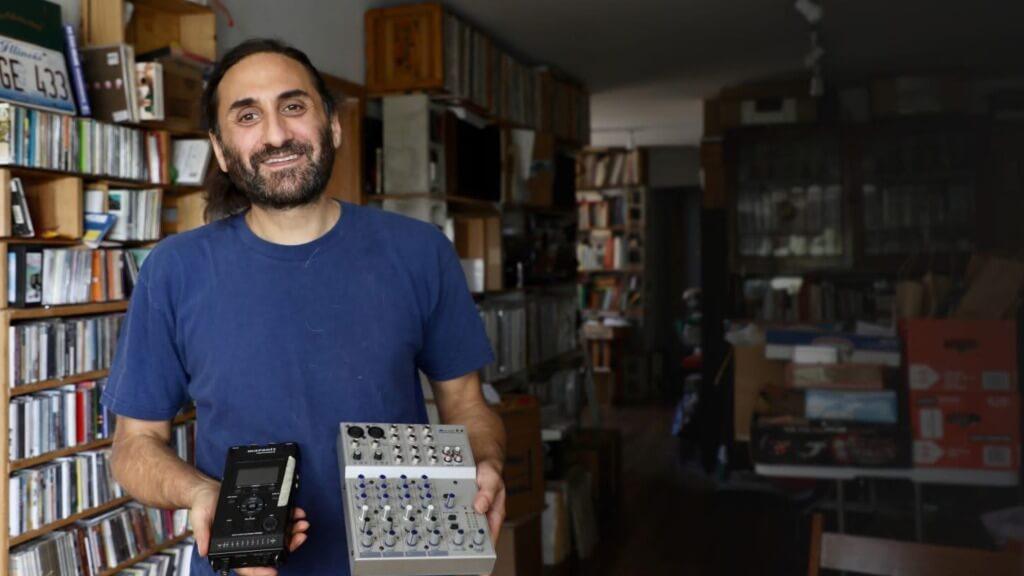
Aadam Jacobs (left) surreptitiously recorded his first live concert in 1984, though he doesn’t remember whose concert it was. It’s hard to blame him: after 40 years and over 10,000 shows, it’s no wonder a few performances have fallen through the cracks. Luckily for the beneficiaries of Jacobs’s labor of love, though, his life’s work is finding a forever home. Thanks to nonprofit digital library Internet Archive and a collective of meticulous volunteers, each of Jacobs’ recordings are being cleaned up, digitized, and uploaded for free listening through the Aadam Jacobs Collection. Thus far, almost 2,500 concerts have made it online via the site’s “No Tape Left Behind” initiative, with thousands more to come.
Jacobs is a bit of an antihero on the live music scene, a Robin Hood character whose impact will soon be immortalized. Though unauthorized distribution of live performances is usually strictly verboten in the industry, Jacobs’ efforts have amassed a mythology all their own. The native Chicagoan’s adoration for concerts has become something of a galvanizing symbol for younger fans, his refusal to charge listeners an ode to the purity of the art form. Though he ran into security roadblocks at the beginning of his efforts to record every show he attended live, he eventually became a sort of cultural institution in the city, a beloved eccentric whose dedication earned him free tickets and local acclaim.
Jacobs’ collection is vast. Focused primarily from the mid ‘80s to the early 2000s, the tapes track the growth of the burgeoning indie and punk rock genres through Chicago and other U.S. cities. A stroll (or, rather, a scroll) through the part of the collection already online shows that it boasts artists from Hüsker Dü, Camper Van Beethoven, and Fugazi to Neko Case, Depeche Mode, and John Cale. Jacobs also recorded pivotal early-career performances by Nirvana, Sonic Youth, the Cure, and the Replacements, and more. (The Replacements loved his recording so much they actually released a mix of it in a 2023 live album.) His is the eye of a non-discriminatory music lover: Boogie Down Productions, Dinosaur Jr., and Belle and Sebastian might be seen during a single 10-second scroll of the archive. He started with a Dictaphone borrowed from his grandmother; he graduated eventually to a Walkman, and more than once his home console cassette machine.
Now, volunteers across the United States and Europe are sharing Jacobs’ gifts with the world. It’s no easy task; song titles are often unclear, and the pressure to accurately document setlists from decades ago is intense. But getting to hear Liz Phair belt “Divorce Song” at an unpublicized 1999 Lounge Ax show, R.E.M.’s 1987 rendition of “I Believe” with hundreds of fans singing along, or even a snippet of Fred Armisen doing improv for 24 hours straight (if that’s more your vibe) makes it all feel quite worth it. And the hundreds of smaller artists catalogued by Jacobs and his volunteers are sure to keep curious listeners occupied for a long time.

THEY´VE ALL COME TO LOOK FOR AMERICANA
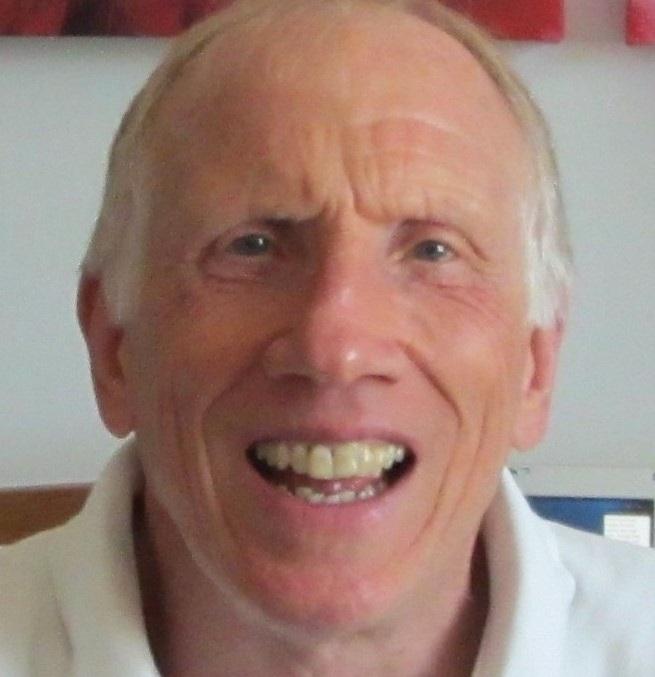
by Peter Pearson (right)
For all our fans of Americana music there is an opportunity to decide for your selves when and where Americana began. It has always been difficult to decipher the origin, perhaps because the music had existed as, or had been categorised in, other genres such as Country. It may be almost impossible to identify a conception-point of Americana music. I know Norman Warwick would make claims for Dvorak and his New World Symphony, and from what I hear he thinks his son, who lives in South Korea, believes that Americana was conceived on one of those long nights and banjo music. There are others who, like him, might also argue that artists like Bela Fleck and Ry Cooder might have been there at the birth of Americana: if not at the birth, then certainly at the baptism.
I´m sure many of our readers are aware of the quarterly series of Songwriters And Invisible Angels and that our next chapter (#3) will be published in September or October. In the series I have selected twelve songwriters who have created scores of excellent songs and because Norman believes that ´songs are the invisible angels who comfort us with music´, he has chosen writers who have offered him codes to live by, with John Stewart being Norman´s chief supplier. So chapter three pairs Kate Wolf, the late American singer writer, with Julie Matthews, and English folkie. country, rocky, writer of beautiful pieces like Blue Songs On A Red Guitar.
We announced in advance what our pairings would be.
However,……..a strange thing happened to me on the way to publication !
As I researched each of my twelve choices, a name was buzzing in my head. The person had been referenced in liner note or interviews by several of my twelve disciples and he had also written some good songs and released a couple of albums that deserved wider response.
So I recently mentioned to Norm that I’m thinking of shoe-horning Malcolm Holcombe into my songwriter choice. However, I did ask Norman whether he thought it might be going too far into the realms of obscurity?
Answer came there none !
Of course, Norm is very busy compiling Spotify playlists that he might never find the time to listen to. He is always listening to the radio as well, tuning in every week for the Bob Harris mix of Americana and Country. Norm notes all the Americana tracks and creates playlists of single and albums by all those artists. He also likes Whispering Bob´s country selections, so Norm puts those on country-dedicated playlists. He says he has over 2,000 playlists, each with 100 songs. Then he types out all the details in case he ever needs them. for reference for a book he admits he will probably never get around to writing /
Sadly, though, it looks like Bob Harris is still out for a while until he is fully recovered for treatment of cancer.
Darius Rucker, (once of Hootie and Blowfish, much loved by Friends, you might remember) has been presenting recently in Whispering Bob´s absence.
Darius is, of course, a huge solo star in America now so he might not be able to continue playing radio presenter when tours begin, or new recordings need to be recorded..
I´m aware that ¨Gambo´, Paul Gambaccini, is a big fan of John Stewart and has an encyclopaedic knowledge of all genres of music. and he has always been an excellent presenter. I´m sure he would be a great temporary stand in for Mr. Harris, though I´m not sure the BBC would consider such a circumstance.
My editor has a long list of artists who will feature in Sidetracks & Detours later in the year. and I´m delighted to see the name of Buddy Mondlock is included. This takes us back to the issue of what is Americana and when did it begin?
I mentioned earlier that Norman, at first, didn´t take to Guy Clark´s Boats To Build album. However, having been taken to task about his comments live on BBC Radio 2 by Wally Wyton, then presenting the station´s weekly country music programme, Norman issued an apology and promised to listen again. He even arranged an interview with Guy, so that he could learn more about the songwriter´s thought-process when making the album.
To close that interview Norman asked Guy whether or not anyone was stepping out of the new generation of these kind of writers and who would be the most likely to emerge.
Guy Clarke proffered the name of Buddy Mondlock !
These days I receive regular emails from Buddy. He released an album a couple of years ago titled Filament. It is quite good and is on Spotify, and I´m absolutely certain Norman will have built a playlist around the album ! (I have,.. it´s called Mondlock And His Buddies).
However, I don’t think Buddy has a record deal these days. It’s all crowd-funded. He is very popular in Ireland and Scotland and makes annual visits there, usually as part of a fans experience tour where you can book to travel with him. This is similar to Tom Russell’s Folk Train project.
Sadly, Buddy never makes it anywhere nearer than that to my own neck of the UK woods.,

However, in an interview published in the February 2026 edition of Uncut, Emmylou Harris is quoted assaying, “It’s because of Guy [Clark] and Townes [van Zandt] that Americana exists. They had to create another part of the playing field”. Those of us whose first acquaintance with Clark’s debut Old No. 1 came about from the relentless championing in Zigzag magazine will recognise that. It lit a path that could enable country music to reclaim its essence from the industrial machine on Music Row.

OLD ROADS AND FREEWAYS
Guy Clark´s Old Number One revisited.
album review by Norman Warwick
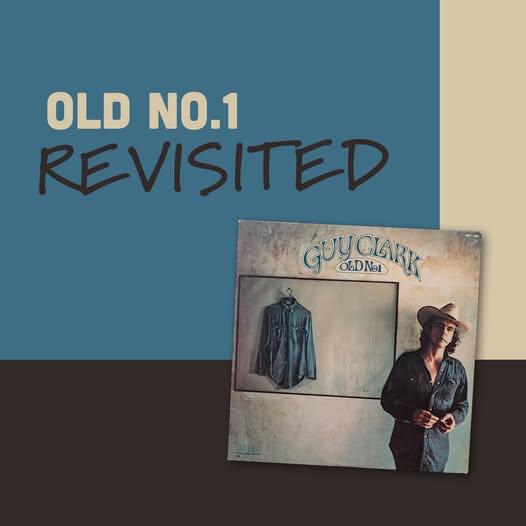
My first acquaintance with Guy Clark’s debut Old No. 1came about from the constant recommendations in magazines such as The Omaha Rainbow, and niche supporters such as Stillwater Times. They seemed to be telling me that the album down a path that would enable country music to reclaim its essence from the industrial machine on Music Row.
Fifty years on, their spiritual children (and a couple of contemporaries) have come together to pay tribute to a record that should always be considered seminal.
Maybe there is a hint of a new zeitgeist as the Guy Clarks Old Number: re-visited album is released at the same time as Old No. 1 at 50: A History of Guy Clark’s First Album, a new book written by Peter Blackstock.
A 9/10 review of the album on AmericanaUK website mentions the 100-page book features interviews by Natalie Weiner and was edited by Tamara Saviano, the author and filmmaker known for the biography and documentary Without Getting Killed or Caught: The Life and Music of Guy Clark. The book includes interviews with people who were in the room during the making of the album, as well as the story of the “lost” album that was recorded before Old No. 1 and why it was never released. There is an accounting of the songs and the backstory, according to Guy Clark. Proceeds from both the album and the book will benefit the Guy Clark Family Foundation.
Producer Dan Kobler gathered together a firmament of musical and singing stars at his Good Wishes studio in Nashville, and it’s fair to say between them, they have produced a worthy tribute to a classic album.
Margo Price leads the way, with Rita Ballou laying out the tale of the cowboy heartbreaker against a tight backing which includes some sweet pedal steel from Russ Pahl and some fine backing vocals led by Logan Ledger and Nicki Bluhm.
Jade Bird doesn´t seem an obvious choice to sing LA Freeway, having only recently made a reverse trip from Austin to Los Angeles. Somehow, though she retains the feel of Clark’s original, and Eamon McLoughlin’s mandolin shines throughout the accompaniment.
A cello, played by Nat Smith, leads Sarah Jarosz, who has been on ouir office playlists ever since Peter Pearson mentioned her music to me three or four years ago, into She Ain’t Going Nowhere. Her vocal truly captures the intimacy and the drama of the song. Jarosz also plays mandolin while harmonies are provided by Erin Rae and Ruth Moody.
The next track throws in A Nickel For The Fiddler. This issung by Kelsey Waldon, backed by a crack band of Critter Eldridge (guitar, Sam Bush (mandolin), Christian Sedelmyer (fiddle), Smith (cello) and Dennis Crouch (bass). As you listen you you can easily imagine Waldon leading a dancing crowd as she rattles through the verses and chorus whilst instrumental breaks maintain the tempo.
Rae steps out front to remind us of That Old Time Feeling, and perfectly captures the smoky late-night slow-dance ambience of the tune. Jarosz adds mandolin, with close harmonies delivered by Roseanne Cash and Ruth Moody.
Brennen Leigh’s own records are themselves a honky tonking dream, and her treatment of Texas 1947 is just right for the song. You can feel the heat and humidity and picture the scene in the small town in the late 1940s as the train barrels on through. This quickly became, and still remains, my favourite train song, and I have delivered it as a performance poem at scores of poetry slams over the years, but Brennen properly puts the music back into the story.
Desperados Waiting For A Train is one of the few Guy Clark songs that I never quite get along with but is probably the best-known song on the record, and credit to Andrew Combs (ably supported by Rodney Crowell) for taking on what I acknowledge has become an iconic tune. It’s so well-known it’s hard not to hear Clark himself in your head as the story of the friendship between old and new generations unfolds. Combs and Crowell capture both the emotion and the swells of the song, and retain the cinematic quality that pervades from so many of Guy´s songs.
Logan Ledger has an autherntic country-music voice, which he wraps all around Like A Coat From The Cold. Steered in by Pahl’s pedal steel, Ledger catches a quiver in his vocal, eking the emotion from the lyric. Mickey Raphael’s harmonica twists beautifully through the words and music; ( it’s borderline perfect, say AmericanaUK)
Instant Coffee Blues, is such a well told story, lending empathy to the two central characters in one of Guy´s best lyrics. Here, on Re-visited it is rendered by Aaron Lee Tasjan with Audley Freed on electric guitar, Pahl’s pedal steel and Crouch’s bass flowing the music through Clark’s miniature of a one-night stand right up to the two parting in the morning.
For the final song, Let Him Roll, Knobler brings in author Caroline Randall Williams to handle the spoken-word tale of old-time characters and their lives of hard work and broken hearts. This was another song that Colin Lever and I, as Lendanear, occasionally delivered in the folk clubs around the North West Of England. Our folkie friend, Pete Benbow, would often play his excellent cover of LA Freeway, with which he introduced me to Guy´s music all those years ago. Pete´s was a faithful replica of LA Freeway but his wistful and restless vocal always made his audience aware that any road name anywhere in the world could be employed to describe the urgency of a desire to move on.
Here on this re-visit to Guy Clark´s Old Number One, Knobler and the assembled musicians and vocalists pay a fine musical tribute to a true Americana classic and one that rewards repeated listens.

Jazz at Progress
coming to you by Jazz in Reading
JAZZ AT PROGRESS, FRIDAY, 12TH SEPTEMBER 2026
FIVE WAY SPLIT
preview by JIM WADE
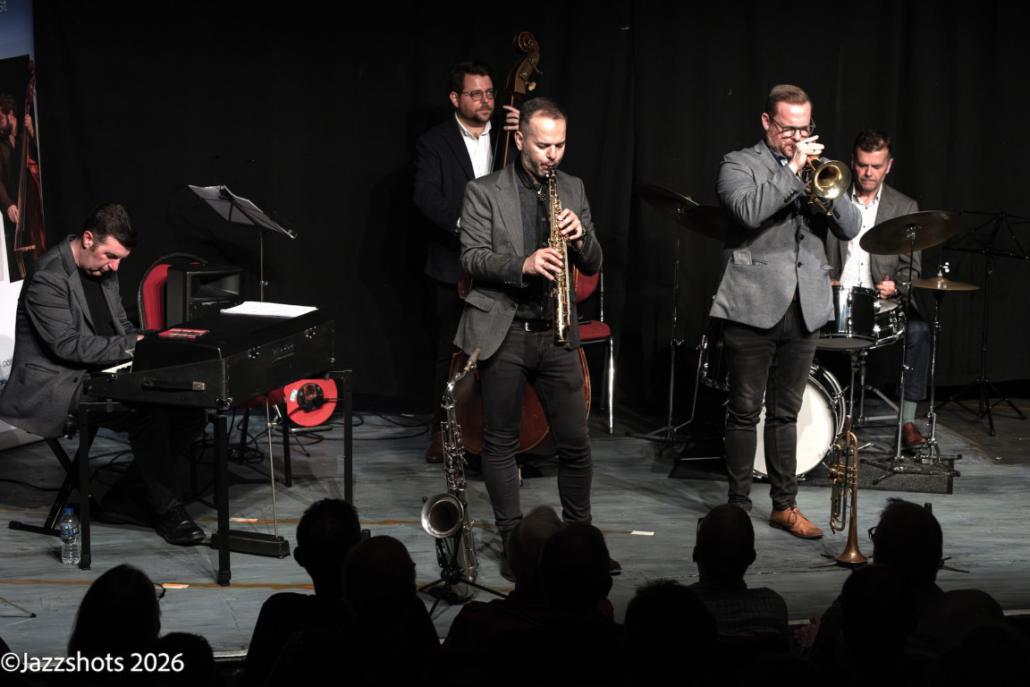
FIVE WAY SPLIT (right) are Vasilis Xenopoulos sax| Quentin Collins trumpet, flugelhorn | Rob Barron piano | Matyas Hofecker bass | Matt Home drums
September is here and we start our new programme with the fantastic Five Way Split, featuring material from their 2026 album “Modus Operandi”. The band, together since 2020, has developed an understanding that makes a brilliant experience for jazz fans.
In May 2024, when the band last played at Progress, Trevor Bannister’s review ended with these words:
“The band launched into a blues. It was ‘All hands to the pumps’ as the excitement mounted for the grand finale – blistering solos, high speed exchanges, dramatic top notes … still the audience called ‘more!”. Nothing less is anticipated in 2026.
The newly released album contains original compositions from band members, alongside arrangements of tunes by Henry Mancini and Jimmy Van Heusen. Most compositions are of the rousing “hard bop” variety, if one has to use such terms. Whatever term you use, a night of great jazz is assured.
“The Blue Note formula may be very familiar as the defining template for jazz in the popular imagination, but there’s not many who can deliver it with such conviction and originality. Lyrical horn soloing over harmonically rich progressions with a deep and unfailing sense of swing”. – Eddie Meyer, Jazzwise, May 2026.
We look forward to welcoming you to the gig.


New at No. 4 is Old Crow Folk Club Presents The Songs of Rev Hammer Reimagined, an eclectic body of work which showcases the vast back catalogue of maverick folk artist Rev Hammer. The album features 23 of his songs reworked by Justin Sullivan (New Model Army), Mark Chadwick (Levellers), Maddy Prior (Steeleye Span), Seth Lakeman and more.
Arriving at No. 6 is the debut collaboration Donn/Dubh between multi-instrumentalist and poet Arun Sood and trailblazing folk singer Angeline Morrison. Spanning electro-folk, ambient, drone, dub and spoken word, this collection sounds at once spiritual yet earthy. Folk melodies are exploded into fragments, then reassembled anew, allowing the artists to explore their complex relationship with musical heritage, tradition, landscape and belonging.
Landing at No. 9 is legendary British singer-songwriter Robyn Hitchcock’s 25th solo album, The Confuser. These perceptive new songs traverse familiar signposts near and dear to Hitchcock’s creative heart, from the significance of love to the mysteries of the cosmos, all delivered with the vivacious gusto and driven delight of an artist still with something to prove


DUO BRAVO
Casa de la Cultura, Yaiza
18th September 8.30 pm
Alma en conciertoi
NOT TO BE MISSED

SIDETRACKS & DETOURS SUNDAY 20th SEPTEMBER 2026
Waiting For Godot and Music At Lunchtomes
SIDETRACKS & DETOURS SUNDAY 27th SEPTEMBER 2026
r.i.p. David Alan Coe, songwriter and unreliable narrator


Leave a Reply
Want to join the discussion?Feel free to contribute!