
SIDETRACKS & DETOURS 28th June 2026: Revival: In Search Of Where Truth Lies + We LENDANEAR To Applause for The Good That People Do

sidetracks & detours
IN SEARCH OF WHERE TRUTH LIES
by Norman Warwick

Some Americana singer-songwriters are occasionally unreliable narrators and some seem to always be unreliable narrators. Americana is not, of course, the only genre to hold such writers in their format and nor is song-writing the only art form in which fans and creators go to war in the name of authenticity, as Nathan Stevens opined in a recent story in on-line Paste magazine, about Gillian Welch. Despite what lyrics might tell us, songwriters almost never shoot a man just to watch them die but a writer born and lived elsewhere who claims to be an Okie From Muskogee would be thought by many to be committing a similarly egregious crime. Surely, though, The (Dixie) Chicks never poisoned anyone with black-eyed peas? Perhaps country music still demands today authenticity or apology necessitating its practitioners to fake it now and then.
Stevens, the journalist, was actually writing about an album released thirty years ago that at the time might have fallen between two stools. Perhaps the entire concept was an unreliable narrator in that it sounded like it belonged to what Stevens called ´an older, darker era of country and Appalachian folk music´.
The recording artist of the album Stevens was referring to was raised in California having been born in New York. Her musical accompaninist on the album Revival was from Rhode Island. The two had met whilst studying at Berklee College Of Music where both auditioned for a country band. Gillian Welch, the name on the album cover, has since said that ´hearing nineteen fifties bluegrass music, particularly The Stanley Brothers duo¨.changed my life´
The most frequently played instrument by her musical partner, Dave Rawlings, is a 1935 Epiphone Olympic Guitar he ´scavenged from a garage when it didn´t have any strings´
These two old-timey loving nerdy students called that debut album Revival.
George Strait had been the most ubiquitous and perhaps the most successful country artist in the decade preceding the release of Revival, and Garth Brooks had a bigger following than most pop stars.
A book full of female artists of this era had not only outsold pop artists of the time but also nearly any other major artist beyond ´country´.
In fact, in those days Bruce Springsteen was lauded as a Rock artist by the music press, The Boss was already exploring rootsier, less polished sounds of Nebraska. Naming his album after the State, he released a collection of four-track, homemade recordings that set a template of the short lived alt-country scene that soon became known as Americana.
The Strait From The Heart came out as massive album at round about the same time and seemed to take one path of opportunity on one side of the central highway of country music whilst, to authenticate Nebraska Springsteen was running alongside that main road.
Instead of following either of those routes Welch and Rawlings tunnelled into the roots of the past instead of moving further down the road.
The writer of the Paste article reminds us that the Revival album by Gillian Welch was released long before Joanna Newsom or Fleet Foxes recast indie-folk.
Contemporaneously, Richard Thompson in the UK, dropped what Nathan Stevens considers as ´misremembered, ancient traditions´. The musical alchemist that is Richard Thompson offered folk music to the rockers and delivered hard rock to the folks, sometimes in the same song.
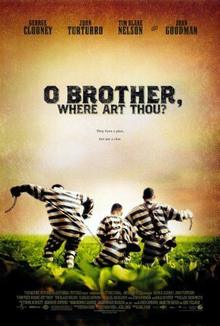
Revival pre-dated the surprise success of the film O Brother Where Art Thou which popped up in of the explosion of apparent love of all things that might be labelled American Folk Music, that transgressed into what Stevans called ´dumbassery´ and stuck around for a couple of decades. I had not read or heard that particular word before but although he places it delicately and neutrally in the Paste article it has echoes of the kind of words employed by unreliable narrators.
T Bone Burnett, legendary producer of a handful of albums that crossed borders and so united many genres that until then had been thought of as strange bedfellows, was impressed by a gig he had seen by Gillian Welch and Dave Rawlings. The three of them subsequently chatted about him producing the planned album of Revival, and the musicians decided to hire him once he had agreed to be as ´hands off´ as possible. On release it was clear to Stevans that the album eschewed the ´poppy gloss´ that was then dominating the charts even though it held a ´cleaner sound´ than some other albums, siting The Natural Bridge an album by The Silver Jews, out around the same time.
The Revival album, says Stevens, ´rejects modernity´ and reminds us, instead, that there is a reason that
Appalachia has the greatest ghost stories in the United States for a reason. The region´s crimes of chattel slavery and a poverty so relentless it ground the populace into bone and dust suggest the area and its history is haunted.
Stevens speaks of how a bluegrass or folk jam can keep you nursing a beer for hours, just to hear one more song and then says that listening to Revival and hearing the track Orphan Girl delivers that same response.
The album tells the history of grief endured by sharecroppers and dust-bowl farmers who not only suffered by being utilised as the tools of capitalism, but also were worn down to the bone by a particularly lengthy spell of the rage of nature. Any of us who ever watched the coupleof series of Lonesome Dove will recognise those conditions. The prayers invoked of that harsh life, and the prayers of Revival´s lyrics, serve weighty anchor, but nevertheless receive no response.
The tight, perfect harmonies of the Annabelle track trace the grief of sharecroppers and Dust Bowl farmers, the yoke of capitalism and the rage of nature wearing them down to the nub. It should be said a few lighter moments, adorned by some nifty instrumental riffs or by occasional lines, written by Welch, that would have graced any poetry anthology
Revival created a template that informed Neko Case on her Fox Confessor Brings The Flood some years later.
Nevertheless, the closing track Only One And Only is a happy melody that counterpoints a desperate story. In fact, Stevans suggests the track ´feels like a spiritual sequel to Blaze Foley’s version of If Only I Could Fly, meditating on lost love and what could’ve been as Welch’s voice fades into a whisper and Rawlings plays a loping, lounging solo´.
Though neither Welch nor Rawlings have much of a connection to Texas, they evoke Townes Van Zandt on Only One And Only. Welch, on Revival, and on stage and in the studio in thirty years since, has faintly echoedTownes in her vocal delivery.
´Both singers (Welch and Townes) could wail like a funeral procession,´ Stevens writes in Paste for this thirtieth anniversary tribute review to Revival. He emphasised his point by saying ´they also knew how to wring devastation out of understatement and directness. Welch can still do that. Listen back to the original Pancho and Lefty and you’ll hear in Townes her ability to turn the screw on the simplest line´.
Both press and public first reaction to Revival was mixed.
However, there was a Grammy nomination in 1997 and No Depression, pioneers of the alt-country tag, loved the album and sensed a sea change.
However, another critic Ann Powers, in what Stevans calls an uncharacteristically wrong-headed and nasty reaction to Revival, lambasted Gillian Welch
“Gillian Welch doesn’t play rock music, but the determination with which she has cast herself into a role that by no right belongs to her shows pure rock attitude,” she wrote in her review for Rolling Stone, calling Welch’s song-writing “museum-careful invocations.”
That quote above, panning Welch for writing fiction rather than pull from her own experience, sounds to us in the soundtracks and detours ´office´ as an early-effort of virtue signalling.
Another respected critic, Robert Christgau, declared that Welch “just doesn’t have the voice, eye, or way with words to bring her simulation off. Unless you’re highly susceptible to good intentions, a malady some refer to as folkie’s disease, that should be that.”
Stevans urbanely points out that these reactions are extremely funny to hear from a Seattle and New York native, determining what is and what is not authentic country music. There’s a hint of self-loathing in both reviews, revealing a gatekeeper’s guilty conscience.
It should be borne in mind, though that Revival arrived during the most fractured time in country music history. As Stevens reminds us, in 1996, the country charts were dominated by a 13-year-old with crossover appeal, perhaps the first sign that the genre’s early-‘90s boom was coming to an end.
He says that not even industry accolades could give some artists true mass appeal. While Welch and Rawlings’ closest peers, Nickel Creek and Alison Krauss, snagged Grammy wins and noms, the Chicks were outselling Alan Jackson and George Strait´.
He further suggests that it took the unprecedented success of O Brother Where Art Thou? , a film of cinema stars, for this strain of folk and country music to find its commercial potency
Of course, Welch, Rawlings, Burnett, Krauss, Emmylou Harris, and the Stanley Brothers all feature in on the film´s sublime soundtrack also helped.
Stevans contextualises all this by saying ´with time, Revival became a path to success for artists uninterested in the rot of mainstream country. Welch and Rawlings certainly followed it on their next album, Hell Among the Yearlings, which refined their debut’s formula, doubling down on its most haunting moments (“Caleb Meyer”) and making its modern detours stranger (“Whiskey Girl”).
One of my own favourite-all-time top ten albums followed in 2001. Time (The Revelator), has a title track that has featured on just about every playlist I have created since.
To close his piece, Nathan Stevens asserted that if country and Americana music is in a constant struggle of self-realization and authenticity, Revival was a welcome balm touched by sheer excellence: demanding and deserving of a place at the table´.
Much as I enjoyed Mr. Stevans piece as a well thought out music-critique guided by lined reasoning, it was what lay between the lines that kept me awake for a couple of nights after my read.
I loved his notions of genre-busting, I admired his willingness to call out unreliable narrators even whilst I pondered the purpose of lullabyes, legends, lies and myths and I was led to imagine conversations between Stevens, Michael Ondaatje, Peter Guralnick, John Tobler, Peter Pearson and others who shape the chaos of poetry and songs, fiction and non-fiction into a novel of our times.
In fact that all sounds like a new challenge for sidetracks and detours to uindertake, so follow your art to a new series, coming soon, in which I ´talk´ to these people I don´t actually know, about how, and why, we write.

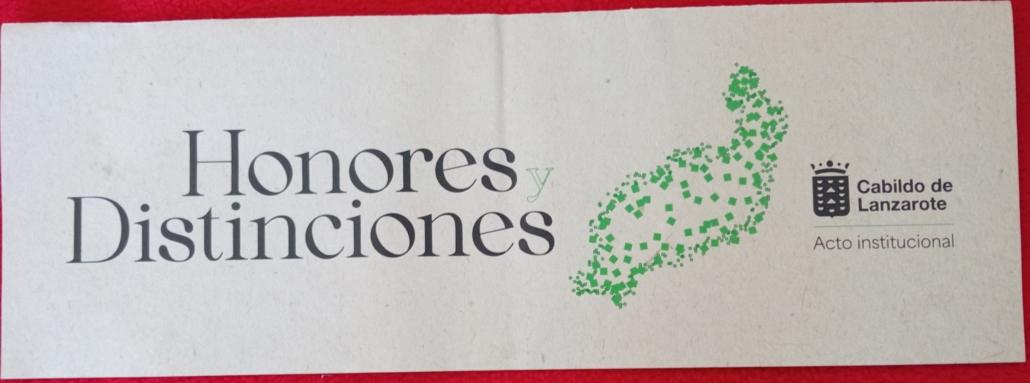
AWARDS WELL-EARNED.
Lanzarote says thanks to all those who help Lanzarote thrive.
review by Norman Warwick
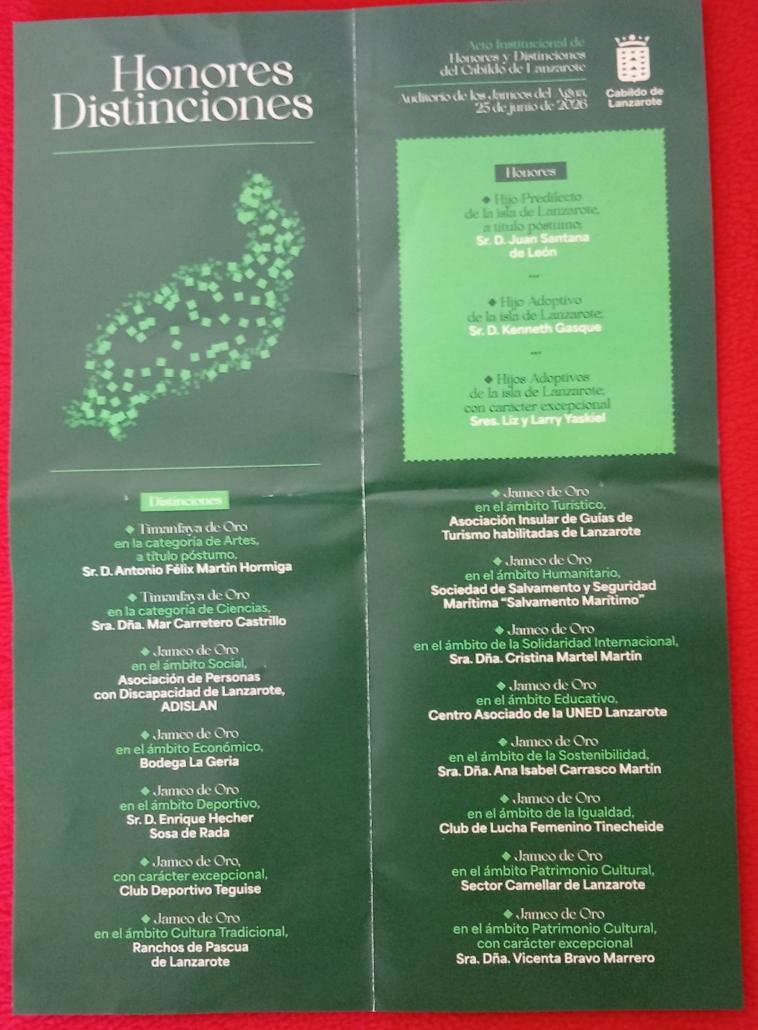
We learned on the 25th May that out friends, Larry and Liz Yaskiel, the editors of the English-language Lancelot, were named Adopted Sons and Daughters of Lanzarote by a vote of the 22 members of the Cabildo (Island Council) .
This couple arrived in Lanzarote from London 42 years ago when they decided to create what is now the oldest English-language publication in The Canary Islands. For this reason, and for having been true ambassadors of our island to the British community, they received numerous accolades in the votings..
Óscar Noda, UPY councilor and mayor of Yaiza, noted that “I met Larry and Liz Yaskell many years ago, although it was probably after a significant part of their careers had already begun. I have always greatly valued the work they have done, especially through that first—and at the time, only—English-language magazine about Lanzarote, linked to the English version of Lancelot. Thanks to that project, they managed to convey the island’s unique character, its virtues, and everything that was happening there to an international audience. I believe it has been a commendable effort for many years, and one that they continue to carry out with the same commitment today.”
The President of the Island Council, Oswaldo Betancort, greatly appreciated the work of Larry and Liz Yaskiel, as well as the other award recipients. “I am convinced that they do not seek the limelight in their professional work. But it is true that with their effort and commitment, they have made Lanzarote a more competitive, more comfortable, more humane, and more valuable island.”
Similar awards have been announced for Juan Santana as Favorite Son and Keneth Gasque as Adopted Son.
Also highlighted in the announcement of the forthcoming awards were the Timanfaya de Oro, werer awards for Félix Hormiga (posthumously) and astrophysicist Mar Carretero, as well as the numerous Jameos de Oro awards, which Councilor Machín Tavío detailed as follows: “Thanks to Juan Santana, posthumously, Kenneth Gask, Larry and Liz, Félix Hormiga, Mar Carretero, Adislan, Bodega La Geria, Hecher Sosa, Club Deportivo Teguise, Ranchos de Pascua, the Island Association of Tourist Guides, Maritime Rescue, Cristina Martel, UNED Lanzarote, Ana Carrasco, the Tinecheide Women’s Wrestling Club, the camel sector, and Vicenta Bravo.”
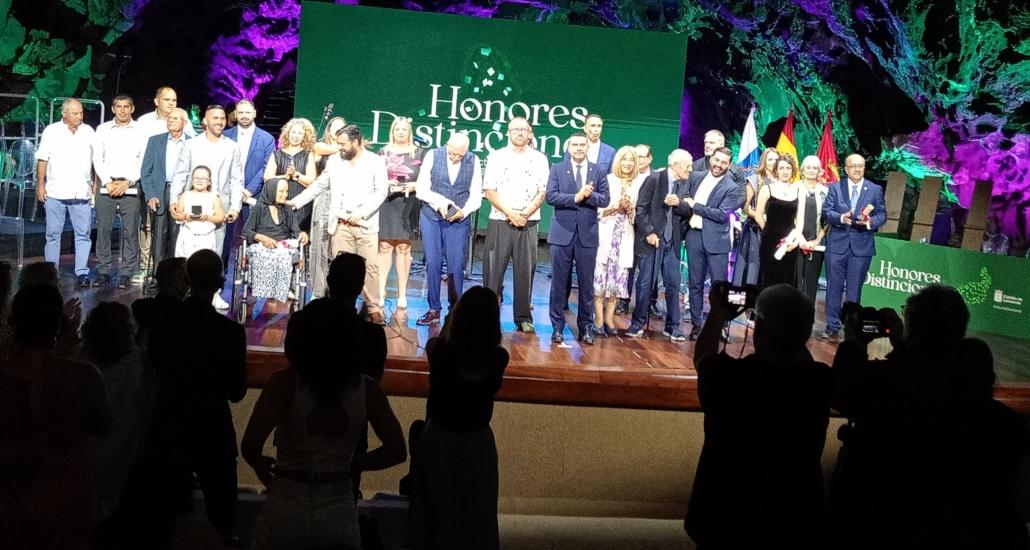
The distinctions and ecorations were awarded to the winners at a grand gala that took place on June 25th at Los Jameos del Agua and Dee (my wife) and I felt privileged to be amongst the audience, having been invited by Larry and Liz.
We have seen a score and more of concerts of classical music, by orchestras and string quartets, and chamber music and even a musical play about the life of Cesar Manrique,…. and even a unique, strange and slightly disturbing one man show by film actor John Malcovich who claimed to be reading from his autobiography, but seemed to deliberately reveal himself as an unreliable narrator of the worst kind, as we listened to what was actually a biography of a known serial killer.
Every year that we have lived on Lanzarote we have seen all the concerts in the annual Canary Islands International Classical Music series, which tours The Canaries each year (in January), so follow sidetracks and detours as we hope to provide previews in the weeks ahead.
Sadly, though, we had waved a sad goodbye to Jameos Del Agua after our final concert in January earlier this year, as the wonderful scenic staircase outdoor winding staircase that we had once taken in our easy stride, now felt more like climbing Everest on unsteady legs and with a heavily breathing heart.
So, at first we thought we might have to decline Liz´s kind invite, but she said we might be able be taken up in the very lift that carries the orchestras´ instruments to their storage place, that would let us out on to the stage, and down into the front rows of this wonderful theatre chiselled of the rock face. And I should say at this stage that we were incredibly impressed and grateful to the staff who accompanied us and a few others and saw us to our seats. hey smiled, chatted but never patronised. In their manner they deserved awards too..
When we lived in England we always felt proud to live in Rochdale, once a cotton mill town but in the twentieth century in steep deline,, that
resisted that decline by its prided in its people, its volunteers, its charities and its arts scene that delivered much in the same as does Lanzarote. Indeed, it was that very attitude that brught us to Lanzarote.
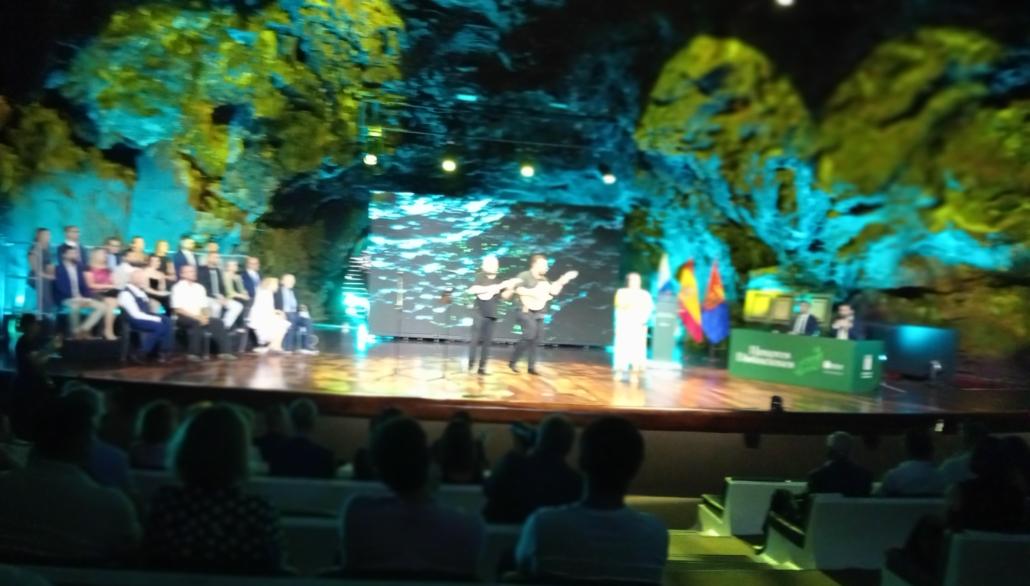
What Lanzarote does though, is to not only recognise those who succeed, but also, and just as importantly, they recognise even those who help, inspire or mentor others to achieve success. It is easy to make these kind of occasions to be full of glitz and glamour and razzmatazz all that jazz but on Lanzorote, even after living here for ten years, we are always impressed by how the authorities, and indeed, the people of Lanzarote, always retain the gravitas and dignity that such awards deserve. The main presenter of tonight´s honours was delivered The President Of The Island and in every one of his introductions of the recipients he spoke of the government´s gratitude at what all tonight´s nominees have contributed to the growth and success of Lanzarote. Each presentation was preceded by short cine film showing the history and the work of the individual recipients and their organisations. All these films taught us so much of the island´s distant history and modern success. Each person collecting their award was given a warm handshake by the President and was then urged to take to the apron of the stage to allow press and pals to take photographs of smiling award-holders, to be for digital, posterity. What struck me most was how everyone in the theatre gave lengthy and appreciative applause to each of those being awarded. I´ve no doubt that many members of the audience e and many of those on stage would have all known each other, and perhaps even worked together in this broad sector. Nevertheless the applause for each and every one was solid and sustained. with several people standing to applaud a close colleague. The ceremony had been opened by a musical performance by a female singer Almudena Hernández, accompanied by musicians José Vicente Pérez and Adrián Nizasted. delivering some glorious musical folklore presented with timple player and a guitarist accompanying the excellent female singer with a fine voice (left) , who sashayed and swayed in front of the cine-screen showing the best of the Lanzarote scenery. The instruments were played with unobtrusive flair and and all enhanced the music. They all three seemed to be loving playing in this arena and thier soothing, yet emotional, traditionl sounds were a perfect opening for the event.
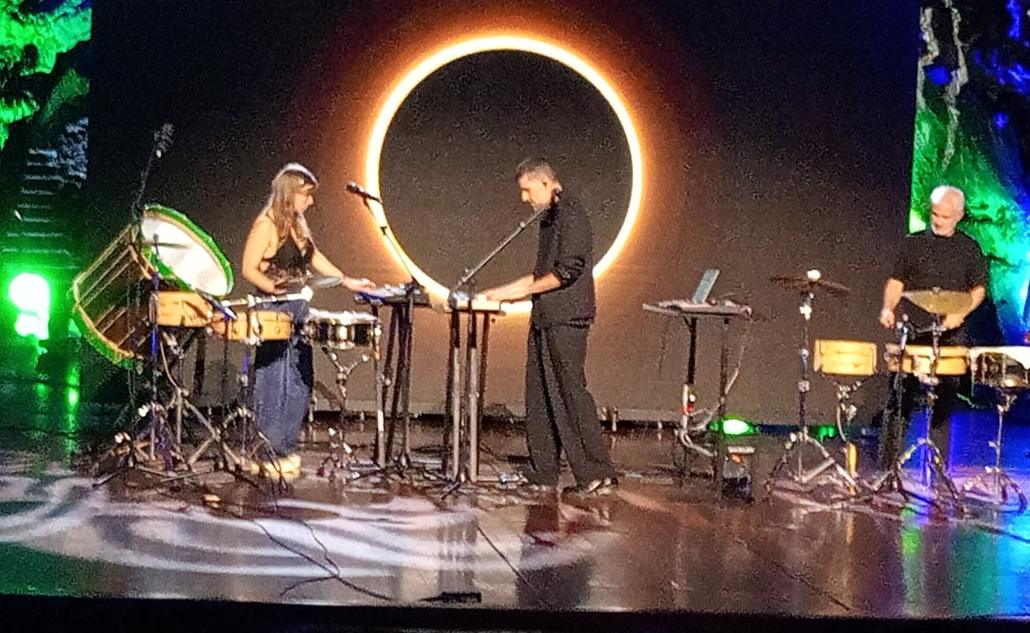
The closing act, the avant-garde music of the multi-award-winning Ale Acosta.were of one female percussionist and two males on bigger drums. It was almost bass and drum music but taken to whole new technological level, as the tree were putting the beat to a pre-recorded instrumental and occasionally vocal backing track. Ths was all aligned with a light show than showed this natural theatre at its prime all the recipients, having received, now gave back. Suddenly they were all clapping along at an appropriate rhythm, providing great support to these superb musicians.
As they played their short set a very professional light show was being beamed up to the rocky roof of this strange cave-like theatre that only someone of the imagination e of Cesar Manrique could have imagined, and I found myself whispering wow, and cor. I somehow missed the house raves that all my teenage friends attended in the seventies. For this, though, we had been invited and I couldn´t believe my ears and eyes, as The Mamas And Papas were still saying to me when everyone else was at a rave.
Tonight had reminded of a genre of music that I had long forgotten and for far too long I had ignored. However, this was wonderful and I will be seeking out any recordings made by Ale Acosta !
Seventy three I might be, but I´m still finding new music to love here on Lanzarote such as Duo Opus 22, Duo Bravo, Mona Lara and now these two acts i had seen tonght..
The following day an articlewas published by Lancelot Digital (see below), speaking also on behalf of Lancelot Television, confirmed my point made at the top of this page that Lanzarote folk genuinely and generously share in the pride and celebrations of those who make the island so community spirited..
The Island Council recently named Larry and Liz Yaskiel as Adopted Sons for their work as ambassadors of Lanzarote
Colleagues of Larry and Liz at Lancelot Medios were especially to attend the Lanzarote Island Council’s Honors and Distinctions Ceremony at Jameos del Agua. It’s not every day that colleagues and friends like Larry and Liz Yaskiel are named Adopted Sons and Daughters of Lanzarote.
These British by birth, but adopted by the people of Lanzarote, arrived forty years ago to start publishing Lancelot in English, when curiously they were hired to translate the German edition.
However, regardless of their role as editors of Lancelot in English, the true merit of this couple is that they have become true ambassadors of Lanzarote to the residents and tourists of the United Kingdom, as well as developers ofthe link with the descendants of Lanzarote natives in the American states of Texas and Louisiana.
In short, it is a great honour for this media group, which humbly boasts of the high value of its professionals..
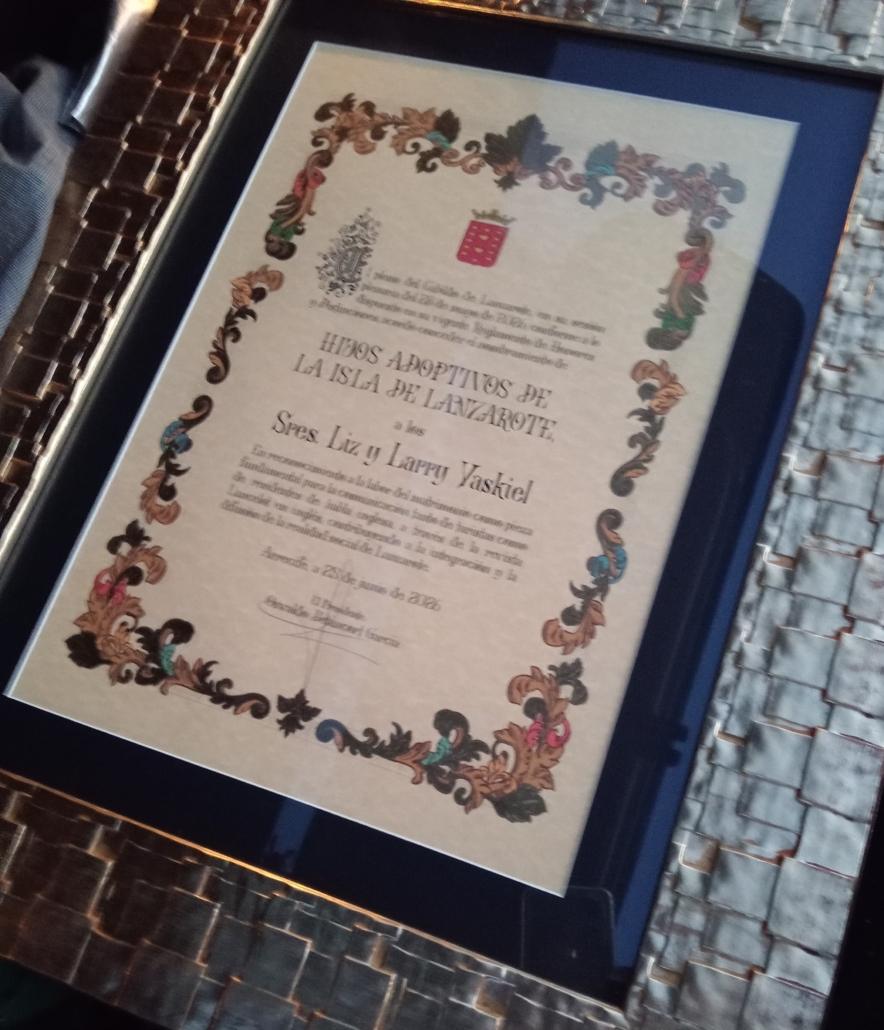
the certificate (left)
the recipients, (above)
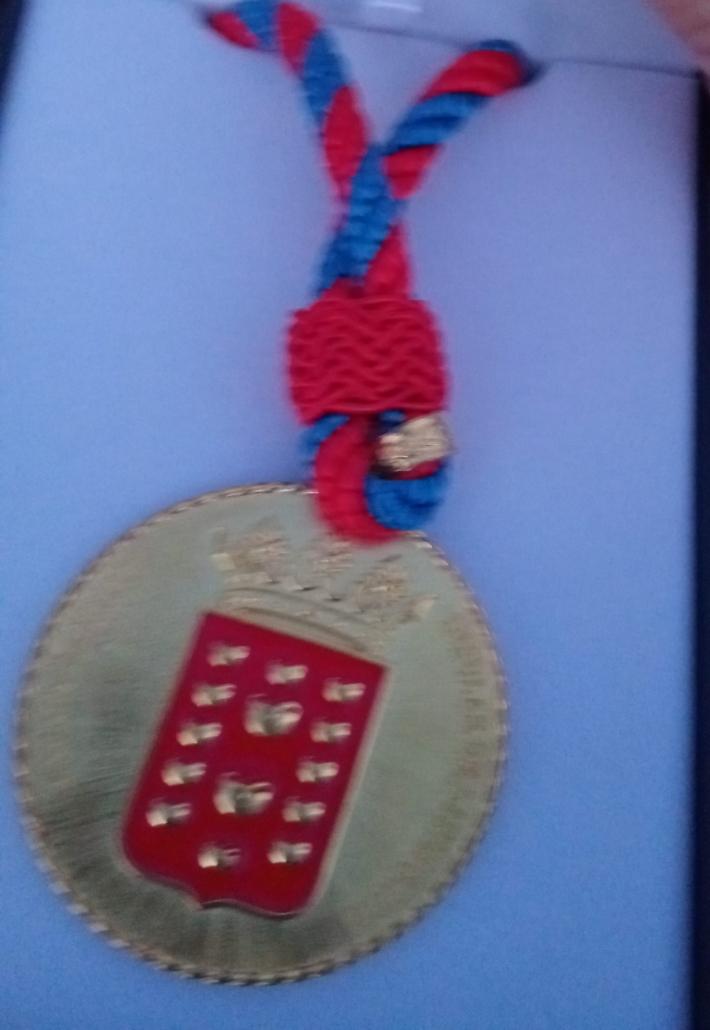
the medal (right)


Leave a Reply
Want to join the discussion?Feel free to contribute!