
SIDETRACKS & DETOURS: 7 / 12 / 25 classical, jazz, folk, rock, americana; songwriters & invisible angels
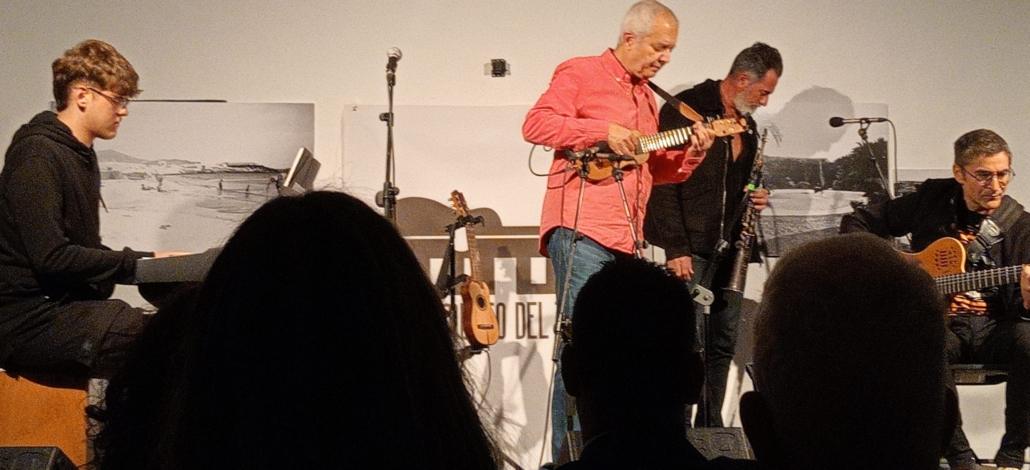
EDITORIAL:
NORMAN WARWICK. Norman´s working life was spent in Rochdale,where he was a champion of the creative arts and creative arts community through his columns online, in print and on radio.
Norman founded The Crew column in The Rochdale Observer, offering a platform to sixth form students at Falinge Park School Of Arts and for a number of years he edited the students´ twice weekly Crew Columns in partnership with his co-founder, the late Robin Parker, a former Mayor of the Borough
Norman retired to live on Lanzarote, more than ten years ago, when he was working with Steve Cooke and was therefore delighted to see Steve take over the all across the arts pages. He knew Steve was not only a huge fan of the arts but was also a hard working mentor and supporter of artists and thier art forms..
Norman worked on a film, shot in Rochdale, called And She Cried, intended to raise awareness of what constitutes a hate crime. He also served as master of ceremonies for three successive years at The Rochdale Literature and Ideas Festival, interviewing artists like Jane Danson (Leanne Battersby) and Kevin Kennedy (Curly Watts), actors on Coronation Street.
Norman Warwick has also written a biography of Peter Courtney as well as a fictional auto / biography of the late singer writer Townes Van Zandt.
Norman has also published a pamphlet of his own poetry, Still Chasing That Rhyme.
He also worked for several years withsinger, songwriter and guitarist Colin Lever in a folk-rock duo called Lendanear and together they recorded three albums: Moonbeam Dancing, In The Theatre Of The Mind and Songs For Sarah. A few years ago Colin re-mastered those recordings and his songs and Norman´s lyrics are available at bandcamp.
Steve Bewick and Norman Warwick hosted a weekly programme on Crescent Radio, Rochdale´s radio for its Muslim residents, a music led programme that also featured the two presenters interviewing Rochdale politicians and others in the news.
Norman also ran a weekly creative writing group for adults, mainly at the Touchstones Art Gallery and Museum.
Throughout all this time he also was a featured artist for Artists In Schools, designing and delivering creative literacy workshops, occasionally designed to address school social issues in primary and secondary establishments.
Since retiring from Rochdale, and establishing a daily blog published from Lanzarote, these days the hinterlands for Norman´s work are based in the UK, The Chanel Islands, The Canary Islands, Spain, Portugal, France, Italy, America, South Korea, Isreal, New Zealand and Australia.
Arts fans in London and Austin Texas have been especially supportive over the years.
The blog addresses a wide range of art forms including creative writing, poetry music, dance, comedy, and songwriing.
In the field of songwiting Norman has personally interviewed singer-songwriters such as John Stewart, Guy Clark, Townes Van Zandt, Mickey Newbury and Tom Russell. He has also met with British musicians such as Gary Hall, John B Spencer, Hank Wangford, Michael Weston King and Dave Barry. He is also proud to have spoken with great songwriters like Julie Matthews, Cathryn Craig and Karla Harris.
SIDETRACKS & DETOURS is a totally non-profit group of volunteer contributors with several writers who give their time freely in support of the core aims.
That Steve Cooke and Dr. Joe Dawson, who also worked with Norman in the UK still appear in today´s pages, kindly allowing us to include their always-positive news and views, helps broaden awareness of the talents of the artists they feature. Michael Higgins is a writer who is a historian of English Folk and Dance, as well as dialect and so many other subjects that energise the arts. He, too, occasionally worked with Norman in the UK, and still contributes columns of rare interest, such as today´s topic of dialect.
Organisations like Jazz In Reading, Ribble Jazz And Blues. Sound Roots and Folk Expo are organisations who also share their news with Sidetracks and Detours.
Steve Bewick promotes his favourite jazz music through his radio programme Hot Biscuits, and keeps readers of Sidetracks and Detours updated when he introduces his weekly show.
And then, finally, Norman also works in synergy with Peter Pearson, who has enjoyed more concerts than Norman has had hot dinners and has also introduced countless great artists that Norman had previously not listened to but who are nowbut who are now firmly placed at the top of his own preferred playlists. Tapping into Peter´s secure knowledge of songwrtiters, particularly on the Americana scene, and Norm´s constant search for the heart of a song, make an ideal casting as editor and correspondent of a a new series of writings on Songwriters And Invisible Angels, This twelve episode seies will be published with one publication each quarter, taking us into 2029.
You can support our commitment to the arts by sending us your news,reviewsinterviews and reviews of any event from all across the arts.
Whilst we cannot pay you, being a not for profit organisation, we can at least present your work, fully attributed to a new audience.
Thank you.
CONTENTS

Choral Music, Creatives Awards, Toad Lane Concerts
1 ALL ACROSS THE ARTS by Steve Cook and Dr Joed Dawason
Classical Music
2 TRIPPING LIGHTLY IN TEATRO TIAS
recital by JUDITH CHOI-CASTRO (violinist) & JOHN PAUL EKINS (pianist)
Classical Music
3 DOMINI STRING QUARTET
Timple Museum, Teguise Lanzarote 22nd November 2025
Classical Music
4 LANZAROTE ENSEMBLE
play Dvorak at Victor Gopar Theatre Arrecife
NEW WORLD SYMPHONY
jazz music UK
5 J AZZ IN READING
preview by Jim Wade
jjazz music USA
6 NEWS FROM KARLA HARRIS

dialect speech
7
rock music
7 SPRINGSTEEN: DELIVER ME FROM NOWHERE
Arrecife Cinema: a film review by Norman Warwick
Americana Music
8 JACKSON BROWN: FOR A DANCER
Norman Warwick believes some songs are invisible angels
new series
9 WHAT´S NEXT
Songwriters and Invisible Angels new series for 2026 created and written by Peter Pearson and Norman Warwick
10 ISLAND LIFE
new books
11 POSTPONED CNCERT PLAYED AS PROMISED

ALL ACROSS THE ARTS
Choral Music
1 CANTARE LADIES CHOIR –SOUNDS OF CHRISTMAS
Preview by Steve Cooke OF ALL ACROSS THE ARTS
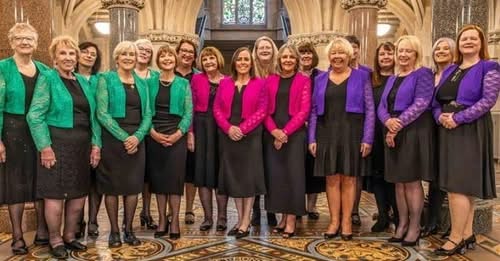
Cantare Ladies Choir – Sounds of Christmas promises to be a magical evening of exceptional music, filled with passion, energy, and festive cheer.
The superb local choir’s diverse repertoire is guaranteed to inspire and entertain, making this a festive night to remember.
To make the occasion even more special you can enjoy a glass of mulled wine on arrival. Non-alcoholic mulled wine and juice will also be available.
The choir was originally founded in 1982 as the Debrose Choir. In 2009, they changed the name to Cantare.(right)
The choir includes women of all ages and from all walks of life – no superstars, just people who love to sing and who want to do it well. The repertoire is exciting and wide ranging, from pop standards and songs from the shows to classical and contemporary choral pieces. The ladies “enjoy a challenge, strive to make a great sound and have a brilliant time whilst we’re doing it”.
Cantare perform regularly at concerts and other events throughout the year. If you would like information about joining the choir, please check on-line or if you just want to go along and hear them sing, have a look at their Future Events also shown on-line
Cantare are suitable For All Audiences
Tickets for Sound Of Chistmas including those for the Accessible viewing platform / area for Wheel chair / pram accessibility are from 5 pounds. Check on-line
Sunday 7 December 2025, 18:30.
Rochdale Town Hall, The Esplanade, Rochdale,
Greater Manchester, OL16 1

ROCHDALE CULTURE AWARDS
Greater Manchester Town Of Culture
preview by Steve Cook
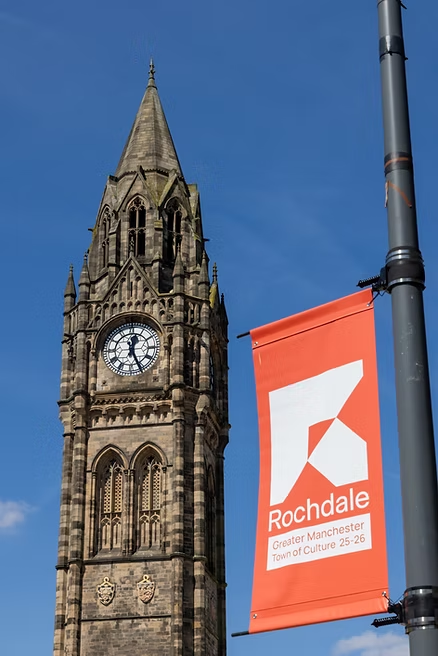
There is a great opportunity for us to celebrate our wonderful creative arts community at the Rochdale Culture Awards to be staged in March 2026
I urge residents and organisations to put forward nominations for the awards, ahead of the closing date of Friday 19 December.
Rochdale Culture Awards will be staged at the town hall on Friday 27 March, as part of the closing weekend for Rochdale’s year as Greater Manchester Town of Culture 2025-26.
Nominations are being accepted across seven different categories: cultural legacy, creative of the year, young creative, cultural event of the year, health and wellbeing, heritage, and community.
Councillor Sue Smith, cabinet member for culture and communities at Rochdale Borough Council, said she wants the new awards to recognise the imagination, talent and dedication that shape the borough’s cultural life: “Culture means many things to many people so these awards will recognise diverse and vibrant ways cultural activities improve our lives. Each category will highlight those whose work inspires others and strengthens our community. From well-known names to unsung heroes, we want to hear about those making a real difference. Please consider submitting a nomination and we are looking forward to reading them.”
Nominees must either be based in the borough of Rochdale or have a strong track record of delivering activity for the benefit of people who live in or visit the borough, or that benefits the local economy.
Estelle Rowe, chief executive of Your Trust said: “We’re incredibly proud to be part of Rochdale Culture Awards which provide a brilliant opportunity to celebrate the creativity, passion and dedication that exists across the borough. From grassroots projects to major events, there is so much inspiring cultural work taking place that deserves to be recognised. These awards are a chance to acknowledge the individuals, groups and organisations who are enriching lives and strengthening communities through arts, heritage and culture.”
Pete Courtie, head of culture and placemaking at Rochdale Development Agency added: “This is an opportunity to shine a light and celebrate those who make a great contribution to the wealth of community culture that we’ve seen already this year, as well as hopefully inspiring others to get involved too, so do get nominating.”
All nominations must reflect activity that has taken place since January 2025, other than the Cultural Legacy Award which can recognise achievement over a number of years.
The awards are supported by Your Trust, Rochdale Borough Council, Rochdale Development Agency, Culture Co-op, Cartwheel Arts, and Rochdale Borough Cultural Network.
Rochdale Culture Awards is part of a spectacular line up of festivals, live performances, exhibitions and art during Rochdale’s year as Greater Manchester Town of Culture 2025-26. The title, awarded by the Greater Manchester Combined Authority, celebrates the town’s rich history, creativity, talent and diverse arts scene
Classical Music
2 TOAD LANE CONCERT
CAMBRIDGE UNIVERSITY CONCERTO competition winner MADELEINE BROWN
Review by Dr Joe Dawson
Rochdale’s weekly lunchtime concerts at St Mary in the Baum provide a platform for local talent, choirs, schoolchildren as well as visiting star performers like today.

Prize winning Cambridge graduate (where she won the university Concerto competition) and Royal Northern College of Music (where she won the Gold Medal), Madeleine Brown captivated the audience with a marvellous piano recital. With her impressive list of past and present tutors and mentors and several international prizes, she looks set for great things. Indeed, the distinguished pianist Peter Donohue described her as having ‘the potential to become a major voice in the classical music world.’
With a charming and engaging manner, Madeleine introduced a fascinating programme containing some pieces which are seldom performed. The overall theme could be said to be about invention and variation on a number of levels.
Haydn’s classical Variations in F minor were delightfully played with agility and fluency. In contrast Janacek’s Sonata of 1905 took us on an emotional journey built on nationalistic elements such as speech rhythms. Three Preludes by Debussy were impressionistic variations with an improvisatory feel such as adapting Spanish guitar rhythms to evoke the story of an ‘Interrupted Serenade’.
The crowning glory of this sumptuous and varied recital was Franck ‘s monumental Prelude, Chorale and Fugue. Based on the forms of JS Bach, as one might expect from an eminent organist, Franck explored his equally impressive pianistic prowess to develop a masterwork in keyboard variations. Initial musical ideas expressed in the prelude, fantastical pianistic expansion of the chorale chords culminated in an extended fugue that linked everything together and made us feel that variation could be infinite. All this was handled superbly by Madeleine and totally from memory.
But most significant of all was Madeleine’s brilliance at taking risks on the instrument to explore variations in technique and dynamics. Rarely do we hear such exquisite soft playing, which in turn added greater power to the crescendos and climaxes … and all of this on an unfamiliar heritage piano that she only had minutes to engage with before the concert.
This had been a stunning and inspirational performance, well on the way to fulfilling Peter Donohue’s prophecy.
The Queen’s Award-winning Toad Lane Concerts are every Wednesday at 12.30pm at the Grade 1 listed church of St Mary in the Baum, Rochdale, OL16 1DZ. Entrance fee is £6 cash. Contact 01706 648872 for further information.
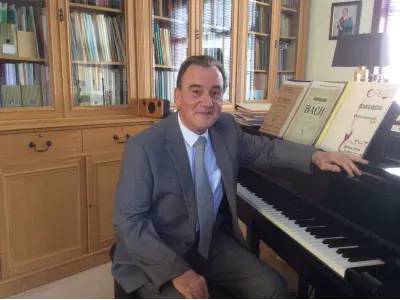
all across the arts logo
NORTHERN BAROQUE ORCHESTRA,
St Aidan’s Church, Sudden, Rochdale, Nov 2026
Review by Dr Joe Dawson (right)
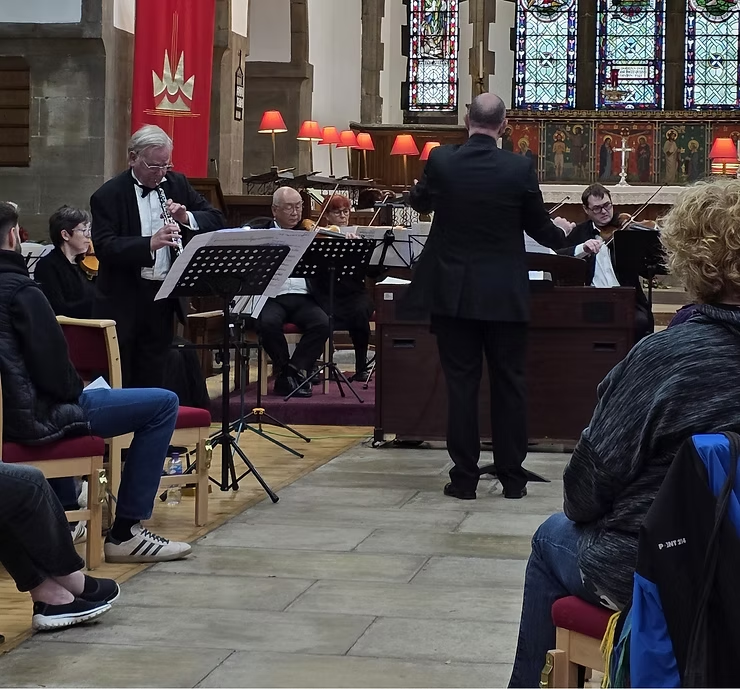
The NBO [Northern Baroque Orchestra, left)] is 40 years old. Founded by the late violinist and teacher, Linda Williams it first emerged on 22 May 1985 as a chamber orchestra based in Rochdale with players from Greater Manchester, Saddleworth, West Yorkshire and further afield.
The beautiful setting of St Aidan’s, which had benefitted from a legacy bequest to redecorate recently, was an ideal venue for a 3 pm winter afternoon concert.
Today’s line-up was essentially a string orchestra (underpinned by harpsichord by Marek Bakota) which was right for the acoustic.
Vivaldi’s scintillating Concerto ‘alla rustica’ set the Baroque mood with vigour, followed by works by Geminiani and Albinoni. The latter composition also featured an accomplished oboe soloist in Chris Browne.
Conductor Paul Witkiewicz singled out the new leader, violinist Maud Hodson for her sparkling playing of Bartok’s Romanian Dances to open the second half. Recorder soloist Ian Noonan was also appreciated by the audience for his fine playing of Telemann; and the concert rounded off with Handel’s glorious Concerto Grosso Op 6 No 7.
On a sad note, Secretary David Shipp announced the recent sad death of Peter Collier. For ten years their harpsichordist, Peter also helped with advice on Baroque repertoire and even supplied music from his extensive library of musical score and parts. This he did for several other ensembles in the area. He will be greatly missed.
There are tricky logistics in gathering musicians for such wonderful music, but NBO for at least two concerts a year. Check them ot on-line for details of becoming a player, patron or member of the audience. The next NBO concert will be Saturday 13 June 2026.
Classical Music
3 TRIPPING LIGHTLY IN TEATRO TIAS
recital by JUDITH CHOI-CASTRO (violinist) & JOHN PAUL EKINS (pianist)
review by Norman Warwick

The Canarian violinist Judith Choi-Castro, and the British pianist John Paul Ekins—two internationally acclaimed performers—presented a program that blended Viennese classicism, early 20th-century Spanish nationalism, and Gershwin’s popular influence, with a premiere from the recent Nino Díaz catalog.
Tonight´s Program included:
Franz Schubert — Sonatina in G minor D. 408 (Op. 137/3)
Allegro giusto · Andante · Menuetto · Allegro moderatoJoaquín Turina — Spanish Sonata in G major, Op. 82
Lento. Theme and variations · Vivo – Andante – Vivo · Adagio – Allegro moderato
Nino Díaz — Fade out #10 for violin and piano
George Gershwin / arr. Igor Frolov — Porgy & Bess, Concert Fantasia
Simply because of the stage and the theatre, this concert had a feeling of grandeur rather than the down-homeliness of the open air concert by Opus Duo 22 reviewed above, but that had me considering the similarities and disparities between pieces of music and whether the setting can enhance a piece of music. Some thitry years ago I was invited on to a debate panel, in front of a large audience, to discuss in a civilised manner whether or not poetry is enhanced when set to music: As a poet who had often worked local musicians place melody behind my words, I probably went to that debate with a fairly strong mind set that if music could enhance my poetry, surely it must be able to speak to wordy wisdom ! This, though, was at the time of Blurred Lines a song which, said a lady in the front row, should be banned for its seeming mysogyny and that the music was spoiled by its lyrics.
With Judith Choi standing tall and exuding elegance and confidence, the Schubert piece in all its forms snuggled into the cosiness of the theatre as it followed the meanderings and diversions of Schubert´s work. Her violin sounded to saunter and sprint, lead and follow and at times to rise and fall like a bird on the wing It seemed that John Paul Ekin´s piano seemed to sprint and saunter, to follow and lead and to rise and fall and rise like a bird on the wing. And yet somehow the instrumewnts never detracted from one to the other. the only enhancement to this music was their musical skill sets, their understanding of the music, and awareness of the times in which they had been created and what the music was intendng to makeus thtink.
It was lovely touch that the duo gave a premier of a recently created piece by Nino Diaz, an acclaimed composer who lives on Lanzarote, and who has established his own music foundatioon here. THe warmth exuded from the audience was for a much loved resident of Lanzarote.
The second half of the concert by Judiith and John Paul had me thinking of what defines enhancement to music.One of my three favourite albums is the Ella Fitzgerald and Louis Amrmstrong version of Porgy and Bess. What we had here tonight was George Gershwin´s Porgy and Bess Concert Fantasia. It was a perfect sample, played beautifully by the two musicians, with notes from the violin hanging in the air, and with Jean Paul at the piano sending rolls of notes out into the theatre,….and, I swear nobody in the audience verbalised any of the lyrics, but we all heard ´summertime, and the living is easy´ as clearly as if it were a code to live by.
As an Englisman who can only dare say no more than mucho gracias senor & senora and even that sounds like thanks a lot to both of you, I have to be honest and say it was lovely to hear Juduh Choi inroducing pieces in Spanish and Jean Paul then translating for the very few English speaking people in the audience. An audience, by the way that gave a standing ovation in demanding encore.
I managed to have brief chat with John Paul after the recital. I gave him a business card so that we might perhaps be able to conduct an on line interview in the near future. So, WATCH THIS SPACE
Tonight´s concert was organized by: Nino Díaz Foundation and Tías Culture,with the support of: Cabrera Medina, Comunigestion, Tías Hardware Store, Hotel Mirama
Classical Concert
4 DOMINI STRING QUARTET
Timple Museum, Teguise Lanzarote 21is November 2025
review by Norman Warwick
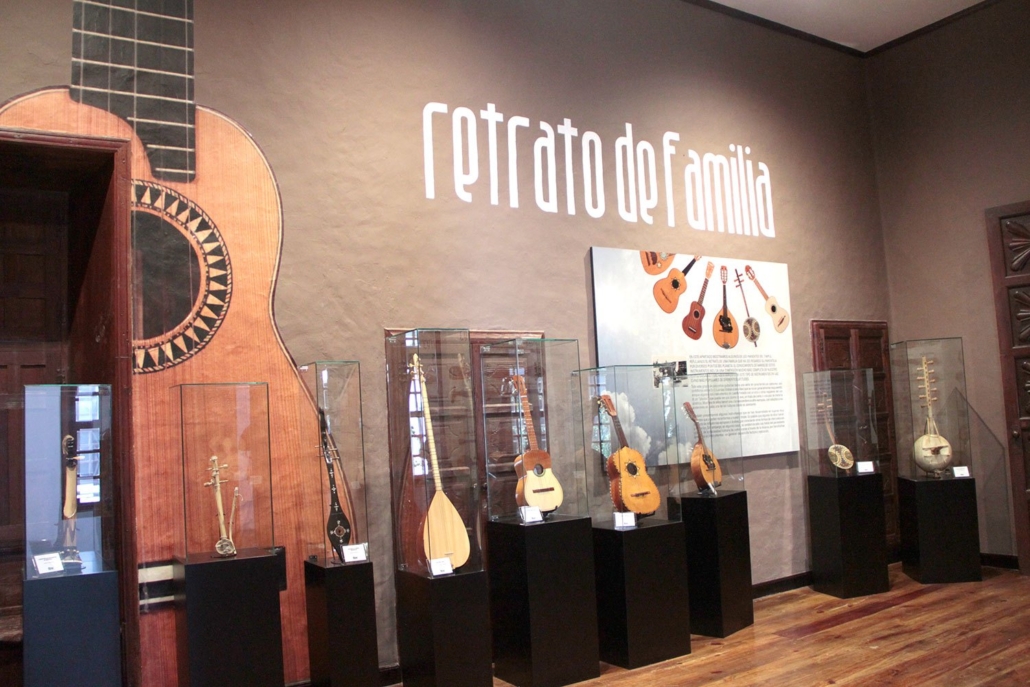
TheTimple Museum in Teguise (near Arrecife) hosts various events, primarily timple concerts and conferences, with a regular concert series tc synthesis category.
We had intended to sit in the evening sunset outside the front of our favourite Teguise restaurant, but the sun had gone to bed early to escape what was a chilly night (for Lanzrote!), so we went into the establishment for the first time ever.
So we enjoyed a meal in a huge ´colonial´ room, deeorated by wallpaper, (virtually unheard of in Lanzarote), and laid out in round tables and massive, and comfortable, chars. We had quite a chat with a twenty two year old waiter, working in his parents´ restaurant. He admitted he s playing a surfer-dude just now and enjoys island life but plans soon to set out into the world looking for a suitable career.
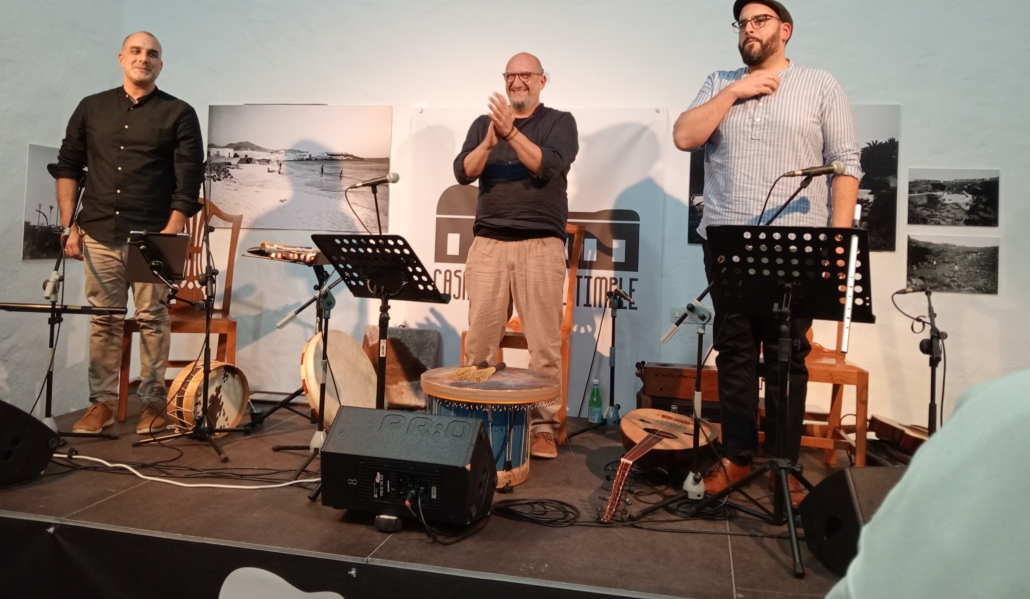
As we took our seats in the second row for the concert by Domini, we already knew it was going to be loud. The clue lay with the twenty two percussive instruments laid seemingly randomly on the stage floor. The three chairs behind this mis en scene not only suggested there were to be three musicians but also begged the questions as to who the heck was going to play all the other nineteen instruments?.
Three smiling and enthusiastic young men, who could have been part of any Irish Celiedh Band stepped out and took their seats. One had a pipe, one had a strange, electric-looking tambourine, the one in the middle had a version of a Bhodran and the other,…wait for it,…. played what I´m sure was a hurdy gurdy. That was a machine made better known by a sixties song by Donovan about The Hurdy Gurdy Man bringing songs of love. It is a machine that stand on legs and has a huge handle that the musicians turns in way that in Britain we used to turn our car starting handles on a cold morning !
So I had heard of a hurdy gurdy, and I knew that itinerent hurdy-gurdy men used to organise street parties whenever they landed in a new town. Hurdy-gurdy players were popular during the medieval period with minstrels, had a golden age during the Baroque and Classical eras (17th and 18th centuries) at the French court, and have experienced a recent revival since the late 20th century. Its popularity shifted over time, from being a popular instrument among the aristocracy to sometimes being associated with beggars, before regaining favour in more modern styles of music,… but I had never actually heard a hurdy gurdy until this evening!
I was amazed that it made any musical notes at all but in fact there was an element of fiddle and bow to the sound, that was enhanced by the floating flute and the tinkling tambourine.
I loved that opening piece, redolent to me of the folk club jam sessions I used to play in (guitar, fiddle, drum, banjo, spoons and vocals et al). It certainly set the style for the evening, that became more of a workshop-concert than an improvisation. However, not only did these three men make great music out of instruments we doubted might to be able to create music at all, but they each had rich voices and sang with a technique of harmonies that spoke with the instruments.
As probably being one of the the only three English people in the audience I can contribute nothing to you here that might shed light on what these instruments were or of any history that might be known on any of them. I am sure, though, that the musicians were sharing their knowledge with the audience, (in Spanish) telling them the rudiments of how each of the instruments were being manipulated, (by pushing them one way then pulling the other, by changing the ´sticks´ to tickle them with or by tightening some instrument´s strings like a girdle, or by loosening the strings and letting it all hang out!)
By the end of the evening each of the lads had played each of the twenty two instruments and all of us in the room were smiling with them, so obvious and infectious was Domini´s enjoyment
Classical Music
5 LANZAROTEENSEMBLE play Dvorak
NEW WORLD SYMPHONY at El Salinero Arrecife 22nd November
review by Norman Warwick
The New World Symphony is one of the most universal compositions in the history of music. Inspired by the landscapes, rhythms, and emotions of the Americas, yet imbued with the European spirit, this work represents the encounter between cultures, the hope and nostalgia of a new era.
Lanzarote Ensemble offered this audiencec a performance brimming with emotion, precision, and energy. I was delighted to have the opportunity to enjoy the virtuosity of local musicians and the evocative power of a symphony that has moved generations. This was the first time I have heard the entire symphony played live and it was an experience that even surpassed any of the thousand and more times I have listened to any of my several various recordings played by the world´s greatest orchestras led by some of the world´s greatest directors.
The concert was an opportunity to enjoy the finest live classical music, performed with passion and excellence. This experience united tradition, talent, and artistic sensibility that captured the piece in all its vastness.

9 e moll “Z nového světa”), also known as the New World Symphony , was composed by Antonín Dvořák (right) in 1893 while he was the director of the National Conservatory of Music of America from 1892 to 1895. It premiered in New York City on 16 December 1893. It is one of the most popular of all symphonies
While in the United States, Dvořák wrote his two most successful orchestral works: the Symphony From the New World , which spread his reputation worldwide, and his Cello Concerto, one of the most highly regarded of all cello concerti.
Dvořák began the symphony in late 1892 and finished it the following May. The first performance, in New York on December 16, 1893 , was a major event, with a public rehearsal and much advance press attention.
Lyricism is a distinctive characteristic of the majority of his compositions. Dvořák is a leading representative of the circle of composers whose style falls into the Classical-Romantic synthesis category.
We were reminded, even as we took our seats, that Lanzarote Ensemble, an outfit we have seen and enjoyed on numerous occasions in the few years since they were formed, are a relatively small orchestra, as evidenced by the small number of seats etc on stage. We were in our audience seats about twenty five minutes before the commencement time, and about ten minutes after enjoying some pasta dishes and even more enjoying the profiterroles dessert at La Divini Restaurant on the ´shores´ of San Gines, a five minute car ride away. We had parked up outside the newly renovated UD Lanazarote football ground. Of course, having been a season ticket holder there for several years until I became too slow to even be a spectator, let alone a player, I sneaked a glance inside the admission gates. This was obviously a junior competition, with the young lads looking as small a subbuteo player on what is a massive pitch.
The twenty minutes or so inside the theatre soon passed, affording us just enough time of people watching as ticket holders were led to their seats by the very efficient and cheerful front-of-house staff at the theatre named after late poet, Victor Gopa. Usually the people watching for people we know is in vain but on this occasion, for the first time in the hundreds of concerts we have attended here, we saw our German next door neighbours strolling to their allocated seats and a few moments later we also noticed Marriane Whelpberg, one of the island´s leading music conductors and facilitators.
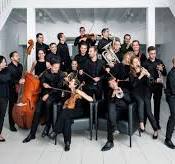
In fact, we seemed to have a full house five minutes or so before the eight o´clock start time, when the thirty or so members of Lanzarote Ensemble strode on to the stage in formal black suits and dresses.
The conductor poised, raised his baton to bring on the immediately recognisable opening notes, and for the next hour and a while we were transported to a New World: eagerly anticipated as much by this audience as those who were part of the European exodus to America centuries ago..
This was a performance that eschewed the sacharined Hovis advert that we seventy year olds grew up with as a child. Nor was this the Smokey Blues Away lost-dog version, a pop song translation of this wonderful music that climbed the British charts in the sixties.
This seemed, instead, a mature reading of the historicity of that search for a New World, and the optimism of the early years of settlement.
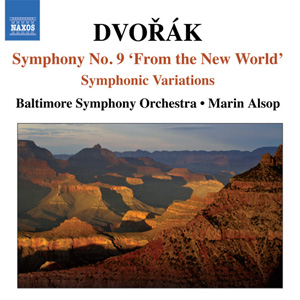
Perhaps my true favourite of recordings of Dvorak´s work is shown left .
Dvořák’s New World Symphony is about his impressions of America, blending his Czech background with his deep appreciation for American musical traditions, particularly Native American and African American spirituals. Written in 1893 while he was living in the United States, the symphony was an attempt to inspire a new style of American classical music, with Dvořák suggesting these traditions could be the foundation for a .national sound.
In that, it succeeded !
In fact, there are plenty of us who were firstly fans of American music, then of cowboy music as it was re-named and then country music as it became known and now of Americana music about which I now publish a regular blog.. The sound of the new World Symphony is, of course, the sound of the pleas of ´don´t fence me in´ and the sound of the cowboy sing-along camp fire sing-arounds played each night along the cattle drive trails.
The New World Symphony also introduced, or at the very least made better known the sounds of some of its instrumentation. That the Irish and Scots and others brought along violins played very differently in their home counhtries has enriched what I today so love as Americana.
Dvorak’s “New World Symphony” accurately reflects his attempt to capture the essence of the ‘American voice,’ influenced by Native American music and African American spirituals.
we can trace developments from Dvořák’s “New World” Symphony in modern American music, primarily because the symphony popularized a new approach to composition that was inclusive of American musical elements. Its lasting influence can be seen in how it inspired later composers to incorporate jazz, blues, and folk idioms into classical works, which in turn shaped the sounds of later genres like jazz and film scores.
Listen to John Stewart´s guitar albums to tracks like Betsy From Pike, composed in the nineteen seventies, that tells the story of the Wagon Trains during the new world landings.

6 Jazz at Progress Friday 5 December 2025
brought to you by JAZZ IN READING
Friday 5 December 2025
JANETTE MASON – REWIRED
previewed by Jim Wade
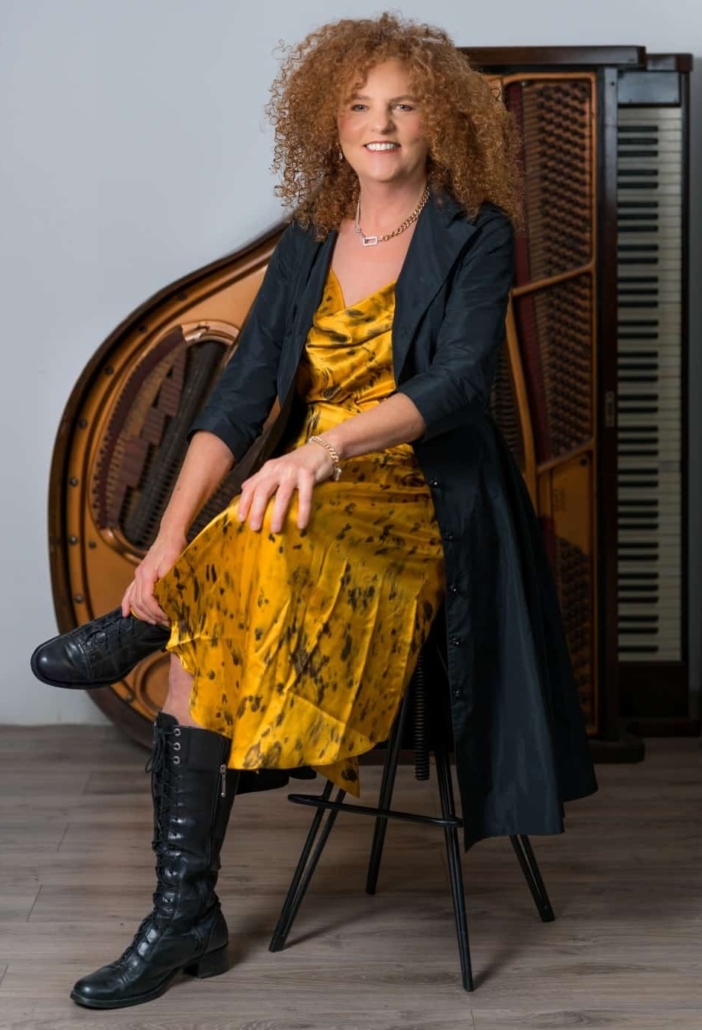
Janette Mason keyboard | Tom Mason bass | Eric Ford drums
‘A substantial triumph for Janette Mason, nominee for Jazz Instrumentalist of the Year – Parliamentary Jazz Awards 2025, as she breathes new jazz life into this well chosen selection of tunes. Her arrangements are intelligent, imaginative and sophisticated.’ – Ian Mann (The Jazzmann) ****
Janette Mason’s ReWired, featuring long-term collaborators Tom Mason (bass) and Eric Ford (drums) presents a basket full of tunes, from timeless standards to modern chart classic, that hold a special meaning.
With Janette at the helm the original tunes are ‘ReWired’ to delight the listener with the depth and sophistication of jazz while retaining the direct appeal of pop. No one is off limits and the repertoire draws on everyone from Rodgers and Hart to Gary Numan, David Bowie, Kate Bush and Noel Gallagher, with Janette’s fiercely inventive arrangements pulling everything together. Mixing deep grooves, gutsy swing, blazing solos and unforgettable melodies, this is timeless music ReWired for the present day.
Photo Credit John Lyons

Jazz Music USA
7 NEWS FROM KARLA HARRIS
My favourite jazz singer, Karla Harris, has featured regularly in our Sidetracks & Detours Pass It on supplements ever since I was introduced to her music by the hard-working Team Karla Publicity and Media supporting team. Her husband and friends deliver a fine service that of course keeps their fan zone informexd of any developments and also provides a fine service that must surely catch the eye of the any press outlets that receive it.
In fact, the first such press release I received came attached to an e mail from her husband, John, who had been given our contact details from my pal Steve bewick at Hot Biscuits Jazz. He sent me a download of her then new album, Moon To Gold, which has become part of my everyday soundtrack whenever I´m in the office.
John asked me how feasible it might be to arrange a short tour to the uk, taking in a run of gigs and media interviews. I had to explain that our afore-mentioned office is based n Lanzarote in the Canary Islands so My contact list in the Uk wsas not as long as it had previously stretched. nevertheless, I was able to offer some ideas of the UK´s most influential jazz publications as well as facilitators such Jazz in Reading, and a few radio stations hosting jaz programmes.
Organising a foreign tour is no easy task, especially given that an artists like Karla has a thriving career in the States and she and John enjoy also a biusy afamily and social life.
As you will see later on in their latest communiqué just how deeply Karla Harris is invested in community and charity work and how ell she is thought of throughout the jazz industry in the USA but also by the community at large. That dream of a UK tour certainly lives on in my imagination, though, and anyone working in the UK jazz scene could search out Karla´s massively informative web site to learn just why she deserves to be heard by UK jazz lovers, and why they deserve to hear her !
So, Karla´s latest glad tidings landed on my in-tray and opened with her usual positivity: The bubbly letter below contains news a peace of the holidays´gala gig, of this year´s Merge album album release. She also tells us how proud and humble she feels to have receiovd a Jazz Hero award and jow much she is looking forward to a Atlanta Community Food concert that will support a community cause. To add to all this Karla tells us of a short-film documentary has been made about her, so I´ll ley Karla share her news directly wioth you, (see below).
´Here they come — the holidays! Let’s greet them together with swinging sounds of the season and some fun “holiday-adjacent” jazz standards at this festive show designed to usher in the jingle season with a little “peace” of the holidays!
July brought the release of my new album, MERGE, and it’s been such a wonderful ride. The album has been in the top 100 on the industry-standard Jazz Week chart for 13 weeks, peaking at #46 in September. We are all so grateful for the reception to this music. You can check out my website as to where you can hear or purchase Merge!

Earlier this year, the Jazz Journalists Association announced its 25th annual recognition of “activists, advocates, altruists, aiders and abettors of jazz,” with a list of 29 individuals from across North America recognized as “JJA Jazz Heroes.” What a surprise to learn I was among the group! Kennesaw State University, where I’ve taught vocal jazz since 2017, recently published a story on the award. I’m incredibly humbled by this honour.
The need for food assistance is high. Come enjoy this concert 👆benefiting the Atlanta Community Food and you will help support the cause. We’re banding together to bring rock, folk, blues, jazz, and cabaret to one stage on one night, for the good.
In case you missed it — the South Fulton Arts documentary “Karla” premiered in February as part of the institute’s Filmer program. Such a wonderful experience to be part of this project. The film is up for viewing (and sharing, on her you tube channel.)

There are so many moving parts to this music biz, much of them behind the scenes. I couldn’t do it without the support and encouragement of my family, my colleagues, radio partners, my students — and friends such as you.
THANK YOU for your interest and support, for providing your email and saying, “Let me know what you’re up to”; for every kind word, every album you’ve bought or song you’ve downloaded; for all the positive energy you’ve brought to live shows … you’ll never know how much it’s appreciated.
I’m looking forward to sharing more music with fans at a future event including a big Love In The Key Of Swing show with the Joe Gransden Big Band at the beautiful Sandy Springs Performing Arts Center on Valentine’s Day 2026. Perfect! Make plans to join us!
Wishing a safe and happy Thanksgiving to you and yours.
May the upcoming season of Peace and Light bring happiness — doubled by wonder.
All the best, Karla

folk music
8 UK FOLK CHART CHANGES
collated by SOUND ROOTS
NEW ENTRIESS ANNOUNCED IN NOVEMBER
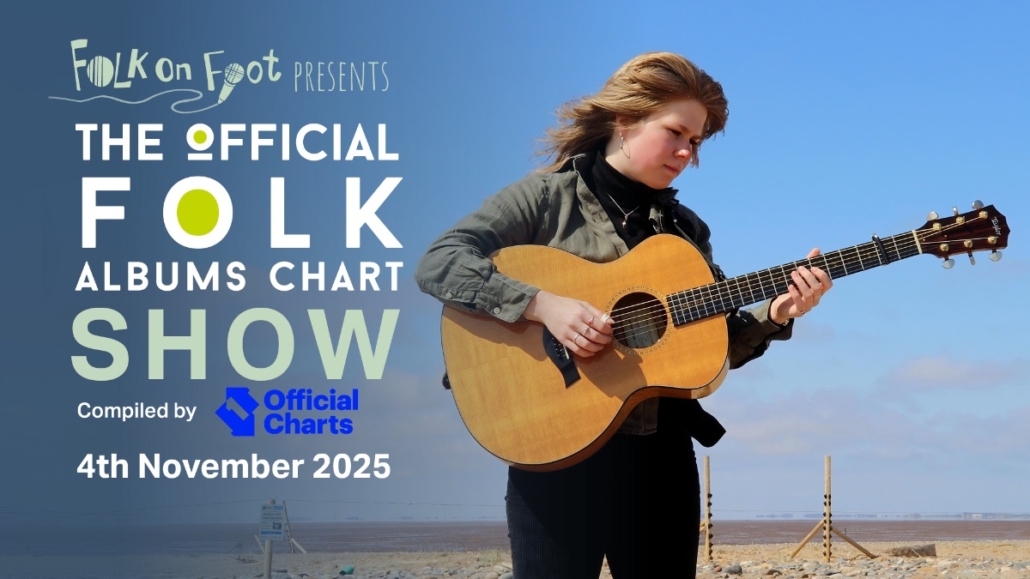
No. 3 – Nick Harper’s 58 Fordwych Rd (Weatherbox) – Harper bridges the 1960s folk revival with his own originality, revisiting songs and stories from his father Roy Harper’s Kilburn flat, once a hub for folk greats like Bert Jansch, Davy Graham and Sandy Denny.
No. 7 – John Smith’s Gatherings (Commoner) – Marking his 20th anniversary, Smith revisits songs from his first three albums alongside new interpretations of audience favourites from over 2,000 live shows.
No. 9 – Kathryn Williams’ Mystery Park (One Little Independent Records) – Returning to the sparse, intimate sound of her early work, Williams crafts songs from the quiet margins of motherhood and memory with collaborators including Leo Abrahams, Ed Harcourt and Paul Weller.
No. 12 – Katie Spencer’s What Love Is (Lightship) – Evoking Joni Mitchell’s later works without imitation, Spencer moves from jazz-tinged soundscapes to folk-baroque fingerpicking in this intimate, richly textured collection.
No. 15 – Cerys Hafana’s Angel (tak:til / Glitterbeat) – Inspired by “an old man who falls asleep for 350 years hearing an angel sing,” Hafana explores minimalism, traditional and avant-folk through the Welsh triple harp.

No. 32 – Leveret’s Lost Measures (Self-released) – Sam Sweeney, Andy Cutting and Rob Harbron capture their signature improvised approach to traditional and original folk tunes, exploring centuries of English vernacular music with originality.
No. 33 – Niall McNamee’s Glass and Mirrors (Self-released) – Described as “the punk lovechild of Shane McGowan, Johnny Cash and Joe Strummer,” McNamee delivers timeless songwriting and charismatic performances on his debut album.
No. 35 – Brown Boots Boogie Band’s Dancing Boots (Self-released) – The British ceilidh quartet’s debut features nine dance tunes blending traditional folk with jazz, Celtic and pop influences, including Jimmy Shand and ABBA.
The Official Folk Albums Chart is compiled by The Official Chart Company and produced by English Folk Expo. The Official Folk Albums Chart Show is presented by Folk On Foot with the support of English Folk Expo
a dialect diversion
9 WHERE BE YE GOIN’ YOU DEVON MAID (AND WHAT ARE YE DOING IN BLACKPOOL?)
A review of the English National Dialect Festival 2025 By Michael Higgins
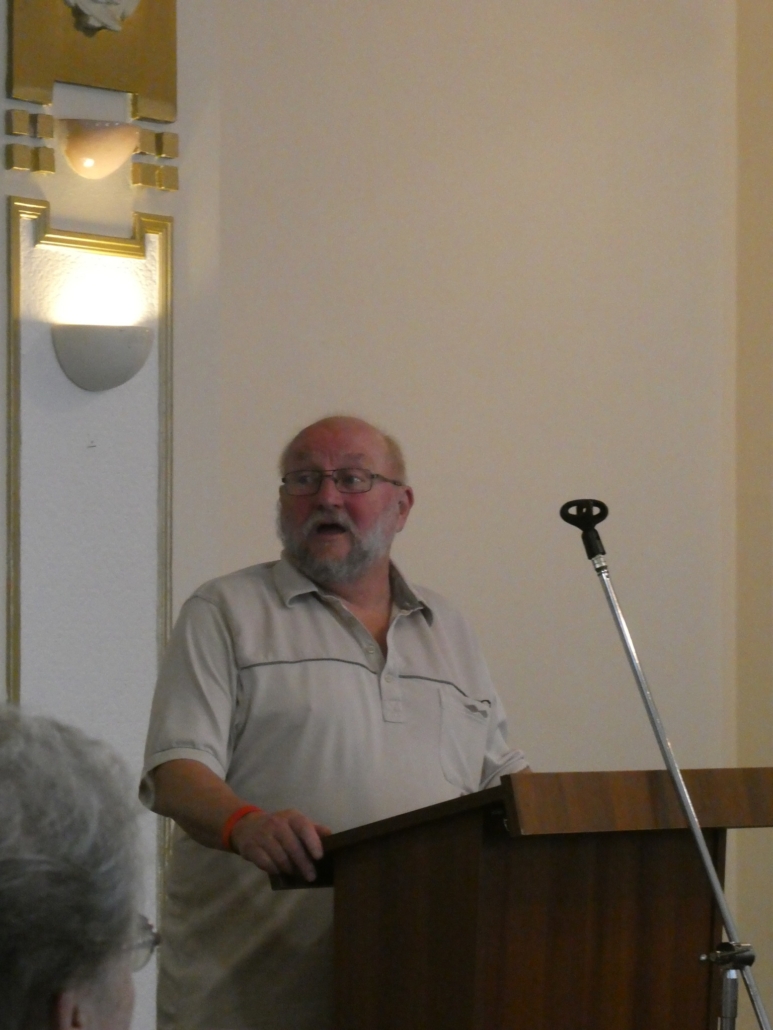
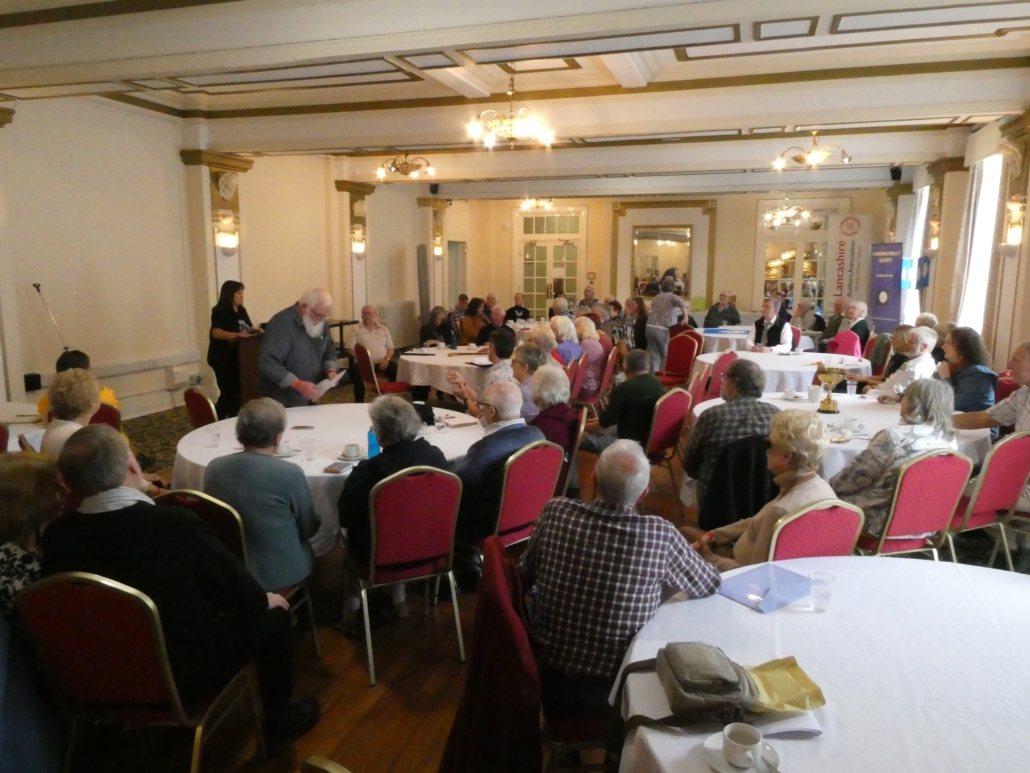
In September I was asked to be a judge at the National Dialect Competition,(see above) this year held in Blackpool, Lancashire. ‘Why me?’, I asked. ‘Because you have not entered the National Dialect Festival competition in any category’ was the reply from Sid Calderbank (right) , the chairman of The Lancashire Society which was running this year’s event. I am a member of the Lancashire Society but not as a great lover of competitions. Lancashire is one of many shires of England with a love of the local brand of English. It has a good musical hall and film background and its local talk, as exemplified in the comedic output of George Formby and Gracie Fields, used to be well known and copied for laughs. Lancashire dialect literature goes back to the 1600s.
Rather flattered as well as shocked I rashly said ‘yes’ (vaguely thinking I must be needed) but demurred when I realised I was being asked to judge the ‘Any Dialect’ category rather than the ‘Lancashire Dialect’ category in which I have form. I am the former chairman of The Edwin Waugh Dialect Society in Rochdale, Lancashire and have enjoyed reading all forms of English from Anglo-Saxon to medieval English, and, as a Lancashire-man, reading the verse of Yorkshire Dialect authoress Dorothy Una Ratcliffe. I also write in Lancashire Dialect from time to time. However, hidden within me it would seem, there is an affinity with Devonian speech too – but more of that later.
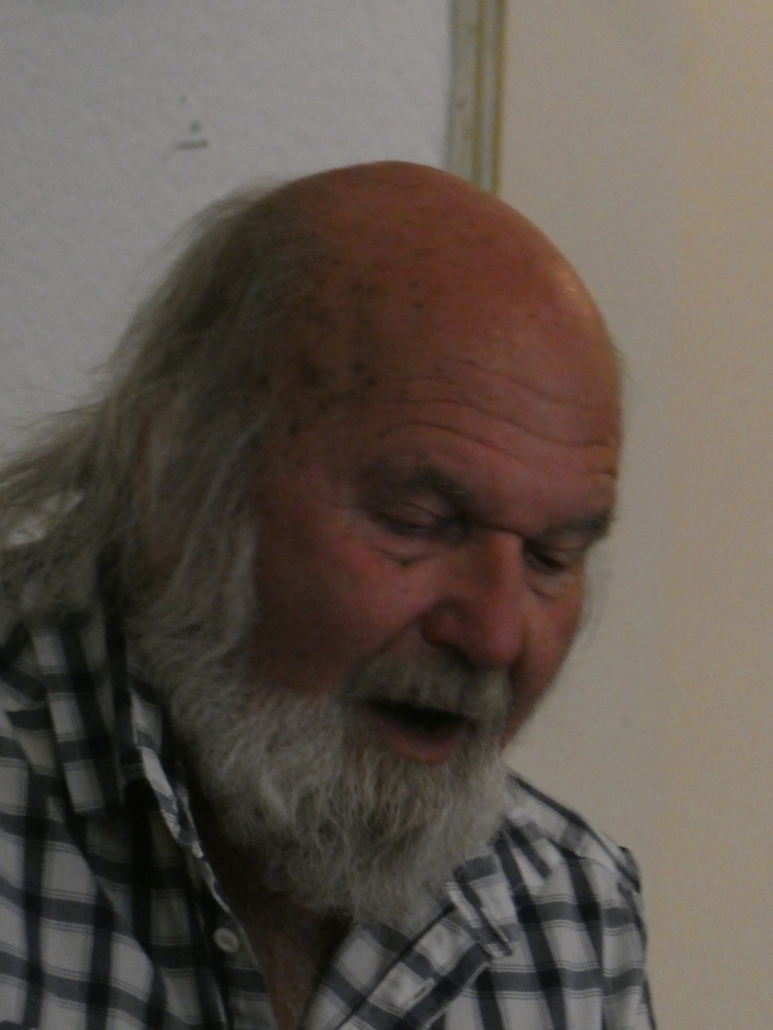
Sid assured me I was the right man for the job so I joined Lancashire songstress and song-smith, Alison Cooper, (see left, of Magpahi mystical music fame), and Chorley Dialect Group writer Philip Graves in an unholy trio. Alison’s brief was the purely Lancashire Dialect category with Philip overseeing the purely ‘Performance’ section, wherein any contestant can recite or sing any piece, written by anyone in any dialect. The Lancashire and Other Dialect categories had to be performed by the various authors of the said piece. And none of us judges would get to read or hear any of the work before the big day. We worked as a team but in a tie the named judge of the category would have the final word.
The event was held at the Savoy Hotel in Blackpool (see headline top) with a full weekend programme of events ranging from a Friday night tour of the famous Blackpool Illuminations, all day judging, and evening sing-a-long on the Saturday, and a trip to a puppet and doll factory to round off the finishing Sunday morning. And yes, if one could squeeze some fresh air into the mix, there was a chance to walk upon the windy promenade and stare out into the grey Irish Sea.

I was surprised to find on arrival that there were delegates from the there, fielding from Lakeland, Northumbria (Norhumberland and Durham), Yorkshire, Lincolnshire, and Devon Societies among them poets, storytellers, singers and musicians galore, and on the Saturday forty-one individual presentations were listed for judging across the three categories. In that crowded ballroom, sat conspicuously at the middle table behind three trophies, sat yours truly with his fellow judges, feeling like he was being judged himself with all eyes fixed on the judging trio.
None of us need to have worried. Sid Calderbank (aka singer and raconteur ‘Lancashire Sid’) opened proceedings by introducing Bill Murray from Devon and Bob Pollard from Northumberland, inviting them to give a short talk on their own dialects which they did with aplomb. Sid himself also gave an excellent overview of Lancashire Dialect, from its first penning in archaic 16th century spellings to its even more obtrusive spellings of the 18th and 19th centuries, to its music hall and comedic aspect and its sometimes vain attempt to be taken seriously. Bob, of the Northumbria Dialect Society gave an overview of Geordie talk, which was strongly accented and challenging in parts for those of us not having been blessed with the north east of England upbringing. What did he mean by the echoing chorus of a poem that repeated the line ‘When we walk back to Wark to wark’?. But with three of us at the judging table able to grasp parts others might have missed, we collectively understood it all!
Bill Murray from Devon (right) outlined the speech of his part of the world. One peculiarity he informed us was the expression ‘Where be ye goin’ to?’ which rang a bell in my romantic head. I recalled reading in a biography of the Romantic ‘Cockney’ poet John Keats that he too had been fascinated by this turn of phrase used by the local women after finishing their days’ tasks where he was staying in Teignmouth in 1818. I recalled his poem on the subject which begins, ‘Where be ye going you Devon maid?’ a rather flirty lyric which I once set to music many years ago. Bill was as surprised as I was to see how all our experiences of language drew the regional differences into a comprehensive joy.
Invigorated by these hidden chords of speech I think we judges all fell into our roles naturally. The Lancashire Dialect section had the least performers as, naturally, the other areas combined made the larger number. The Performance section was the largest group, as anyone could perform anything for it. The other two categories were the serious ones and bearing in mind each entrant had a strict five minute limit and because that content as well as its delivery mattered we grabbed our pencils. My marking was simple: 1 tick for above par, 2 ticks for a contender, and three ticks for tops. Dead simple. My two companions had their own methods but at least mine was simple enough for me.
With our Town Crier, Tony Blagrove, as time-master we were off on a roller coaster ride of supreme talent which not only made our day all the merrier but wearily all the more difficult from which to determine a winner. That was our worst nightmare: a rota of cabaret stars throughout and no obvious duds.
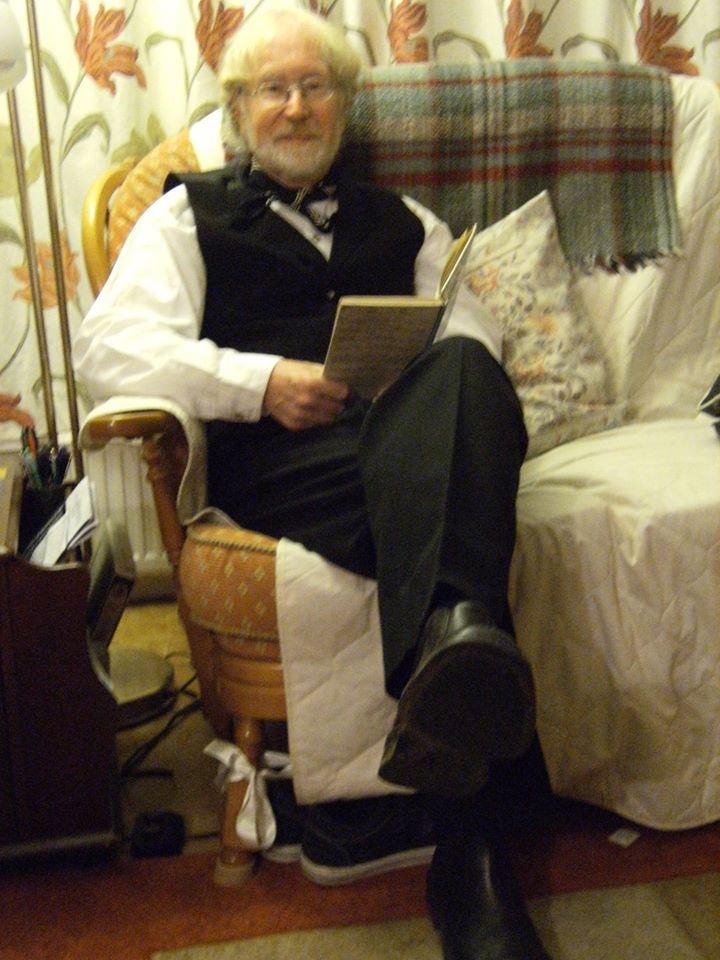
The Lancashire category came first with the hardest decision for Alison, with Phil and I as supporters. Picking one winner from these all stars was indeed hard but it was done, with Bill Rhodes (left) winning with his humorous poem on a hypochondriac and his pills.
The Any Dialects section was easier as a last minute 14th entrant from Northumberland, Graham Bell, stole the show with a well read poem entitled ‘In the Deep Pit Winter’ about the cold aftermath of the mine closures. All three of us were collectively stunned by its content and delivery. Whew, no dilemma for me there.

Likewise, the performance group with its 21 entertainers showed off glorious voices, Northumbrian small-pipes, accordions and concertinas and more. Here again the winners, Northumberland duo Ed and Sam (right)were easily grand winners for a rollicking song ‘ Drunken Royo’.
Alas for the multitude of runners-up, there was no second or third prize. Fortunately for us judges we all agreed that it would have been difficult for anyone to have picked a winner from these professionals. Alas we could only pick three.
For me they were really all top notch. And for me, who has read all manner of English and Scottish border ballads, the Lincolnshire dialect verse of Alfred Lord Tennyson, The Northampton shire dialect of John Clare, and the many layered pseudo Cockney quips from Kipling to Robert Service, it was a joy to hear most of these dialects as spoken today. Throughout the day we were regaled with regional accents, words and phrases intoning homespun tales of farmers and their dogs, gossiping idle chatter ’Jennet trees’, ‘holiday goans’ ‘transporter bridges’ , being away with the fairies, and being visited by King Charles. And speaking of Tennyson, he did get a mention, related by a true Lincolnshire lad.
And there was tradition as well, with a Yorkshire dialect version of ‘The Lyke Wake Dirge’, the well known Northumbrian song, ‘Wor Nanny’s a Mazer’, The Edwin Waugh song, ‘Come Whom To Thi Childer an’ Me’, a verse by the Yorkshire classic poet John Hartley and too many other historical pieces to mention.
Ah yes, and at the sing song session later in the evening the full panoply of talent burst forth in speech, melody and song. And for my part I got to sing Keats’s ‘Where be ye Going ye Devon Maid?’. For Bill Murray, It is only four verses long so I was able to slip out into the night when it was done to see the last of the illuminations before bed and an early morning start home.
Next year the Festival and competition will be hosted by the Yorkshire Dialect Society so someone else will be judging thank goodness. Whew, now how did that Geordie song, ‘Walkin’ awa to Wark to wark’ go again? And what did it all mean?
all photographs in the above article by Bil Murray
At least no one whistled. Norman Warwick tells me that in the Canary Isles there is a whistling tradition of regional communication, not merely dialect. This was news to me. But then I do whistle tunes all the time and thinking of the melodies I heard to accompany all the dialect words used in the Festival I still whistle them in my head. But Walkin’ awa’ to Wark to wark? Ah, should it be ‘whistling while you walk to work in the town of Wark’ in Northumberland?. The more one delves into the Dialect the more there is to learn and enjoy. I certainly enjoyed myself on National Dialect Festival Day 2025 but would I be brave enough to enter the fray next year? To be judged or not to be judged by others roped in for the task by the mysterious forces that organise such esoteric events?. ‘Eeh by gum’, as one says in these parts.
(c) Michael Higgins (see left)
rock music
10 SPRINGSTEEN: DELIVER ME FROM NOWHERE.(biopic)
Arrecife Cinema
a film review by Norman Warwick

“Springsteen: Deliver Me From Nowhere” is a biographical musical drama that chronicles a pivotal period in Bruce Springsteen’s life during the creation of his iconic 1982 album “Nebraska.” Starring Jeremy Allen White, the film explores the young Springsteen’s internal struggle with fame, creative pressure, and his personal demons, including bouts of depression and a complicated family history. Recorded in the intimacy of his bedroom with a four-track recorder, the album is a landmark for its raw emotion and reflecting the lives of marginalized individuals searching for hope. The film offers an introspective look, focusing on the artist’s vulnerability and creative process, far removed from the usual rock spectacle. Directed and written by Scott Cooper, it is based on the book by Warren Zanes
Reviews for the Springsteen biopic Springsteen: Deliver Me From Nowhere are divided, with many critics praising Jeremy Allen White’s performance but criticizing the film’s narrow focus on a specific period and its lack of dramatic action. While some appreciate the film’s introspective, mood-driven approach to Springsteen’s mental struggles during the making of Nebraska, others find it slow, unsatisfying, or an “underwhelming missed opportunity” that doesn’t capture the spirit of his music.
This video review discusses the film’s strengths and weaknesses, including its pacing and Jeremy Allen White’s performance:
Jeremy Allen White’s performance as Springsteen is widely praised as convincing and “stunning,” with many noting his ability to capture the artist’s quiet intensity and stillness.
Introspective approach: Some reviewers appreciate that the film avoids typical biopic clichés and focuses on the internal, “soul-deep pain” of the artist rather than just the triumphs, particularly during the making of the album Nebraska.
Restraint: The film’s, surely deliberate, lack of urgency and its focus on the quiet, melancholic moments are seen by some as a strength that accurately reflects the mood of the Nebraska period.
Slow pacing: Many critics find the film too slow, cautious, or “underwhelming,” especially those who are not already deeply familiar with Springsteen.
Limited scope: The decision to focus on a very narrow window of time (1981-1982) is seen by some as a missed opportunity to explore more of Springsteen’s life and career.
Lack of dramatic action: Some reviews note a lack of urgency, with the film sometimes feeling too uneventful.
Performance imitation: The film is criticized for its musical scenes, with some reviewers feeling that the performances, particularly the singing, are not as captivating as the real thing.
Personally, I feel that many reviews overlook the importance of Springsteen´s skewed relationship with his father, and the loyalty Springsteen still feels to his family´s blue collar roots. All this was revealed in a defiantly honest way by Springsteen in his well-received autobiography, Born To Run, and the reconciliation, of sorts, was the crux of the book.
It is true the film disregards the initial public misunderstanding of the lyrics on Born In The USA on and seemingly few reviews acknowledge how the studio scenes of Springsteen knowing exactly the sound he wants on recordings (of the Nebraska songs particularly) clearly remind us why he is seen as The Boss. Deliver Me From Nowhere shows Springsteen to be a resilient and durable artist with a social conscience.
Maybe some of the critics writing their reviews were still so ´blinded by the light that they expected something more form this film,
I found the scenes of Springsteen creating the recorded tonal texture of the Nebraska songs to be very revealing of what a diligent artist he has always been´.
The film works well in revealing some mental health issues Springsteen carried at the time, perhaps because of the fractious relationship with a father he was nevertheless proud of, and perhaps because of the aforementioned ties of the musician´sloyalty to family and friends.

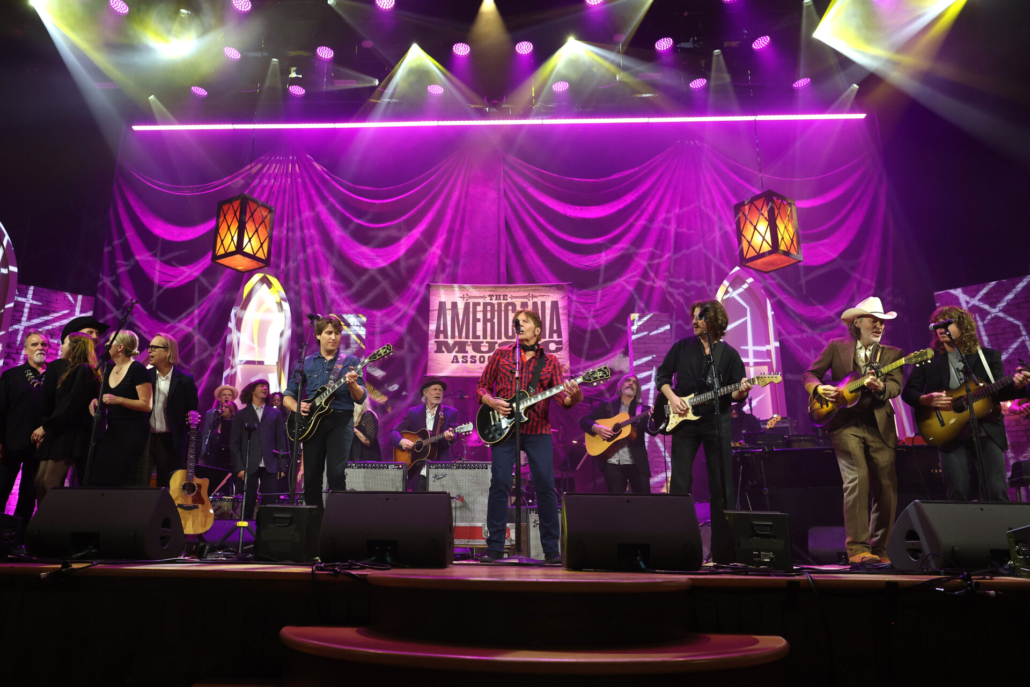
americana music (left)
11 JACKSON BROWNE: FOR A DANCER
Norman Warwick believes some songs are invisible angels
There’s a mother lode of memorabe thoughts and imagery packed into the suite of beautifully intertwined piano ballads of Jackson Browne’s landmark 1974 album, Late for the Sky. One remembers with almost cinematic clarity the metaphorical picture, conjured by The Late Show, of the narrator parked outside a mournful girl’s house in his early model Chevrolet, her standing in the window, him mentally urging her to bundle up her sadness, leave it at the curb, and just get in the car so they can go far away from whatever it is that’s breaking her heart. There’s the photo of a former lover he finds in a drawer in Fountain of Sorrow, so clear in the mind’s eye; she’s turning around to see who’s behind her, unaware that her picture’s being taken, and thus caught off guard betrays her true feelings with the unmasked sorrow in her eyes. There’s the open road, stretching on forever like the highways do in places like Arizona and Utah, which I always see when I listen to Farther On. There are frank, rueful sentiments, like maybe people only ask you how you’re doin’ cuz that’s easier than lettin’ on how little they could care. Every song is a finely wrought study of loss, regret, doubt, and a steadfast refusal to give up, but the finest has to be For A Dancer, which showcases Browne’s rare capacity to mix profound sadness with a clear-eyed, rational hopefulness that acknowledges all the mishaps, mistakes and misfortunes that drag down our spirits, tells itself no lies, harbours no illusions, yet refuses to accept that our lives must be futile, no matter how much it may seem that way. Written in memory of a friend who died pointlessly in a house fire, For a Dancer is poignant, philosophical, and steeped in almost unbearable emotional honesty, confronting head-on the terrible, unfathomable reality of death.

What can anything mean when you can be alive one minute and permanently gone the next, when somebody you know can simply vanish, and all the things that were unique and endearing about a friend can be rubbed out like they never existed in the first place? Why maintain the forward momentum when all paths lead us over the edge of an abyss? Once we’re gone, will it matter at all that we were here for just a little while?
The special grace of For A Dancer lies in Browne’s admission that he just doesn’t know, but he’s not going to let that stop him from squeezing as much out of his time among the living as he can. You never know what will be coming down, and if you don’t know what it’s all about, and can admit of the possibility that it might not be about anything at all, you also have to accept the flip side, and allow that after all, our seemingly inconsequential lives might form a part of something larger and mysteriously, perhaps unknowably, meaningful. It might not be the answer we’re hoping for, but maybe we can still take solace in realizing that the doubt cuts both ways.
Don’t let the uncertainty turn you around
(The world keeps turning around and around)
Go on and make a joyful sound
Into a dancer you have grown
from a seed somebody else has thrown
Go on ahead and throw some seeds of your own
and somewhere between the time you arrive
and the time you go
may lie a reason you were alive
that you’ll never know
Somehow, the closing lines of For A Dancer always manage to break my heart and mend it at the same time. I know of nothing else in popular music that offers such an honest and unblinking rationale for continuing to hope against hope. Maybe our lives don’t matter. Maybe they’re too meaningless to justify the pain. Maybe, though, there’s a reason that we’ll never know.

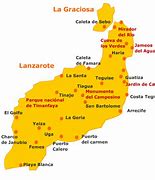
literature and history
12 ISLAND LIFE
new book about Lanzarote before the aeroplanes
by INES CARABELLO MEDINA
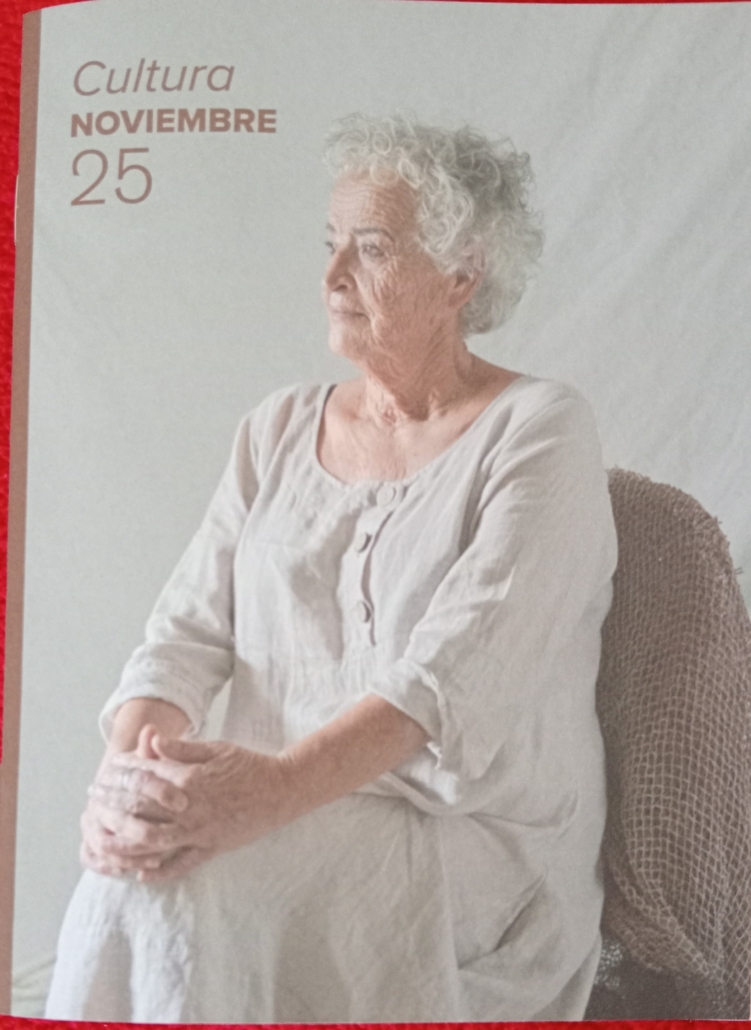
Our accompanying photograph shows Inés Caraballo Medina, accompanied by a beautiful text that we translate below. She has written two books and has recently published a third that will further enhance our understanding of our island´s history.
“I was born in Berrugo, in a house nestled between salt flats and the sea. My early years were spent between a rocky outcrop, where you could hear the fishermen singing as they baited the moray eels and the white mounds of salt.
´I was a grand-daughter of salt workers. My father was a coastal skipper and my mother was the eldest of ten siblings, with all that this implies in terms of sacrifice and dedication. and, For my deepest respect, she was also a sailor’s wife, destined to raise and educate her children alone.
During my school years, we moved to Arrecife, to the La Vega neighborhood, where I spent the happy years of my youth. What led me to write? The curiosity to learn about some unclear aspects of our history.
ne day, some elderly neighbors from La Degollada came to my house and asked me to dedicate a poem to their village. That’s how I began researching to write “La Degollada in the Fenauso Valley.”
Understanding the historical importance of Rubicon, and considering that the history of the shepherds, the fishermen, and the wells that quenched so much thirst for a parched population is no less important,
Thus, “Life on the Stony Plains of Rubicon” was born.
Now I am about to publish a new book: “Pulling the Line: The Intricacies of Lanzarote Fishing on the Coast (1406-1937).”
Sidetracks and Detours will bring you further details of this as it becomes available.
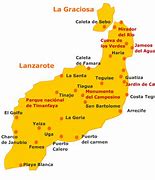
folklore music
ISLAND LIFE
folklore Music
13 POSTPONED CONCERT PLAYED AS PROMISED
Tonin Cojero Quartet: Review by Norman Warwick
:

I feel very privileged to have already seen half a dozen concerts by Tonin Corujo; some with and some without his now established quartet. I was due to see him again with his three musical colleagues last Friday night, 26th September at the wonderful and somehow historic Timple Museum in the centre of Teguise. (you can find articles about the venue in our archive of more than 1,500 articles)
The concert, of course, was postponed due to the circumstances detaile4d in the piece above, but I´m sure the hearts of all ticket holders go out to Tonin at this time.
A Canarian timple player with an eclectic style, Tonin Corujo, has for many years been making roots music with a universal projection.
His work, writing, composing, recording and performing, is conceived as a musical tribute to his land and his people, through a successful fusion of avant-garde music, jazz and elements of the Canarian musical identity. I liken what he does as being in the same high calibre as the work of bluegrass afficienado, Bela Flek.
Tonin´s compositions wander through spaces and people, recalling figures such as César Manrique, Jesús Soto, and Leandro Perdomo. They also feature magical Lanzarotan places, such as Famara, Mancha Blanca, or ancestral elements like the Gofio, to which he also dedicated one of his songs.
Their music, filled with hypnotic melodies, provokes sensations that transport the listener to the magical spaces to which they allude.
The secret to creating shows filled with complicity and unique proposals lies in their great ability to create participatory teams.
Its musicians, virtuosos and versatile multi-instrumentalists of eclectic style, offer a concert of incredible dimensions that range from the most absolute calm to the most active and unbridled atmospheres.
Toñín Corujo offers a sensational musical offering. Drawing on tradition, yet open to the musical reality of the entire planet, the timple player offers contemporary art made from the heart.
Toñín Corujo is one of the most renowned composers and performers of the timple.
The Canarian musician was born in 1960 in Arrecife, Lanzarote, to a family of musicians. His surname is one of the most important in the Canary Islands’ folk music scene.
In 1975 Corujo joined the group Awañac, helping to revive the verses of Víctor Fernández Gopar.
In 1987, he traveled from Paris with the Guitar Consort to Czechoslovakia, giving concerts in Kladno and Prague. Also in Paris, he had the opportunity to share experiences with Juan Carlos Pérez and Domingo Rodríguez, and to take classes with Michelle Ponce and Roland Dyens.
In 1998 Tonin directed the recording of “Rancho de Pascua de San Bartolomé” and participated in Artenara’s first album.
In 2004 he released his first album as a leader: “Arrecife”.
He participated in the Womad Canarias in 2005 where he shared the stage with Salif Keita, The Wailers, Carmen París, Yasmin Levy or Trilok Gurtu, Amadou & Mariam, The Bays, Cristóbal Repetto, Kanda Bongo Man, and others.
In 2006 he participated as a performer, composer and arranger in the Tewiza project.
In 2007 he presented “Salt and Sand”, a carefully produced recording by Andreas Prittwitz and featuring José Antonio Ramos, Ángel Crespo, Javier Saiz, David San José, Antonio Toledo, Fernando Anguita, Diego Galaz and Mariano Díaz.
He gave concerts at the Expo Zaragoza 2008 .
In 2011 , Toñín Corujo brought together the most important figures in the Canary Islands music scene to record “El Salinero,” based on the verses of Víctor Fernández Gopar and performed by his father, Antonio Corujo.
In 2011 he also published “Lanzarote Music”.
photo Since Saturday, June 15, 2013 , the “Toñin Corujo Quartet” has been offering a concert every Saturday at Noches de Jameos with Carlos Perez on saxophone, Yarel Hernández on guitar, Israel Curbelo on piano and percussion, and Toñin Corujo himself on timple. The live recording of “Una Noche en Jameos del Agua” was held in 2015 .
2016 presented the show “Dawn Of A Game” at the “Jameos del Agua Auditorium”
2018 included the Universo Colorao show at the Jameos del Agua Auditorium.
With the “Toñin Corujo Quartet” he travels to Berlin every year, where they perform in various venues and in the city’s famous jazz clubs.
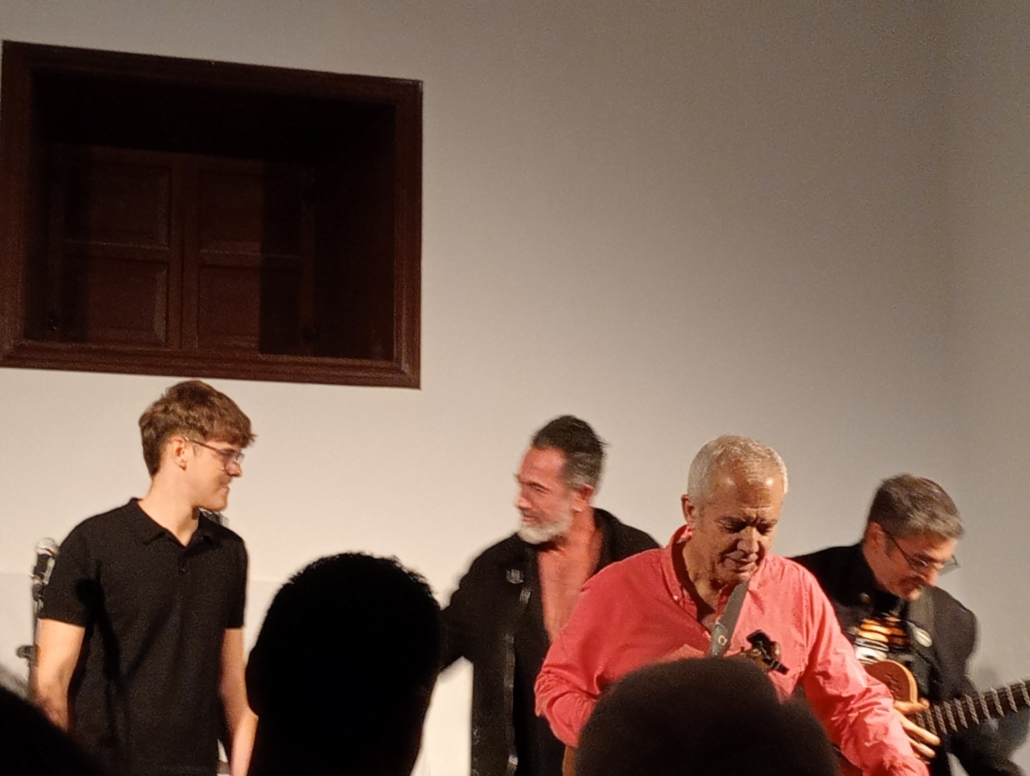
The house was slightly less than full, though that was to be expected as the concert postponed earlier in the year was a sell out, but this postponement so close to Christmas must have caused confusion to a few. Nevertheless Tonin Corujo is such a popular artist, who always delivers busy and entertaining concerts, that there was only a handful of empty seats for this re-scheduled gig.
Dee and I had eaten at the El Patio restaurant, a favourite haunt of ours in Teguise, just round the corner from the Timple Museum. The Tapas of Papas Arrugadas, Ham and Cheese Table, a large slice of Tortilla Espanol (Spanish Omelette) and a few Cervazas Sin Alcohol and by the time we turned into the square in front of The Timple Museum, the doors were already open and the fans were streaming in.
The group were introduced on stage by a gentleman we see regularly on the performing arts scene. He introduces the acts with enthusiasm and general high regard for the successes and talents and tonight was no different as he celebration Tonin Corujo and his band members. He was accompanied tonight by three extremely talented musicians: on electric guitar, another on whistle and occasional bass guitar, and some wonder-kid who looked too young and nice to be out this late at night but who played keyboards, beatbox, occasional bass guitar and occasional concertina.
What an incredible trio they were. It was very obvious that Tonin Corujo was as great an admirer of them as were the whole audience.
He wandered amid and betwixt his instrumentalists, setting the tempo, playing lead parts on his tiny Timple, signalling in on his band members´ lead parts. He is a figure, in this role, who reminds me of Ian Anderson, the flautist and leader of jazz/folk/ rock band Jethro Tull.
On hearing the beautiful riffs offered in the opening number by the band´s youngest member reassured all the auience that we were safe in the hands of this young pianist, who later in the programme would play beatbox and who, a little later in their programme would play piano and beatbox simultaneously.
Tonin´s greatest gift, I think, is his ablity and willingness to cede to his musicians and opt out and drop in with his TImple at the precisely right times. This is another reason why he reminds of the Jethro Tull figure. He is intense, almost making love to his instrument as he sees to guide her round the stage, between and betwixt the players,whilst producing exquisite sounds. He pulls strange, closed-eyes- faces as he hunches over his Timple to pick and pluck and strum, making the gentlest and fiercest of sounds. Thus Tonin and his Timple held their nerve when playing a kind of Devil Went Down To Georgia challenge match agains his wind instruemtns player in what was effectively a jzz epic.
The guitarist was smiling beatifically throughout the concert and guided everyone down lanes that after tonight will remain forever gentle on my mind.
But all roads taken, for both the band and the audience were signalled by the trafic poolieman who is Tonin Corujo. Furthermore he was generous in his sharing of the spotlight with such great musicians and at times he simply watched as spellbound as we were in the audience. The guitarist and wind-player challenged the talents of the young multi-instrumentalist and smiled happily for him as he met all of them with confidence and aplomb.
The music closed with three stnding ovations before the master of ceremonies present the band with a framed souvenire as a thank you for their work in preserving the folklore music of Lanzarote. It was announced that a book is to be published by the local authiorities and made availalbel to all schools so that studnets can learn mnore aobut the folk-lore music of lanzarote, so that students might protect it and enhance it even, in the years to come.


SONGWRITERS & INVISIBLE SONGWRITERS
new quarterly series
created and written by
PETER PEARSON & NORMAN WARWICK
A brand new and extensive series begins on the first weekend of January 2026. Songwriters and Invisible Angels is a series created by our two Americana writers, Peter Pearson and Norman Warwick. Each has selected twelve of his favourite artists and each episode, to be published quarterly, will feature one choice from each author. All twenty four artists seem somehow inextricably linked, even though each of the writers made their selections privately.
When seeing how the pairings became obvious we knew we definitely had a series on our hands, especially as Peter and Norman are walking parallel on each side of the road, Peter following sidetracks that connect his selection of songwriters and Norman taking detours to seek the gathering of invisible angels that appear so often when he hears certain songs by any of his chosen artsts.
Peter might not yet be able to define where the paths of his artists cross and Norman is not yet certain of the existence of these invisible angels but knows he has heard them.So join us here at Sidetracks & Detours and let´s see where this series takes us !

SONGWRITERS by Peter Pearson
2026 Greg Brown Bill Morrisey Kate Wolf
2027 David Olney Tim Grimm Jason Isbell
2028 Steve Young Nathan Bell Dave Alvin

& INVISIBLE ANGELS by Norman Warwick
2026 Mickey Newbury Gary Hall John B Spencer
2027 Julie Matthews Hoagy Carmichael Katy Moffatt
2028 Hank Wangford Stephen Foster Lendanear (diaspora)
A brand new and extensive series begins on Sunday, January 4th 2026. Songwriters and Invisible Angels is a series created by our two Americana writers, Peter Pearson and Norman Warwick. Each has selected twelve of his favourite artists and each episode, to be published quarterly, will feature one choice from each author. All twenty four artists seem somehow inextricably linked, even though each of the writers made their selections privately.
When seeing how the pairings became obvious we knew we definitely had a series on our hands, especially as Peter and Norman are walking parallel on each side of the road, Peter following sidetracks that connect his selection of songwriters and Norman taking detours to seek the gatherings of invisible angels that appear so often when he hears certain songs by any of his chosen artsts.
Peter might not yet be able to define where the paths of his artists cross and Norman is not yet certain of the existence of these invisible angels but knows he has heard them.So join us here at Sidetracks & Detours and let´s see where this series takes us !


Leave a Reply
Want to join the discussion?Feel free to contribute!